The Complete Guide to Writing a RISC-V Kernel
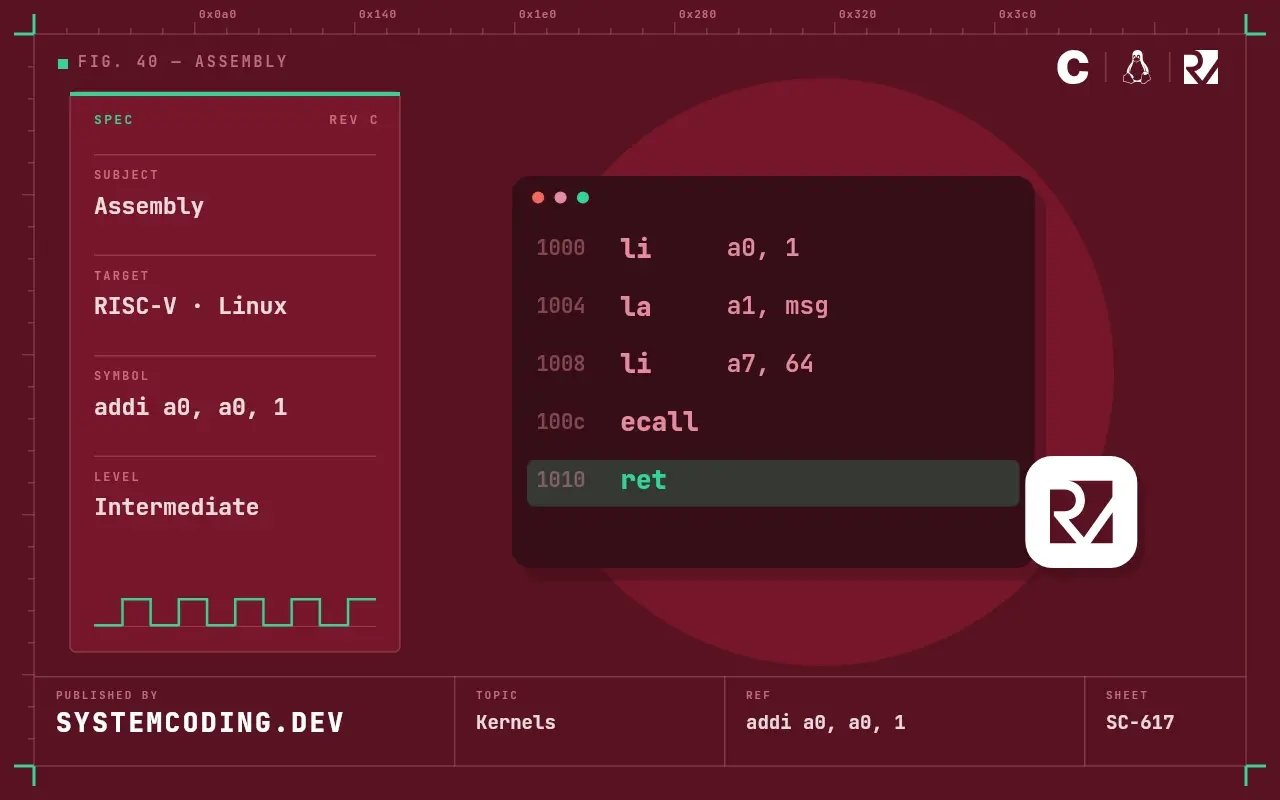
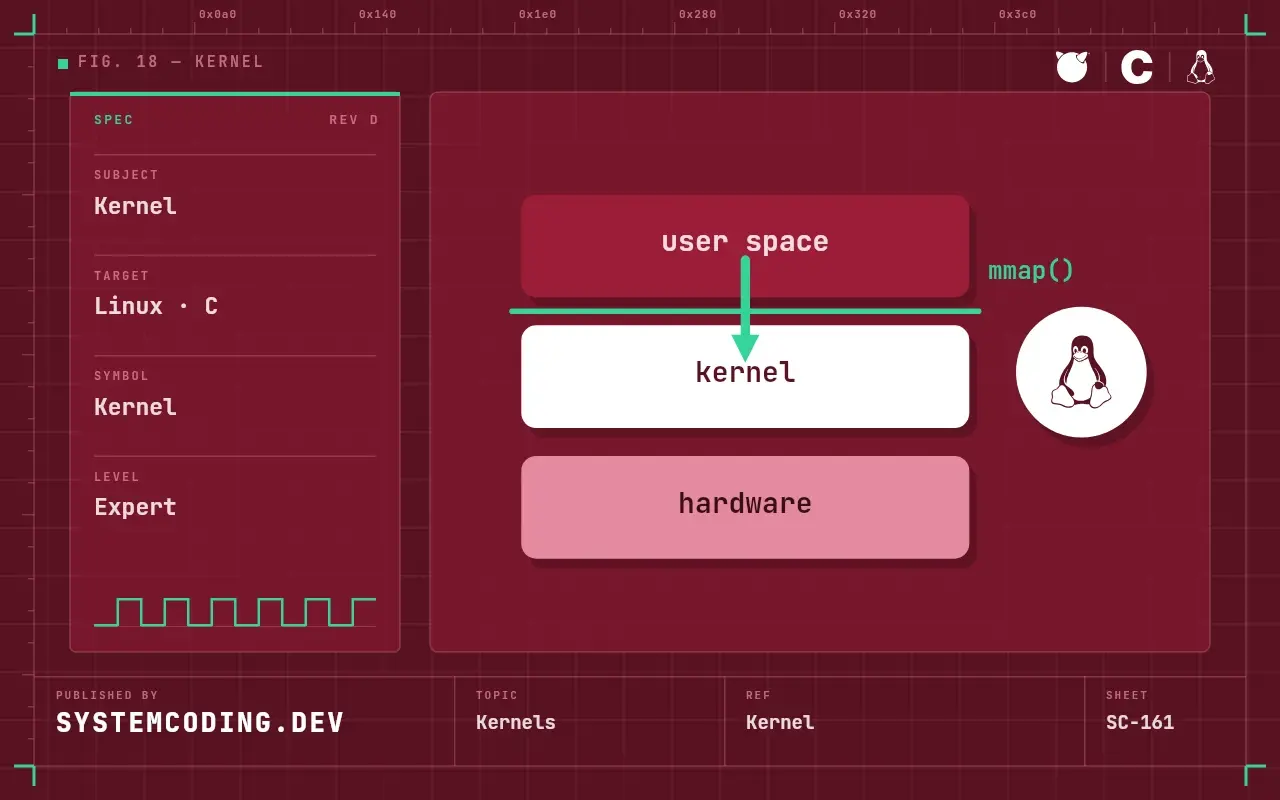
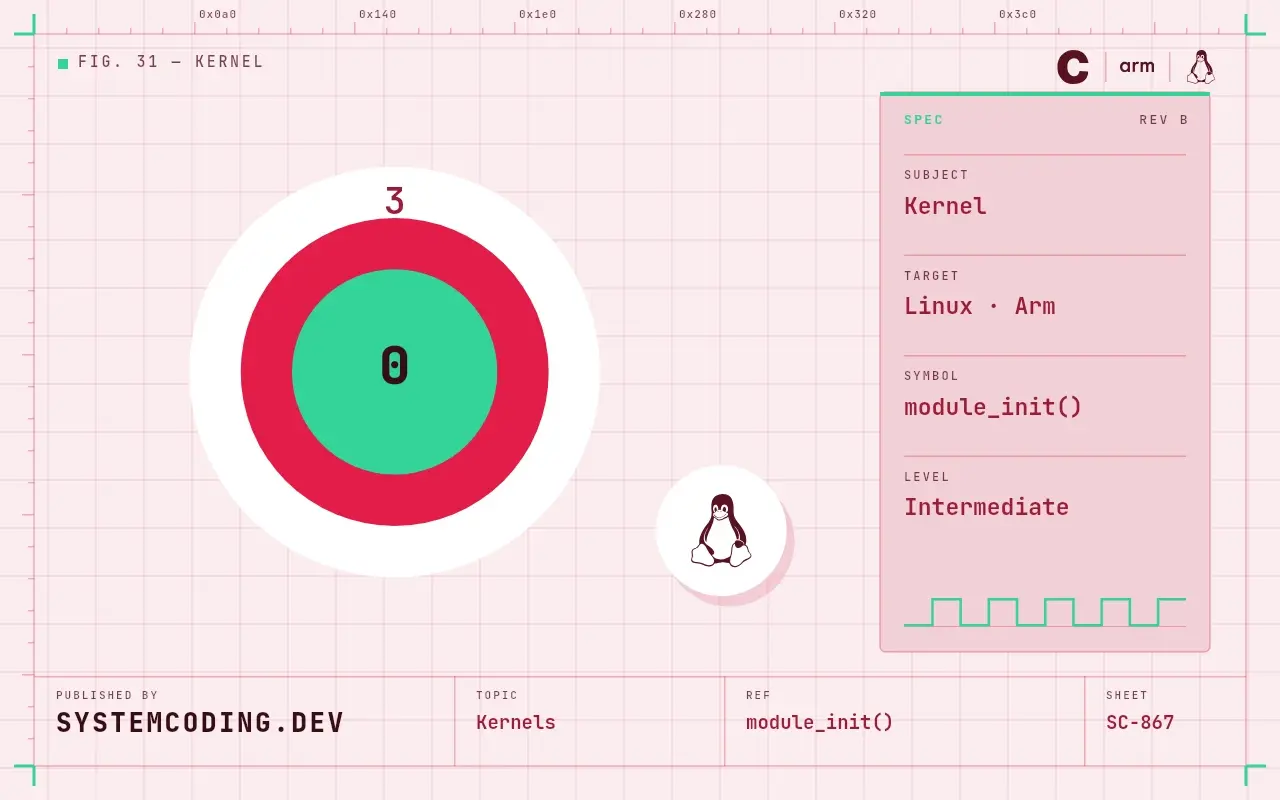
Write a 64-bit RISC-V kernel in C and assembly for QEMU virt: boot through OpenSBI, traps, timer, paging with Sv39, a page allocator, tasks and user mode.
Kernels
35 min read
Read itExplore various tutorials from the learning catalog.
Write a 64-bit RISC-V kernel in C and assembly for QEMU virt: boot through OpenSBI, traps, timer, paging with Sv39, a page allocator, tasks and user mode.
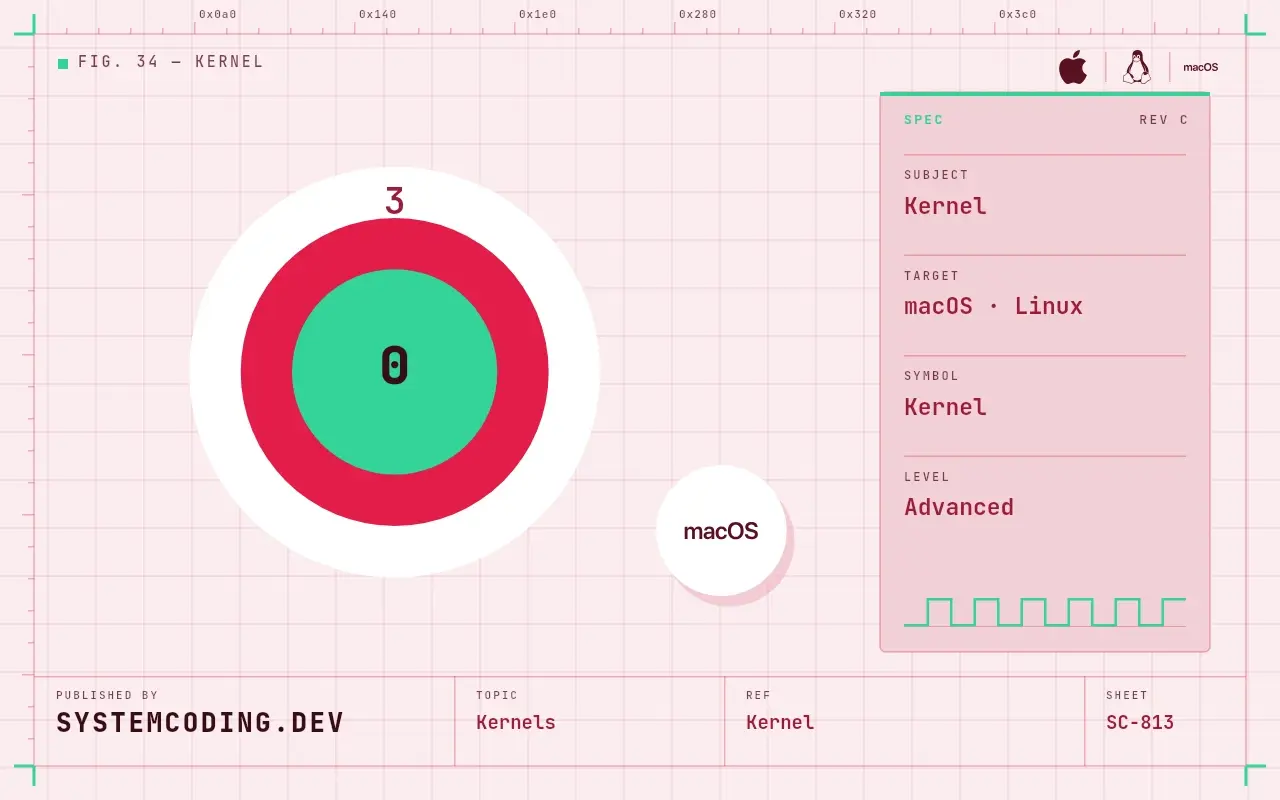
A map of the XNU kernel behind macOS: Mach tasks and ports, the BSD layer, IOKit, system call entry, virtual memory, security layers, extensions and boot.
Learn fixed-point arithmetic for firmware in C: Q formats, conversion, multiply and divide, saturation, filters, printing and testing, with verified outputs.
A complete x86-64 kernel core: GDT, IDT, exceptions, PIC and APIC interrupts, timers, a frame allocator, four-level paging, page faults, a heap and PCI.
Compare TinyGo, Zig and Ada for microcontroller firmware: toolchains, blinky programs, memory models, interrupts, C interop and when to choose each.
A complete guide to Linux kernel modules: lifecycle, build, load, parameters, exported symbols, a working misc device, licensing, signing, DKMS and debugging.
Write Linux systems code in Rust with compile-time ownership checks, safe syscall wrappers, and the exact boundary where unsafe remains necessary.
Learn embedded Rust from an empty directory to flashed, logged, interrupt-driven firmware on a Cortex-M board, with the toolchain, crates and mental model.
A beginner guide to Linux kernel development: how the kernel works, a safe lab, reading source, kernel C, a first module, debugging and a first patch.
Everything between exec and main in C on Linux: argv, envp and environ, getopt, the auxiliary vector, startup code, exit paths and passing a safe environment.
Learn how a microcontroller bootloader starts, validates and updates firmware, from the Cortex-M reset sequence to safe OTA, rollback and secure boot.
Write Linux 6.18 drivers in Rust: toolchain, module anatomy, pinned initialization, device lifetimes, misc, platform, PCI and PHY drivers, testing and style.
Build a real Unix command-line tool in C from argument parsing to exit codes, pipelines, locale, tests and a man page, with every step explained.
Build nRF52 and nRF53 firmware from first LED to BLE, power, DFU and the dual-core nRF5340 with the nRF Connect SDK, Zephyr and tested register-level code.
Write a Linux filesystem as a loadable module: file_system_type, the mount API, superblock, inodes, directories, page-cache I/O and a mount option, tested.
Build container isolation by hand: Linux namespaces for what a process sees, cgroups v2 for what it may use, with C code for clone and pivot_root.
Learn how DMA controllers move data without the CPU, from memory copies to ADC, UART and timer transfers, on STM32, RP2040 and ESP32, and the pitfalls to avoid.
A working method for Linux 6.12 kernel bugs: debug builds, reading oopses, runtime checkers, tracing, gdb in QEMU, hangs, and capturing crashes with kdump.
Learn Zephyr RTOS from install to first threads: west, Kconfig, devicetree, the build, kernel services, logging, debugging and tests, with FreeRTOS comparisons.
Learn file descriptors on Unix and Linux from open and close to dup2, fork, pipes, limits, leaks, passing between processes and the kernel tables behind them.
Learn ESP32 firmware with ESP-IDF v5.4: install the toolchain, build a project, use FreeRTOS tasks, GPIO, NVS, Wi-Fi, HTTP, OTA and debugging, with code.
Build a complete Linux 6.12 network driver for a ring-based PCIe NIC: rings, NAPI, DMA, statistics, ethtool, link state, offloads and recovery.
Learn IBM High Level Assembler on z/OS end to end: source format, registers, linkage, data, I/O, macros, DSECTs, dumps and modern instructions.
Why threaded C and C++ programs stop scaling, and how to find and fix serial sections, lock contention, false sharing, bandwidth limits and bad work splits.
Cross-compile C, Autotools, CMake, Meson, Go and Rust programs for an embedded Linux board with a toolchain and sysroot, and fix the errors you will hit.
Learn assembly language on the 6502 and Z80, from registers and flags to loops, 16-bit math, subroutines, interrupts and tooling, with worked programs for each.
Learn FreeRTOS queues, stream buffers and message buffers: when to use each, ISR sends, sizing, pointer ownership, patterns and the failures that lose data.
A guide to shared memory, semaphores and message queues on Linux: POSIX and System V APIs, layout, locking, robust mutexes, crash recovery, limits and cleanup.
Learn low-power firmware from the energy model to sleep modes, clocks, pins, wake-up sources, measurement and battery budgets, with a complete STM32 example.
How the Linux 6.12 device model binds drivers to devices, and how platform drivers use device tree, devres and runtime PM to expose hardware through subsystems.
Learn Vulkan 1.3 from instance to frame loop in C++: devices, queues, swapchains, dynamic rendering, pipelines, synchronization, memory and debugging.
Learn how UART, SPI, I2C, APB, Wishbone, AXI4-Lite, AXI4 and AXI-Stream move data on wires and inside chips, with Verilog for each and a way to choose.
Learn to write a CPU emulator in C from nothing: registers, memory, the fetch-decode-execute loop, flags, timing, devices, testing and a path to RISC-V.
Fuzz C and C++ with libFuzzer and AFL++ on Clang 19: write targets, use sanitizers, build corpora and dictionaries, triage crashes and run fuzzing in CI.
A complete guide to IEEE 754 floating point: formats, encoding, rounding, error, exceptions, FMA and compiler flags, with C code and exact output.
Learn FFmpeg 7.1 hardware encoding end to end: NVENC, VAAPI, Quick Sync and VideoToolbox, memory models, rate control, pipelines, measurement and failures.
Build network protocol parsers and a small TCP/IP stack in C: framing, bounds-safe parsing, state machines, packet buffers, testing, fuzzing and limits.
Learn OpenMP in C from the first parallel loop to tasks, SIMD, thread binding and GPU offload, with worked programs, exact output and common mistakes.
Clang and LLVM from first compile to production: architecture, diagnostics, sanitizers, clangd, clang-tidy, coverage, ThinLTO, cross-compiling and tools.
A full guide to LLDB: its command grammar, breakpoints, stepping, variables, memory, watchpoints, core files, Python, remote debugging and macOS specifics.
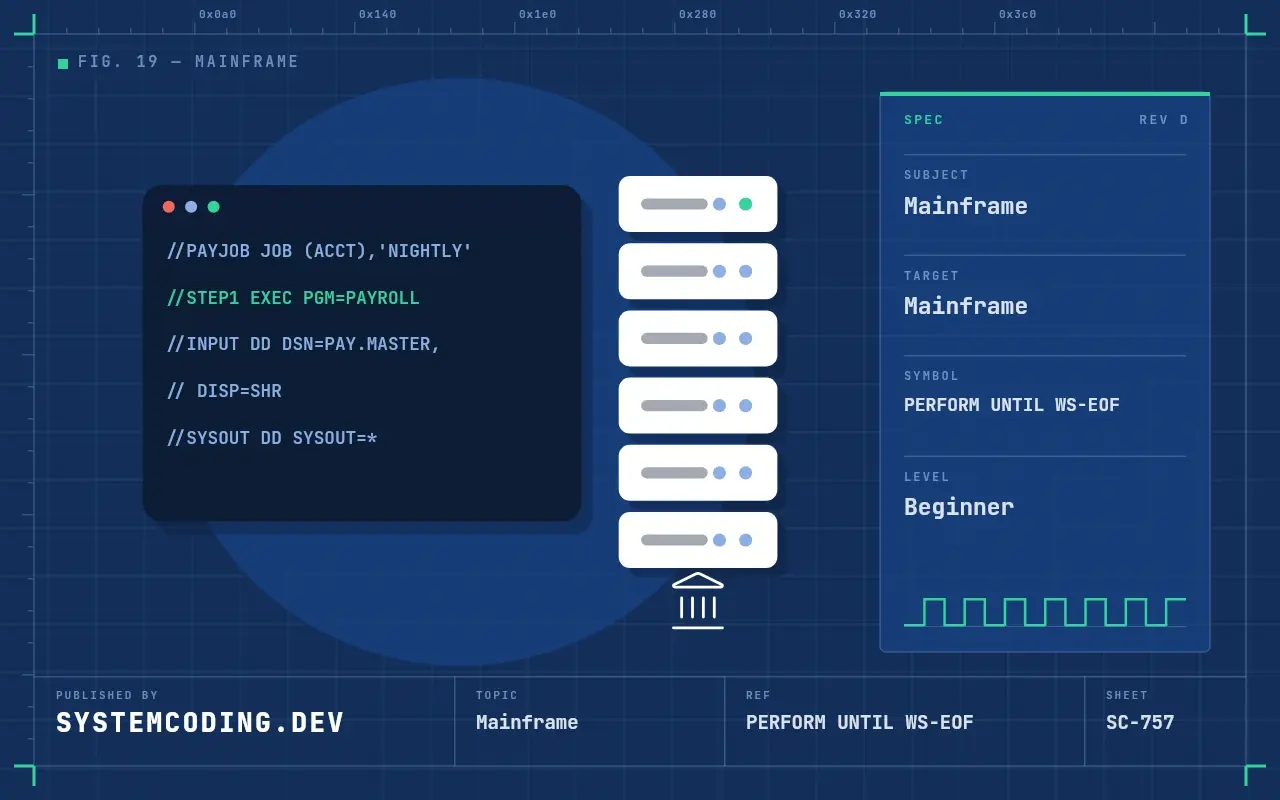
A beginner guide to JCL on z/OS 3.1: job flow in JES2, JOB, EXEC and DD statements, datasets, utilities, procedures, conditions, output and failures.
Measure C, C++, Rust and Go the right way: clocks, optimizer barriers, warm-up, statistics, environment control, frameworks and reporting, with working code.
How a Yocto build becomes a shippable image, how application developers get an SDK, and how devtool speeds up the loop, on Scarthgap 5.0 with BitBake 2.8.
Build an x86 bootloader in NASM from a 512-byte boot sector to a loaded kernel, covering disk reads, A20, the memory map, protected mode and long mode.
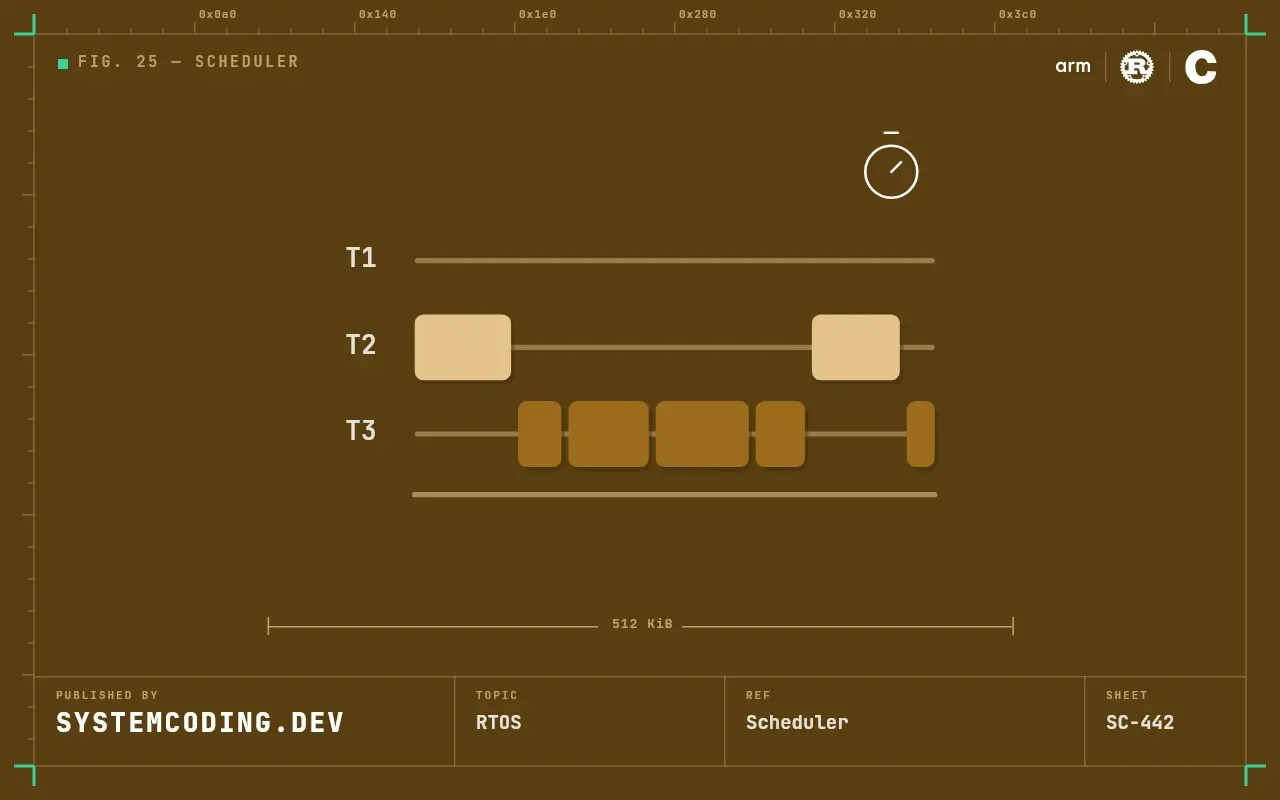
How an RTOS works on a microcontroller: tasks, scheduling, interrupts, queues, mutexes, memory and timing, with FreeRTOS code and a route through the series.
Learn malloc, calloc, realloc and free from scratch, the bugs they cause, who owns each pointer, and what glibc does underneath, with tested patterns.
Learn I2C from the open-drain wires up: addresses, ACK, repeated start, pull-up sizing, STM32 register code, bus scans, clock stretching and recovery.
Write a complete Linux 6.12 PCI driver: probe, BAR mapping, MSI interrupts, DMA with a restricted mask, a user-space interface, error recovery and testing.
Open windows, read keyboard, mouse and gamepad input, handle resizes and high-DPI, and choose between GLFW 3.4 and SDL 3.2 for OpenGL and Vulkan programs.
Simulate Verilog and VHDL with Icarus Verilog, Verilator, GHDL and cocotb, view waveforms in GTKWave, write self-checking tests and choose the right tool.
A practical tour of the Linux KVM ioctl interface: system, VM and vCPU descriptors, memory slots, kvm_run exits, interrupts, CPUID, debugging and threads, in C.
Every GCC and Clang hardening flag that matters, with its minimum version, cost and effect on the binary, plus Make, CMake and Meson recipes and checks.
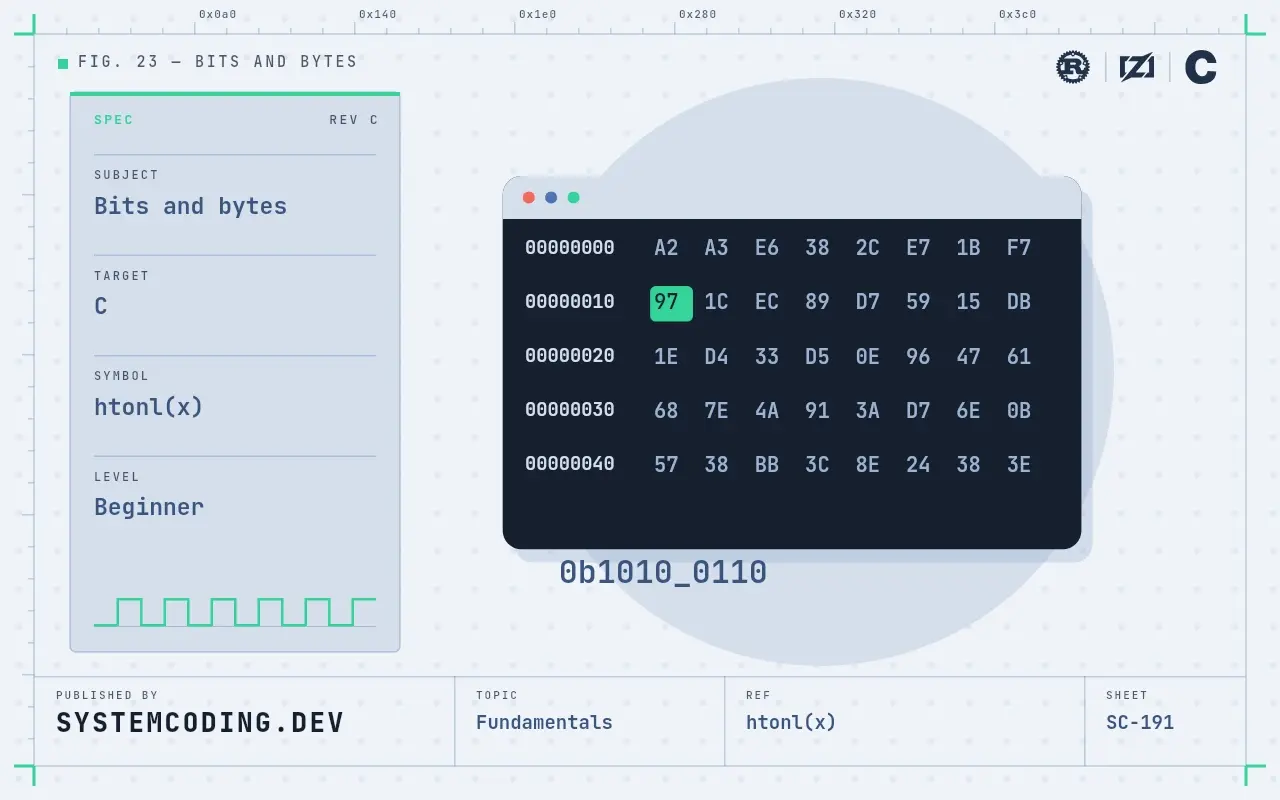
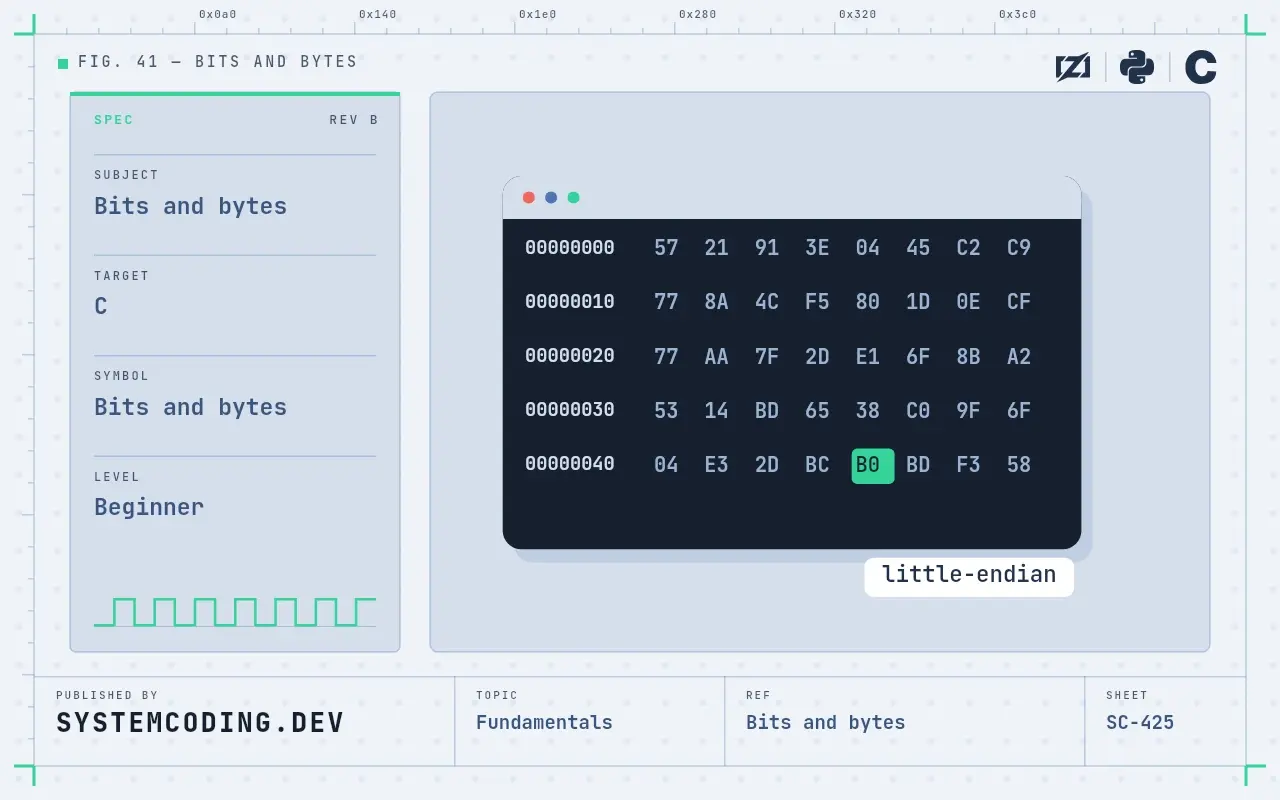
A complete guide to bits, bytes, binary, hex and octal for programmers, with conversions, binary arithmetic, masks, memory, ASCII and hex dumps worked in C.
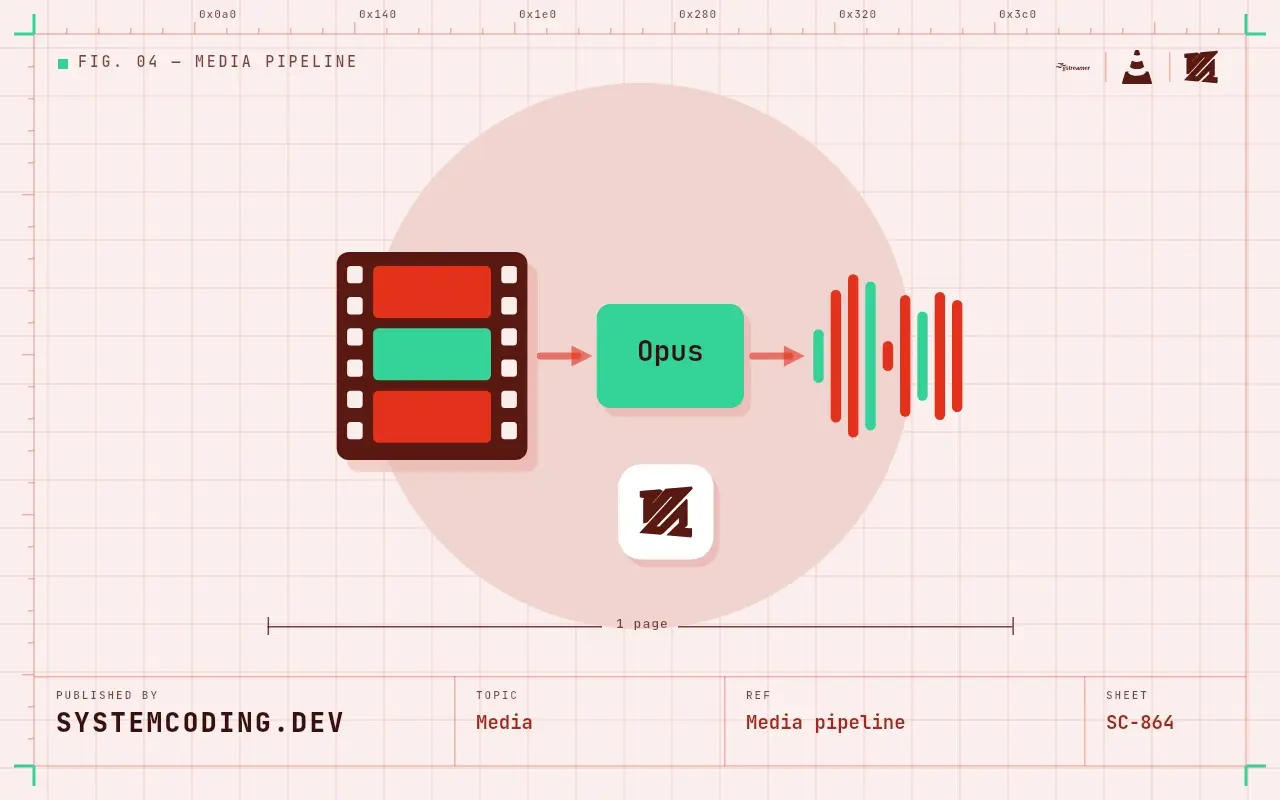
Understand codecs and containers from raw pixels to files: compression, frame types, H.264, H.265, VP9, AV1, AAC, Opus, MP4, MKV, WebM, streaming and ffmpeg.
A full guide to eBPF for network work on Linux: programs, maps, the verifier, XDP, tc, sockets, tracing, testing, debugging and running it safely in production.
One guide to locking in C, C++ and Rust: mutexes, deadlock, condition variables, semaphores, barriers, rwlocks, spinlocks, futexes and debugging.
A working tour of GCC attributes and builtins for C: function, variable and type attributes, the builtins worth knowing, and how to keep them portable.
A full guide to GDB for C and C++: building for debugging, crashes, wrong answers, hangs, corruption, threads, core files, remote targets and habits.
Read z/OS abend codes like a debugger: system and user abends, the messages and dumps that explain them, the common codes by cause, and a triage method.
Learn perf from first run to expert use: counting, sampling, call graphs, flame graphs, memory and scheduler analysis, tracing and a measurement workflow.
A map of the Yocto Project: Poky, BitBake, layers, recipes, caches, images and reproducible builds, with the key commands for Scarthgap 5.0.
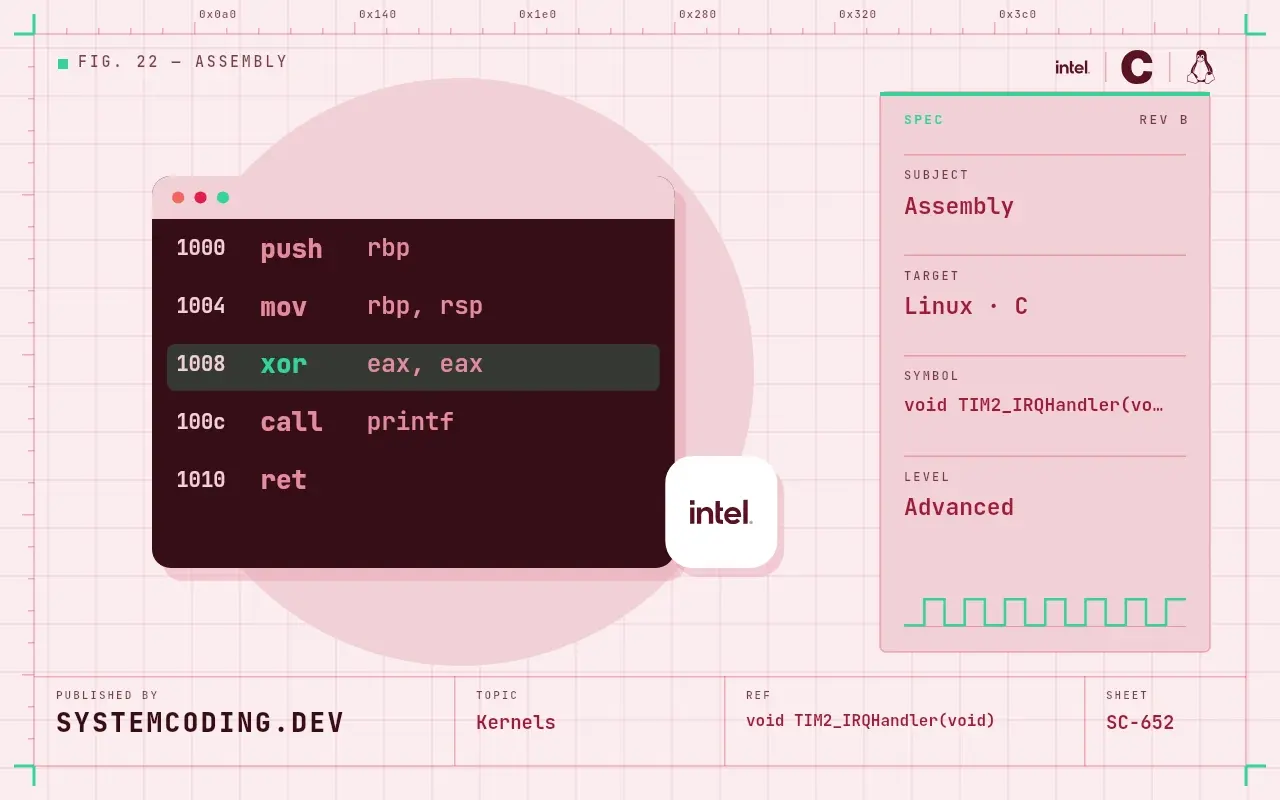
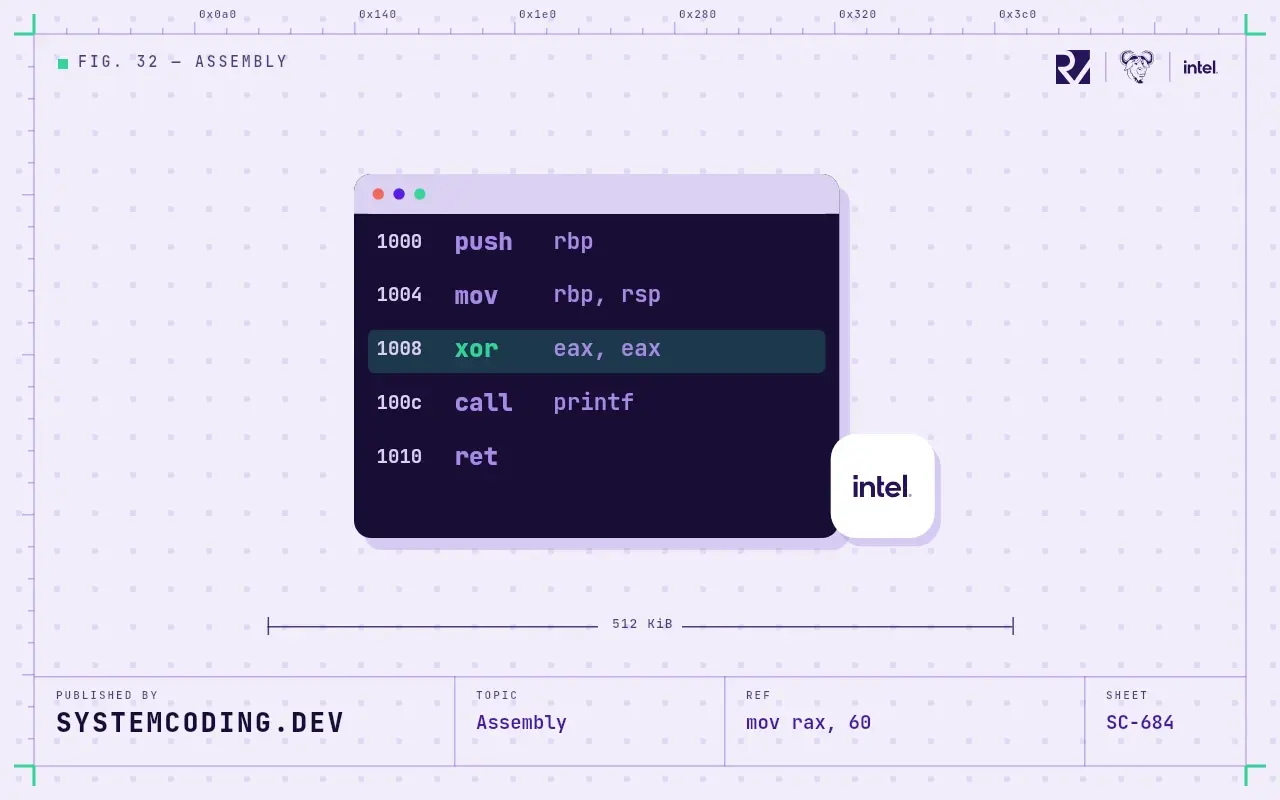
A complete guide to x86-64 assembly on Linux: registers, flags, addressing, branches, the stack, calling C, atomics, encoding and a full worked program.
Learn FreeRTOS V11.1.0 software timers, the timer service task, the idle hook and tickless idle, from one-shot timers to low-power setup.
Learn Win32 from scratch in C: handles, files, processes, threads, synchronization, memory, pipes, DLLs, windows and error handling, with code for each.
A practical guide to USB device firmware: enumeration, descriptors, endpoints, device classes, stacks, hardware, a first STM32 device, debugging and updates.
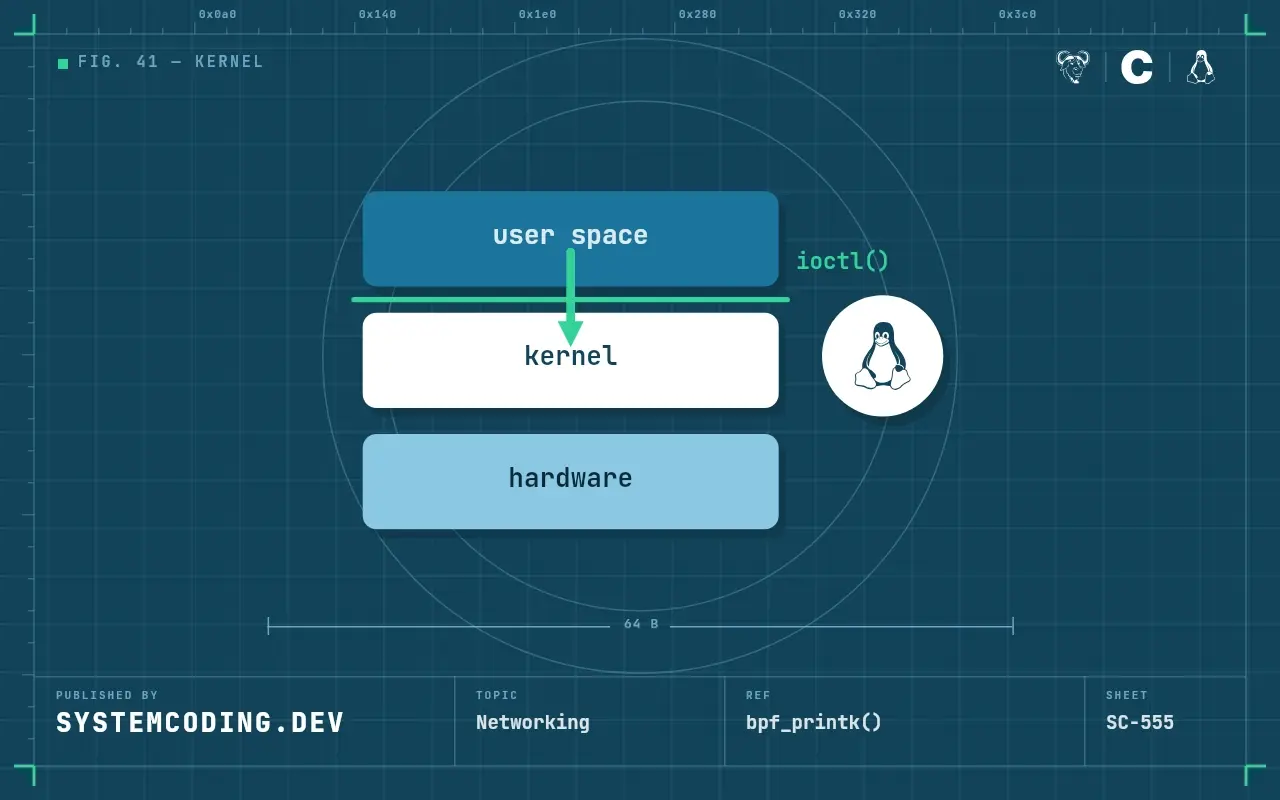
A working guide to Linux system calls: invocation, error returns, the main families with code, tracing with strace, seccomp filtering and portability.
Learn OpenCL 3.0 in C from platform discovery to kernels, buffers, work-groups, local memory, events and profiling, with complete programs and their output.
How open-source FPGA toolchains work: Yosys, nextpnr, IceStorm, Trellis and loaders, with a full iCE40 and ECP5 build, constraints, timing and CI.
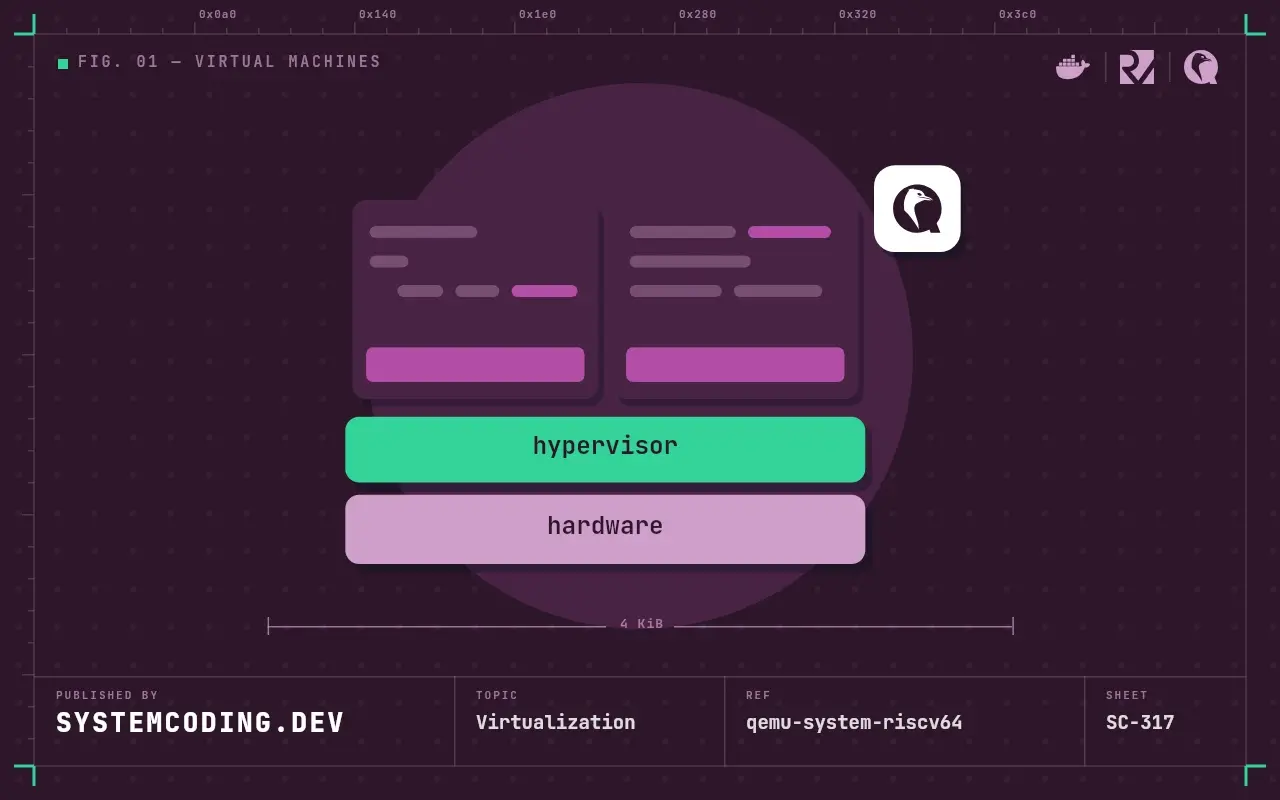
How virtual machines really work, from CPU privilege rings and VM exits to EPT, virtio, containers and confidential VMs, with C code you can read line by line.
A map of memory-safety bugs in C and C++, from stack overflows to use-after-free and type confusion, with the habits, tools and flags that stop each one.
A bottom-up tour of how a computer runs your code: bits, memory, the CPU, caches, interrupts, DMA, virtual memory and the kernel, with C programs and output.
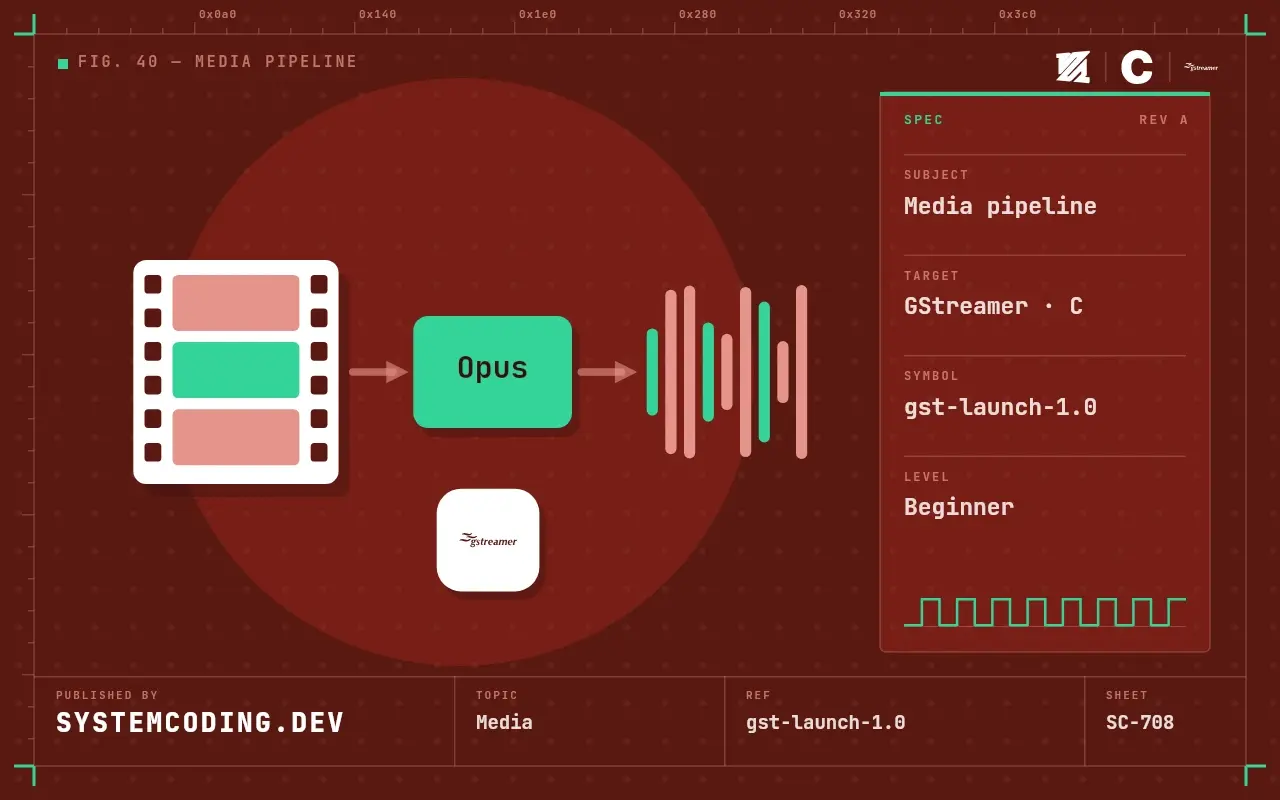
Learn GStreamer from first pipeline to C code: elements, pads, caps, states, the bus, threads, clocks, dynamic pads, appsrc, appsink, tee, seeking, debugging.
Learn I/O multiplexing in C: select, poll, epoll and kqueue compared, with event loops, edge and level triggering, partial I/O, timers and scaling across cores.
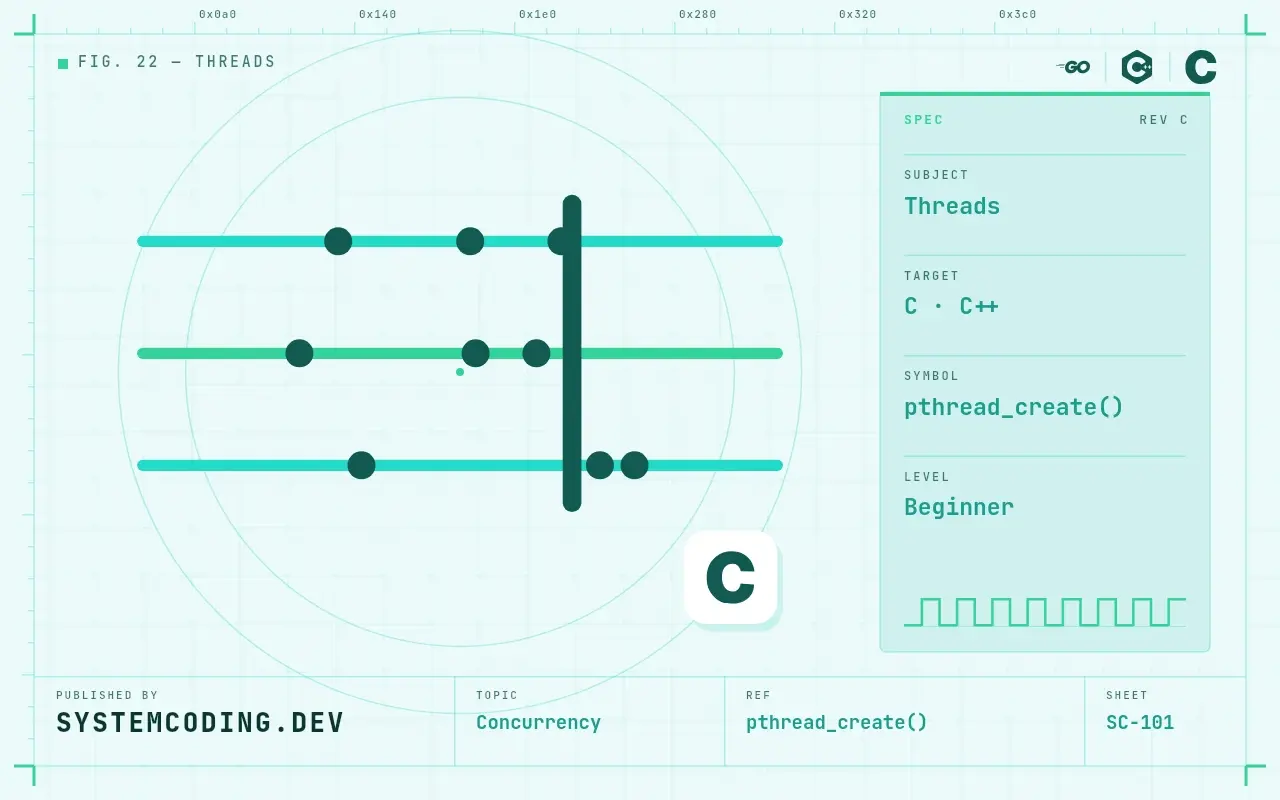
Learn threads from first principles in C with pthreads, C++ with std::thread and jthread, and Rust: create, join, share data, stop, name and debug them.
A complete guide to GNU Make for C: rules, variables, pattern rules, header dependencies, build directories, parallel builds, libraries and debugging.
Find memory errors, leaks, uninitialised reads and thread races in C and C++ with Valgrind, then profile heap and cache use, debug live and gate your CI.
A complete guide to CICS programming in COBOL: tasks, BMS screens, VSAM files, queues, program control, error handling, Db2, debugging and operations.
Learn SIMD from scratch with C intrinsics for SSE, AVX2 and ARM NEON: loads, arithmetic, masks, shuffles, reductions, tails, dispatch, testing and pitfalls.
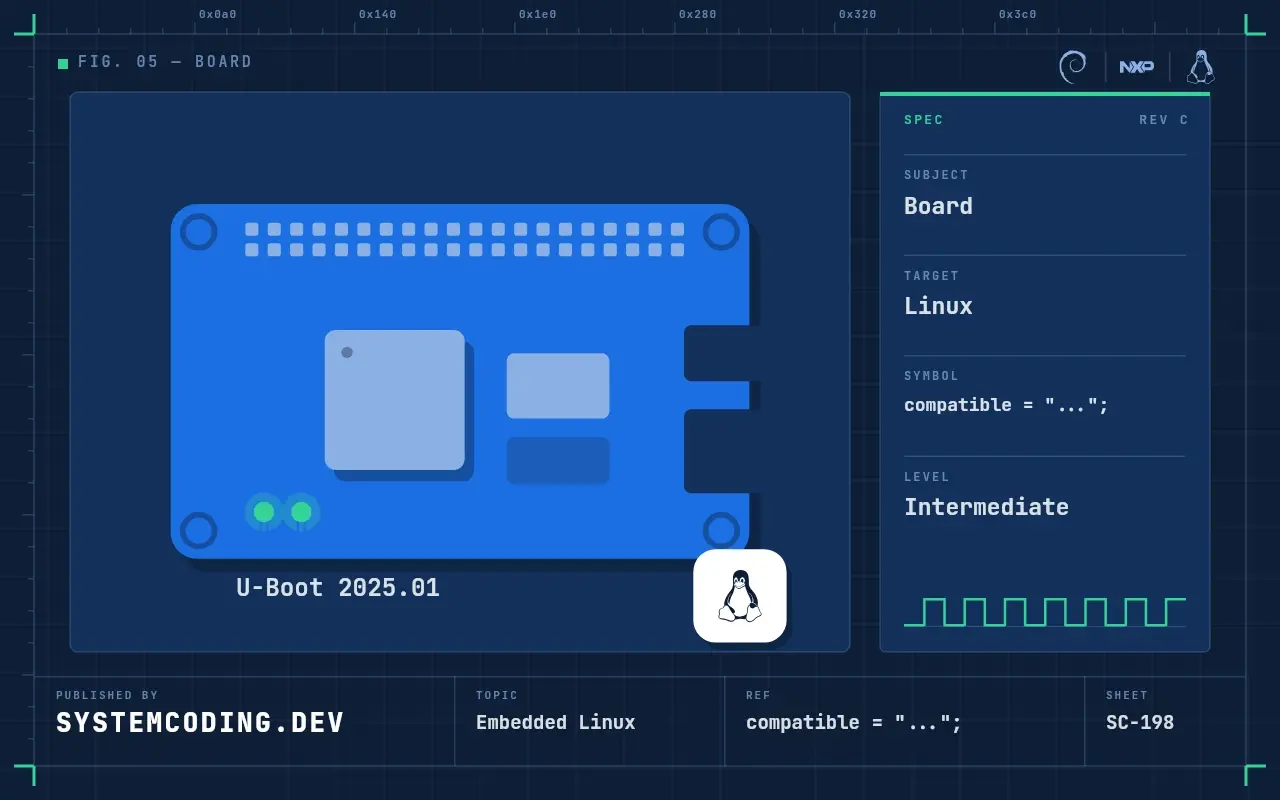
Learn the device tree language, how Linux uses it, and how to write, build, layer, validate and debug a board description from a blank file to a bound driver.
A full guide to x86 assembler syntax: Intel and AT&T operand order, NASM and GNU as directives, addressing modes, sections, macros, linking and porting.
Learn Eclipse ThreadX and RTEMS side by side: history, thread and sync APIs, memory pools, builds, configuration and how to choose between them.
Learn how Unix processes work in C on Linux: create them with fork, replace them with exec, collect them with wait, and end them cleanly with exit.
Learn GPIO from the pin up: modes, pull resistors, drive strength, interrupts, debouncing, alternate functions and loads, with STM32 code and cross-chip notes.
One driver for one chip, built from user-space probing to a regmap core with I2C and SPI front ends, IIO output, interrupts, error handling and debugging.
A working method for faster CUDA kernels: classify the bottleneck, fix memory access, tune occupancy and divergence, overlap transfers and verify each change.
Learn Verilog from a firmware engineer's view: wires, registers, clocked logic, state machines, testbenches and a first FPGA build, with worked code.
Build a working Linux container runtime in C: namespaces, a pivot_root rootfs, cgroup v2 limits, veth networking, seccomp, and what runc adds on top.
Build a Linux process sandbox layer by layer: drop root and capabilities, add namespaces, seccomp, Landlock, cgroups and systemd limits, then test what escapes.
Learn what undefined behavior is in C, why compilers exploit it, the common kinds with sanitizer output, and how to write, detect and fix code that avoids it.
A complete guide to the FFmpeg command line: the pipeline, option order, streams, codecs, quality settings, trimming, joining, subtitles, ffprobe and scripting.
Learn socket programming in C on Linux from zero: addresses, TCP servers and clients, UDP, getaddrinfo, closing, errors, poll and a working chat server.
How async runtimes work from the kernel up: readiness and completion I/O, epoll, io_uring, reactors, executors, Tokio internals and how to choose.
Build static and shared libraries in C with ar, gcc and ld, then link, version, install and debug them, with a decision table for choosing between the two.
Learn to trace programs on Linux with strace 6.8 and ltrace 0.7.3: read every line, filter, time, follow children, find config bugs and know the limits.
Learn COBOL on z/OS from the four divisions to files, tables, subprograms, compiling with JCL and reading abends, with complete programs and their output.
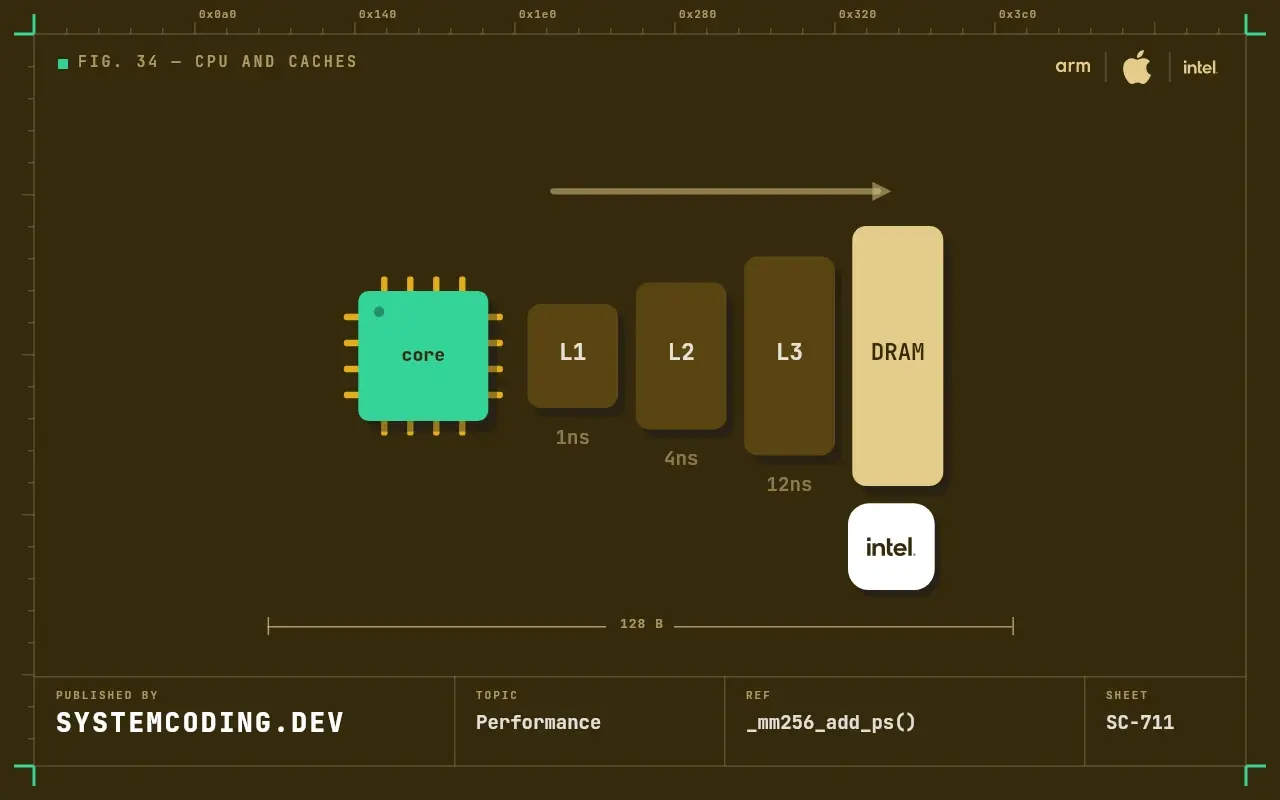
Complete guide to memory performance on Linux: measure bandwidth, place data across NUMA nodes and cut TLB misses with huge pages, with C code throughout.
Drive GPIO lines, I2C sensors and SPI devices from Linux userspace with libgpiod, i2c-tools and spidev in C, Python and Rust, plus device tree and permissions.
Learn Cortex-M assembly end to end: registers, Thumb-2 encodings, branches, calling convention, startup, interrupts, RTOS switching, atomics, DSP and FPU.
Learn Zephyr threads, priorities, timers, work queues, semaphores, mutexes and message queues, with working examples and a rule for picking each primitive.
How systems code reports, checks, cleans up after and tests failures: errno, short writes, goto cleanup, fault injection and error design in C, Rust and Go.
Build a Cortex-M boot path from scratch: vector table, reset handler, linker script, .data and .bss, heap, stack, constructors and debugging, with a Makefile.
Everything a driver author needs about interrupts in Linux 6.12: request_irq, handler rules, shared lines, threaded IRQs, bottom halves, affinity and debugging.
We send one email when a new post is published. No spam.