
Kernels
Boot Linux on RISC-V in QEMU With OpenSBI and U-Boot
Build OpenSBI, U-Boot and a Linux 6.12 Image for riscv64, boot them on QEMU virt in the real firmware chain and load the kernel from an ext4 disk with booti.
8 min read
Linux kernel modules and drivers, system calls, schedulers, bootloaders and UEFI, and writing a hobby operating system from the first instruction.
Build OpenSBI, U-Boot and a Linux 6.12 Image for riscv64, boot them on QEMU virt in the real firmware chain and load the kernel from an ext4 disk with booti.

Call the RISC-V SBI from supervisor mode: probe extensions, print through DBCN, set timers, start harts and shut down, with the ecall rules and errors.

Build the smallest RISC-V kernel that boots on QEMU virt: a linker script at 0x80200000, an entry stub, a C main printing through the UART, and a GDB check.
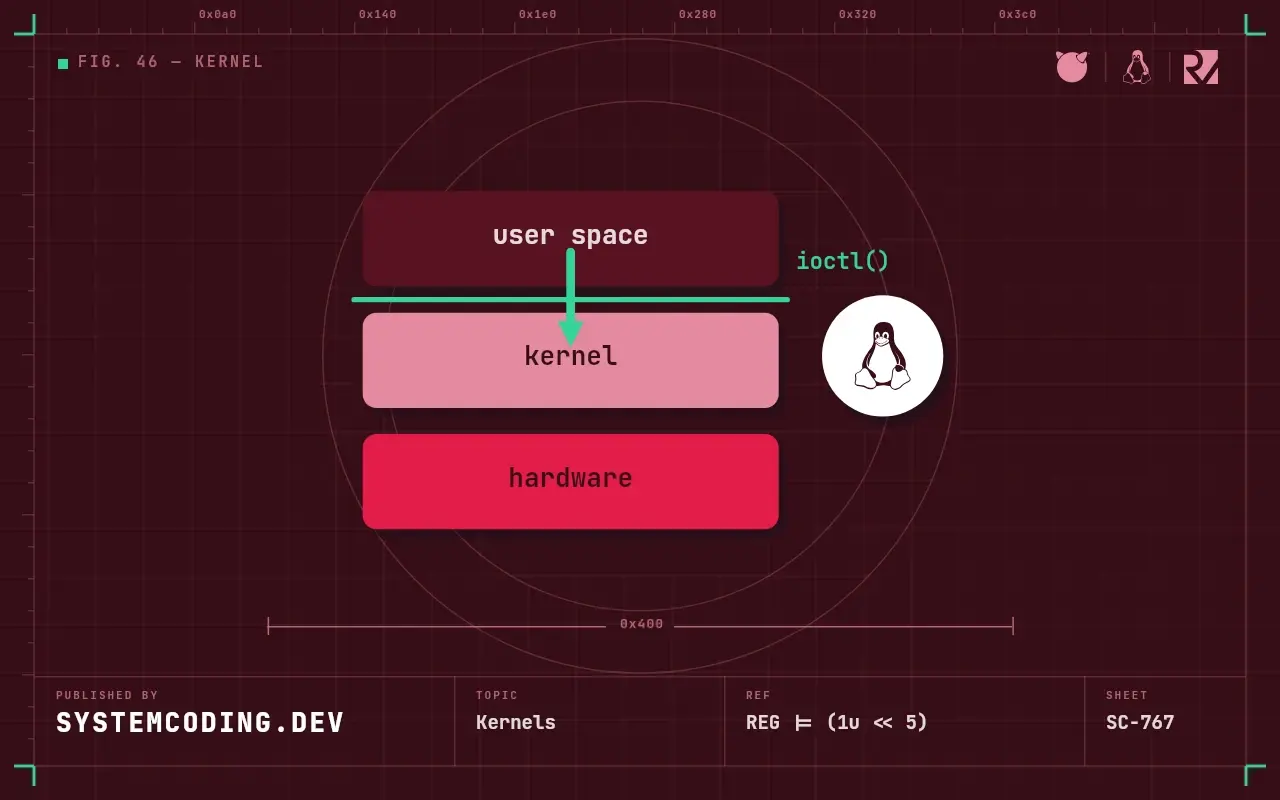
A tour of the RISC-V supervisor CSRs a kernel touches: sstatus, sie, stvec, scause, sepc, stval, satp and sscratch, with instructions and exact bits.
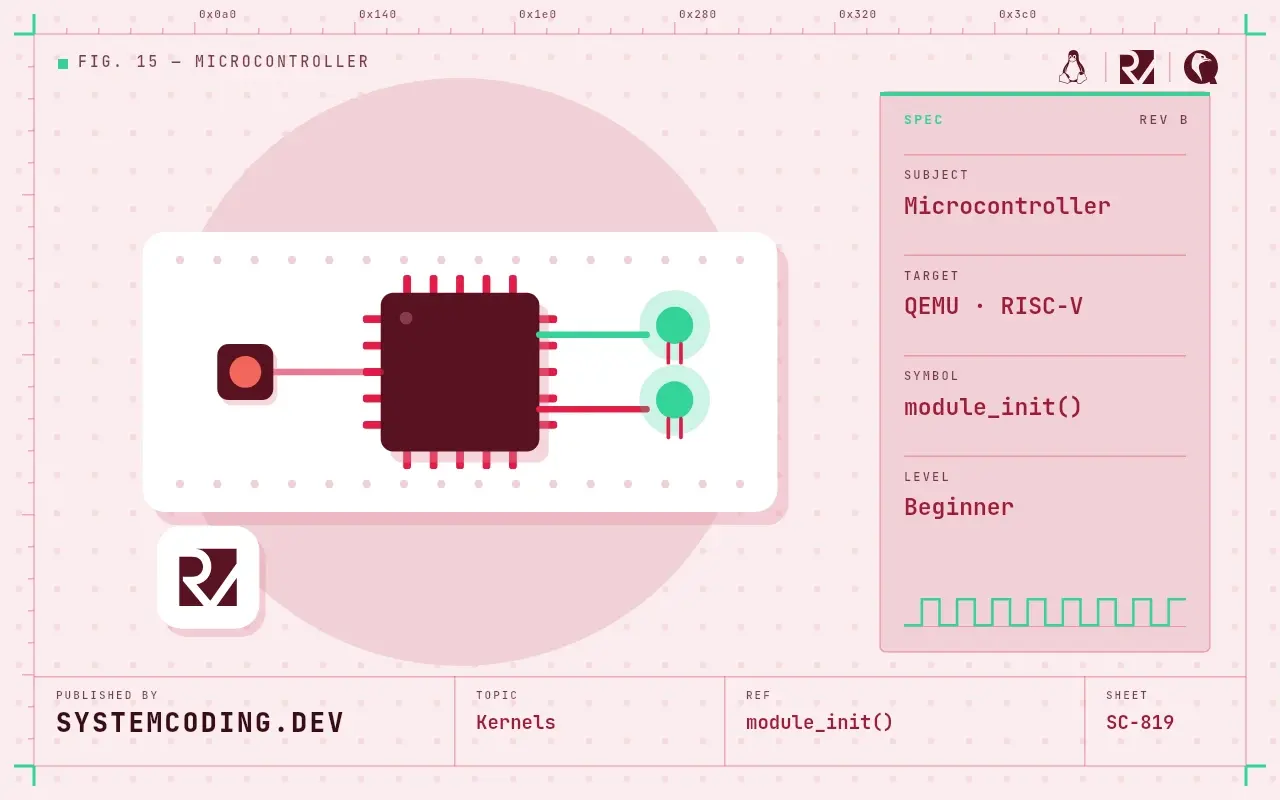
Drive the NS16550A UART at 0x10000000 on QEMU's RISC-V virt machine with volatile MMIO in C: initialize it, send and poll bytes, then add receive interrupts.
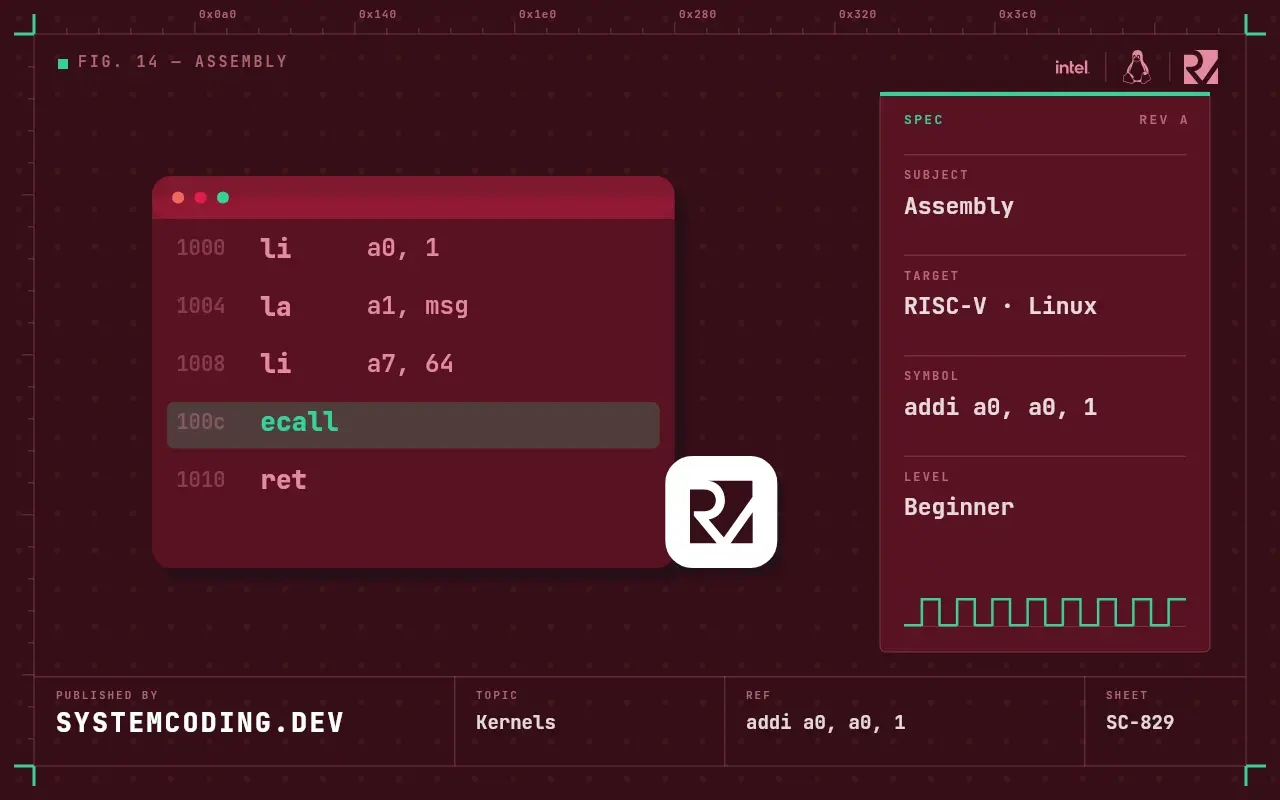
Learn what machine, supervisor and user mode each control on RISC-V, how traps are delegated between them, and how firmware drops into S mode with mret.

Learn how macOS routes one trap instruction to either a Mach trap or a BSD system call, how the number sign and class decide, and why you should call libSystem.

How Mach ports, port rights and mach_msg work on macOS 15, with a complete client and server in C using the bootstrap server, plus where XPC sits on top.

Choose between DriverKit, system extensions and legacy kexts on macOS 15: what each runs in, what it can reach, how it installs, and a decision table.
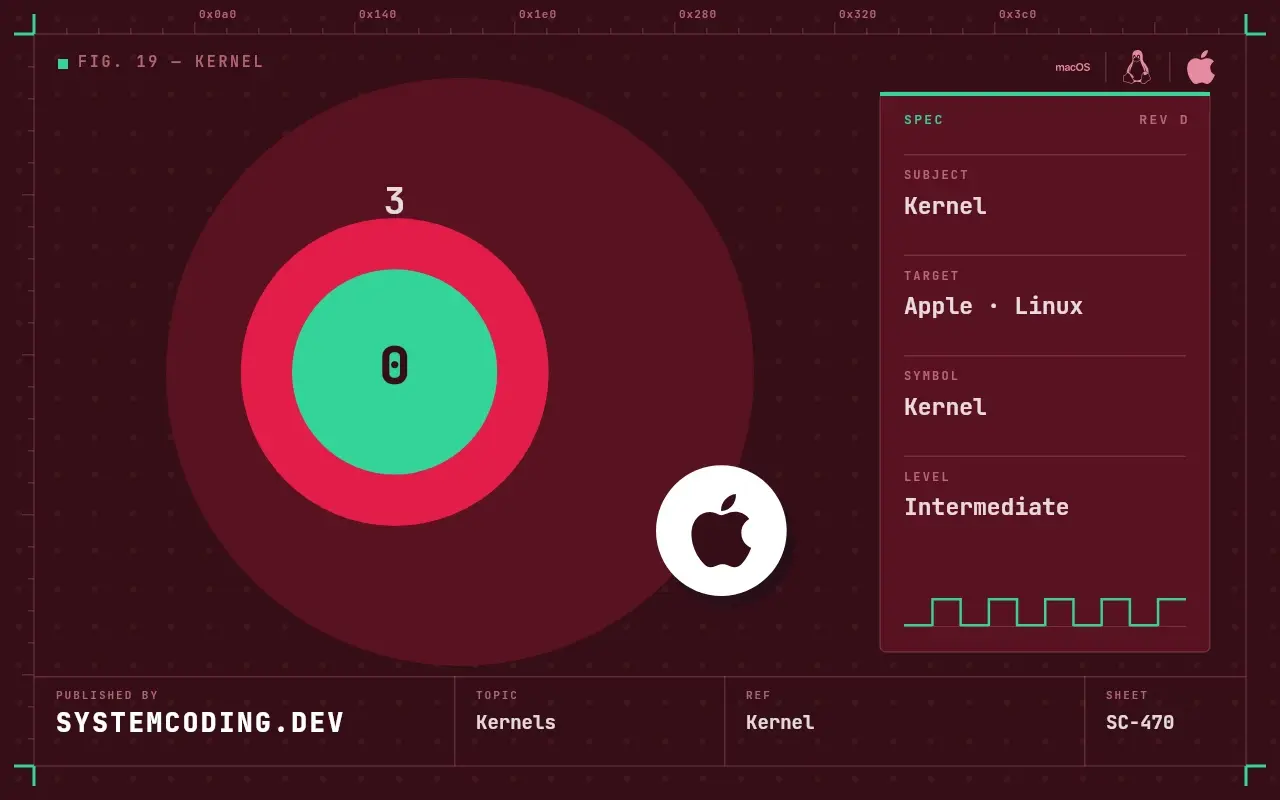
How XNU combines Mach, a BSD layer and IOKit in one kernel: what each part owns, how a process maps to a task, and how a read call crosses all three.
Read kernel and driver messages on macOS 15 with log show and log stream, using predicates on process, subsystem and message text, plus time ranges and levels.
Read macOS kernel state from Terminal with sysctl and ioreg: hardware sizes, boot time, the device registry, USB devices, and how to filter the output.
We send one email when a new post is published. No spam.