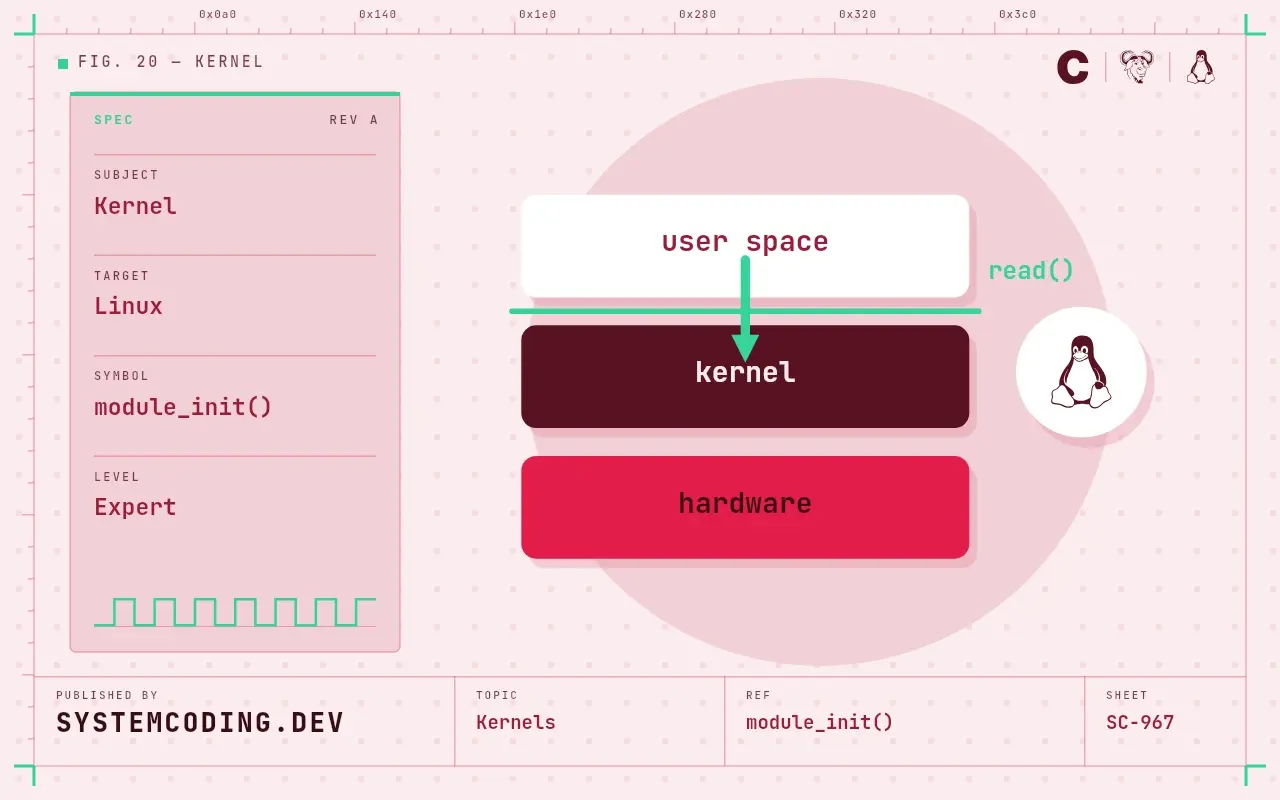
Kernels
How DRM/KMS Drivers Are Structured: CRTCs, Planes, Encoders and Connectors
How a Linux 6.12 DRM/KMS display driver is organized into framebuffers, planes, CRTCs, encoders and connectors, and how atomic commits move through them.
7 min read
Everything you need to level up your coding skills.
How a Linux 6.12 DRM/KMS display driver is organized into framebuffers, planes, CRTCs, encoders and connectors, and how atomic commits move through them.
Compare libx264 with NVENC, VAAPI, QSV and VideoToolbox in FFmpeg 7.1 on your own footage using VMAF, and decide when speed or quality per bit should win.
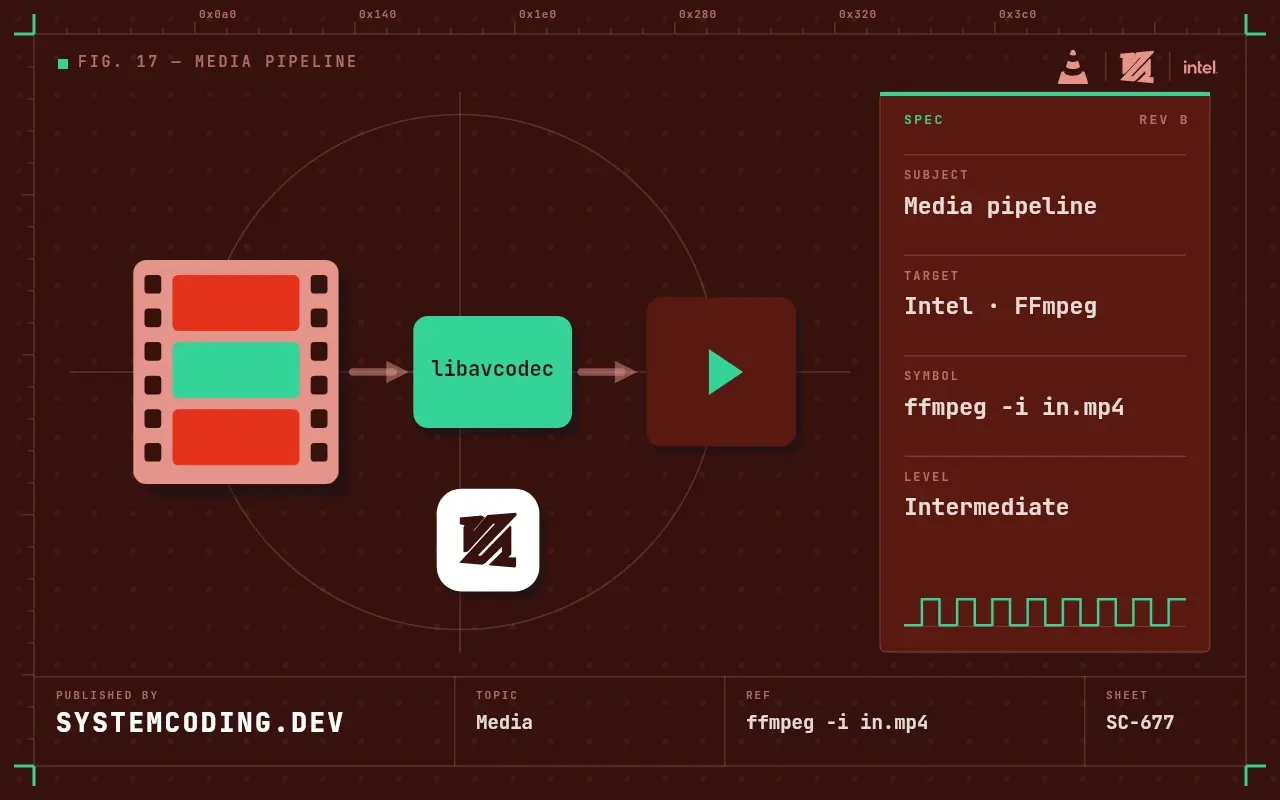
Encode H.264, HEVC and AV1 on Intel GPUs with FFmpeg 7.1 QSV encoders: libvpl and driver setup, hardware frames, ICQ quality, presets and look-ahead.
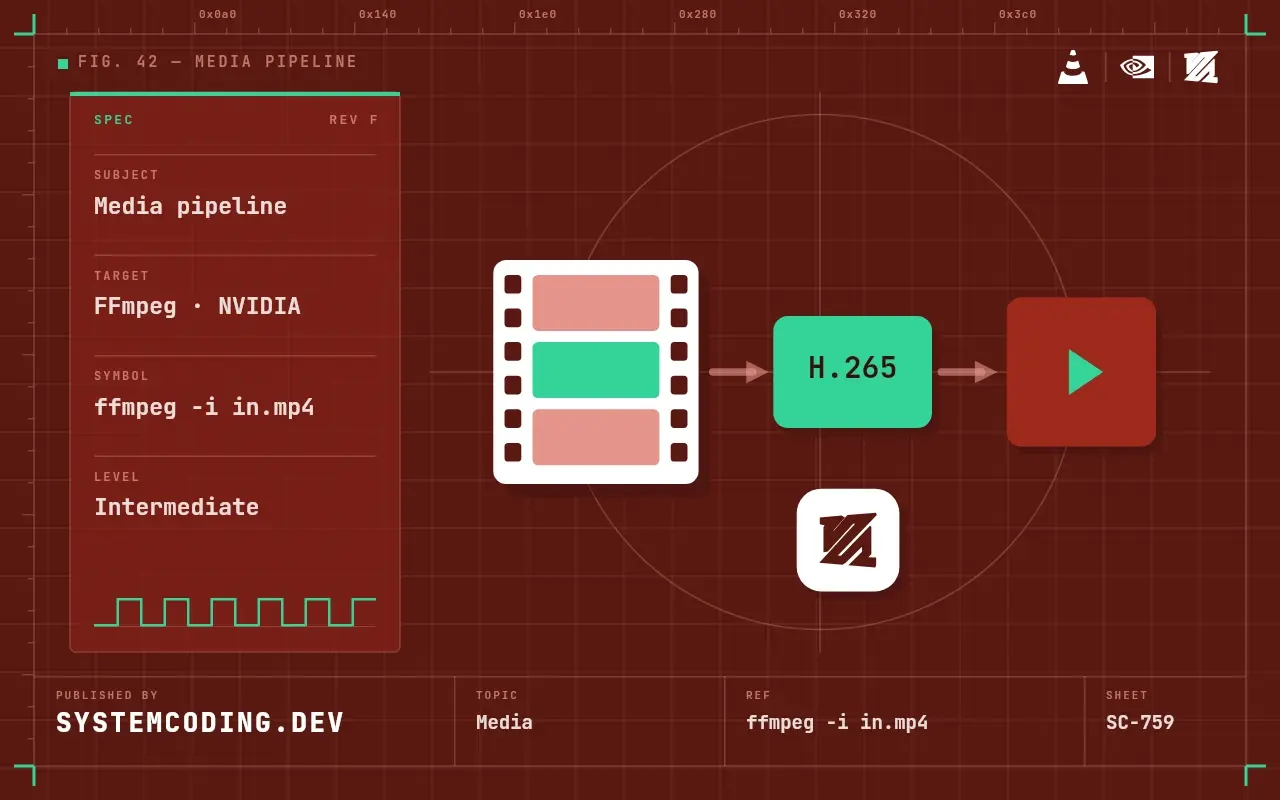
Encode with h264_nvenc and hevc_nvenc in FFmpeg 7.1 on NVIDIA GPUs: driver needs, a working command, quality settings, session limits and fixes.
Use FFmpeg 7.1 with h264_videotoolbox and hevc_videotoolbox on Apple silicon: quality and bitrate options, the hvc1 tag for QuickTime, and hardware decoding.
Learn the difference between FFmpeg hardware decoding with -hwaccel and hardware encoding with a codec such as h264_nvenc, and why mixing them costs copies.
Create a command pool, record a vkCmdFillBuffer into a command buffer, submit it with a fence, and read the result back from host-visible memory in C++.
Create a VkDevice in C++ with queue create infos, Vulkan 1.3 features and the swapchain extension, then fetch graphics and present queues.
List the GPUs a Vulkan instance can see, score them by type and limits, and find the queue families for graphics, presentation, compute and transfer in C++.
Create a VkInstance in C++ with the Khronos validation layer, check that the layer and extensions exist first, and read the result with a working error path.
Install the LunarG Vulkan SDK on Windows, Linux or macOS, set the environment, and check the loader, driver and validation layers with vulkaninfo and vkcube.
Learn how Vulkan differs from OpenGL in state, command recording, memory, synchronization and validation, and whether a beginner should learn it first.
We send one email when a new post is published. No spam.