
Systems Programming
How argc and argv Reach main in a C Program
The kernel copies argc and argv onto the new process's stack on execve, then startup code hands them to main. See the layout and measure it with a program.
6 min read
Everything you need to level up your coding skills.
The kernel copies argc and argv onto the new process's stack on execve, then startup code hands them to main. See the layout and measure it with a program.

Browse Linux source online with Elixir and index a local tree with cscope and make cscope, so you can find a symbol's definition and every caller in seconds.

A guided map of the Linux 6.12 kernel source tree, from arch/ to mm/ and net/, with when each top-level directory is worth opening and when it is not.
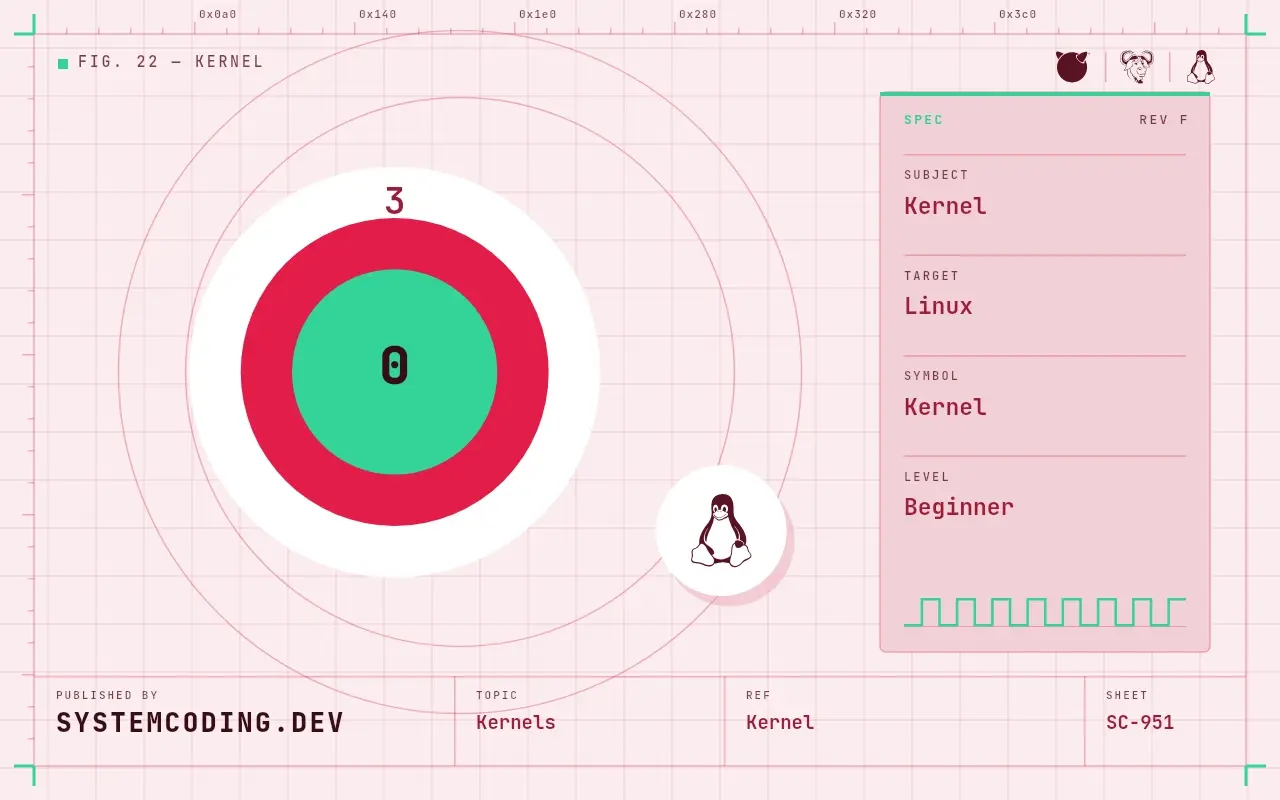
Monolithic, microkernel and hybrid kernels differ in how much runs at top privilege; this compares Linux, MINIX 3, seL4 and Windows NT with a decision table.
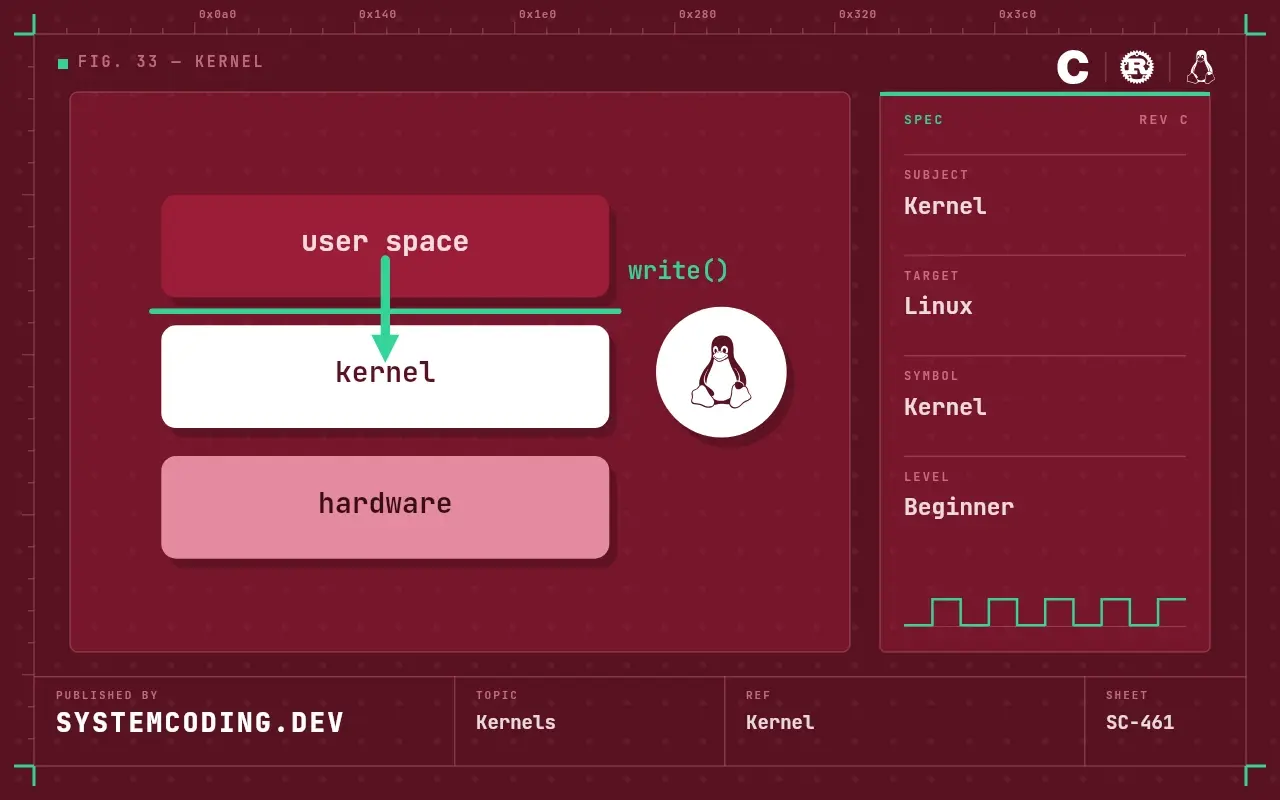
User space and kernel space are two privilege levels and two address ranges; code in one reaches the other only through system calls, faults and interrupts.
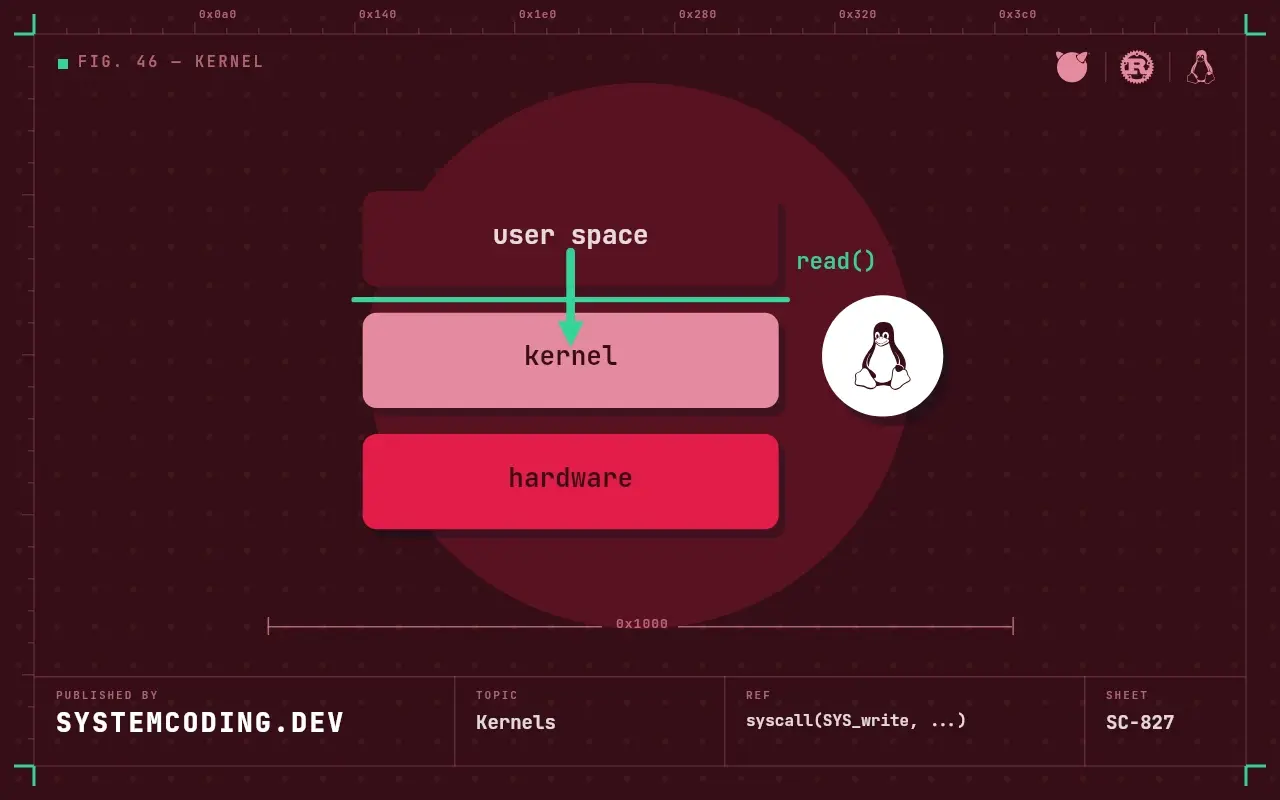
A kernel schedules processes, manages memory, drives devices and exposes system calls, and everything else on a Linux machine sits on those four jobs.
A file descriptor is a small integer that indexes a per-process table of open files. Learn what 0, 1 and 2 mean and how open and close hand numbers out.
A 1975 processor with 56 instructions still teaches what every modern CPU builds on: flags, addressing modes, the stack, memory-mapped I/O and interrupts.
See where C variables live: the stack for locals that vanish on return, the heap for data you free yourself. Learn the limits, costs and bugs of each.
Choose between float and double in C by precision, range, memory, SIMD width and hardware support, with accumulation examples and a decision table.
Compare floats in C with an absolute tolerance, a relative tolerance and a ULP distance, see where each fails, and combine them into one safe helper.
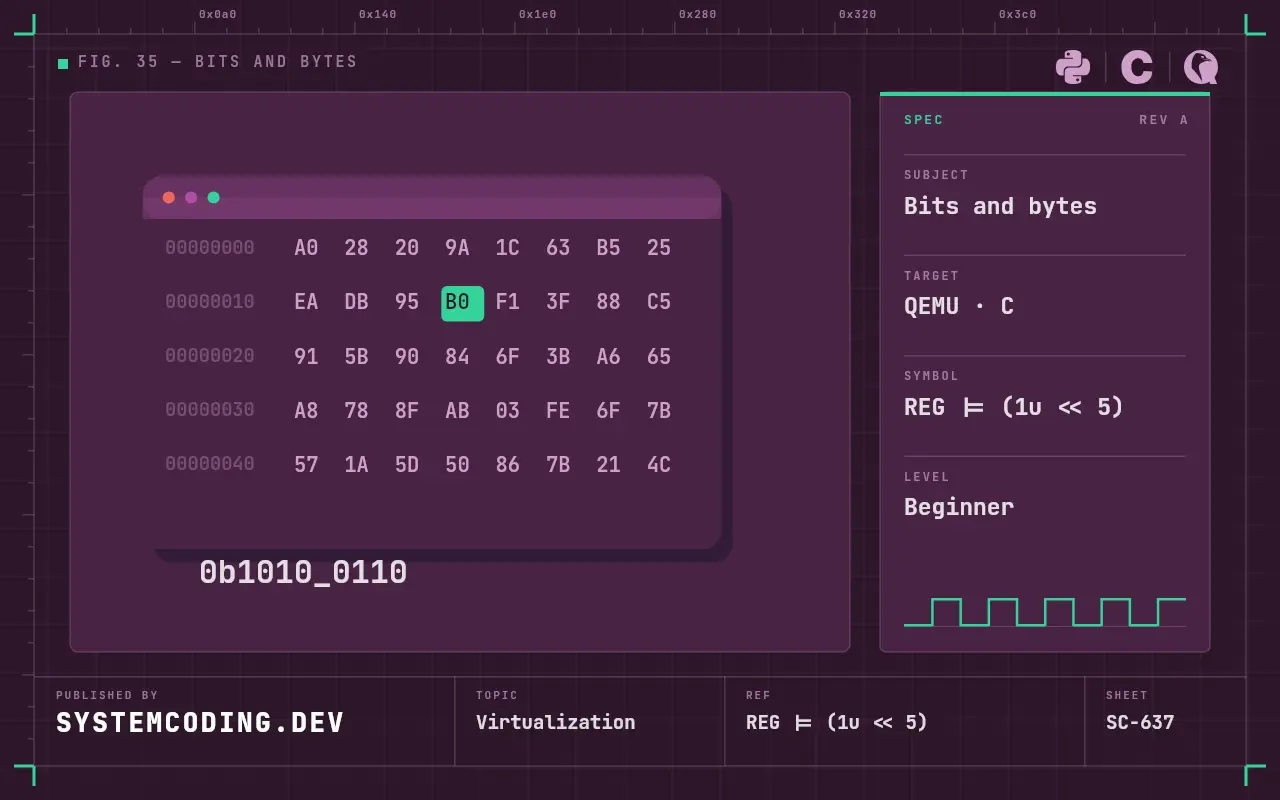
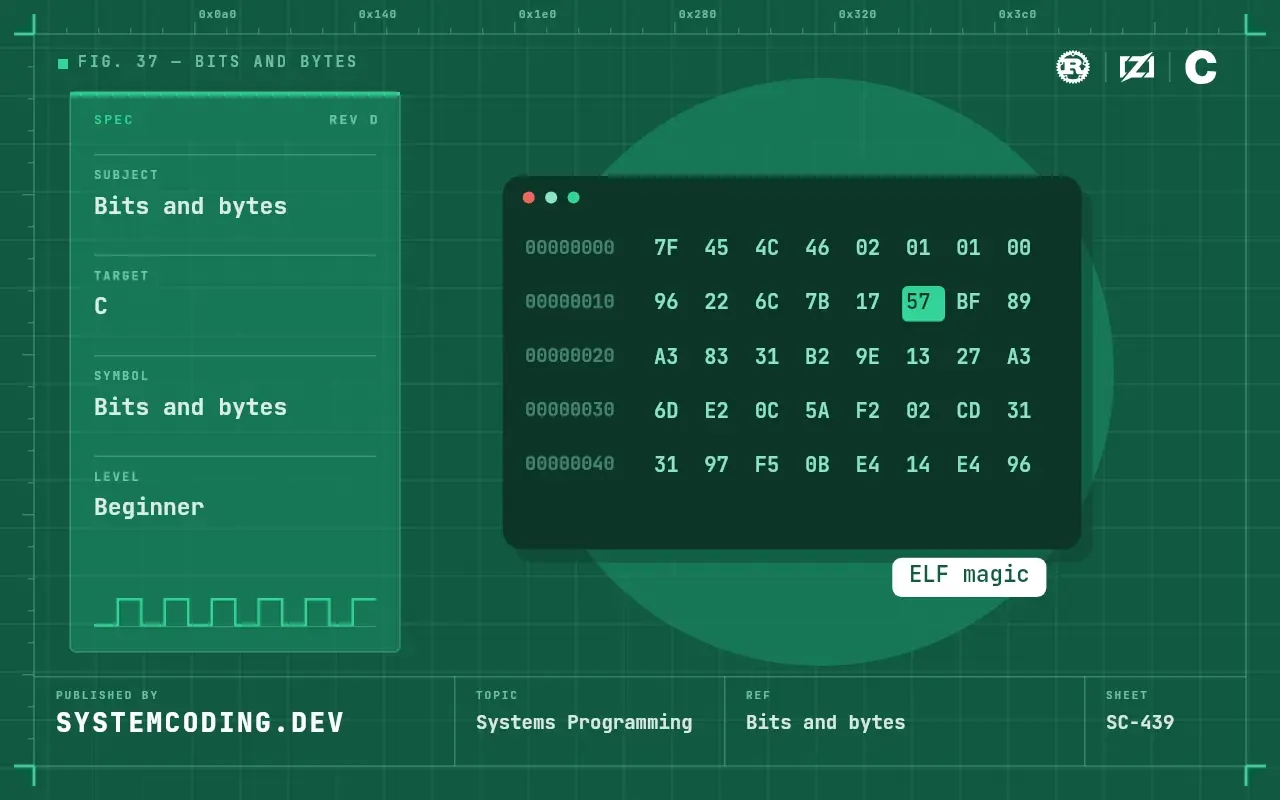
The number systems and bit operations behind every emulator: binary, hex, shifts, AND, OR, XOR, masks, signed bytes and sign extension, with C examples.
We send one email when a new post is published. No spam.