Hardware
What Synthesis, Place and Route and Bitstreams Actually Are
Understand the three stages that turn Verilog into an FPGA bitstream: synthesis to LUTs, place and route onto the fabric, and the configuration bits.
7 min read
Everything you need to level up your coding skills.
Understand the three stages that turn Verilog into an FPGA bitstream: synthesis to LUTs, place and route onto the fabric, and the configuration bits.
What $@, $<, $^ and $? mean inside a make recipe, with a Makefile that uses each one and the mistakes that make $< and $^ behave unexpectedly.
Choose an x86 assembler by platform, syntax, macro power and output formats. A decision table compares NASM, GNU as, MASM and FASM, with when not to pick each.
Follow a Cortex-M core from power-on to main: the two vector table words it fetches, the reset handler, and the C runtime setup that runs before your code.
Build and load a design for a Lattice ECP5 board such as the ULX3S with synth_ecp5, nextpnr-ecp5, ecppack and openFPGALoader, with an LPF constraint file.
What a make rule is made of: the target, its prerequisites and the recipe, how make walks the dependency graph and decides what is out of date.
Read x86 assembly in Intel and AT&T syntax with a six-rule translation method, a side-by-side table of operands and addressing, and a guide to choosing one.
Go from Verilog to a flashed iCE40 board with Yosys, nextpnr-ice40, icepack and iceprog, with each command, file and log line explained for a beginner.
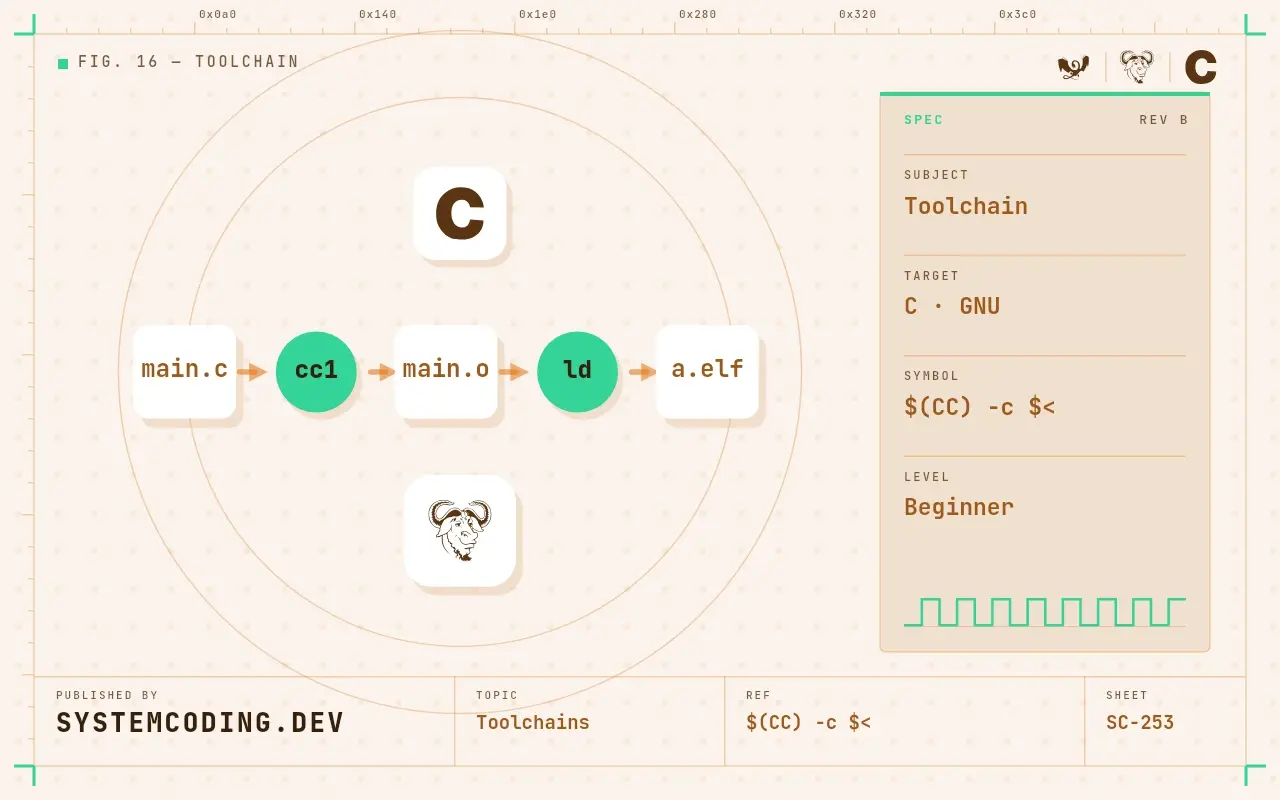
Write a working Makefile for a small C program with a compiler variable, flags, object files and a clean target, and see how make decides what to rebuild.
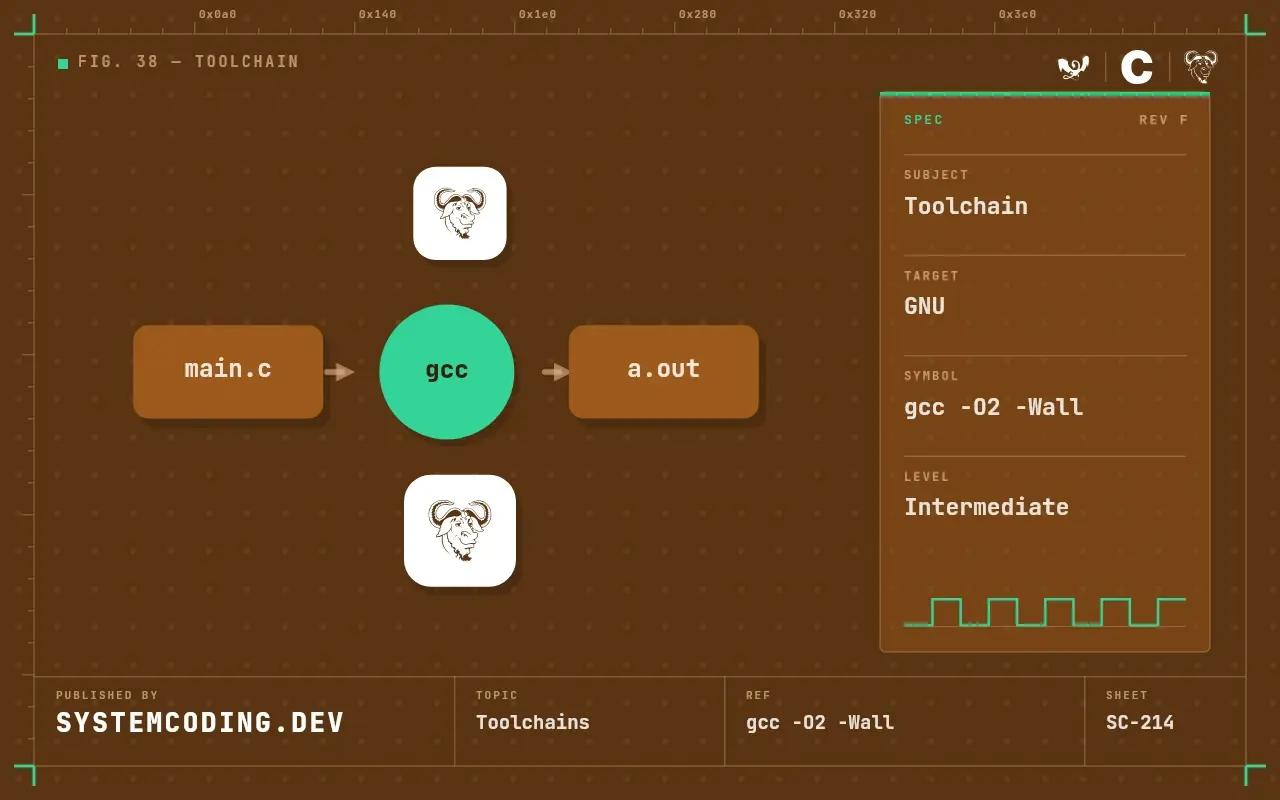
Write a pkg-config .pc file so users get the right include paths and link flags for your library with one command, and install it where pkg-config will find it.
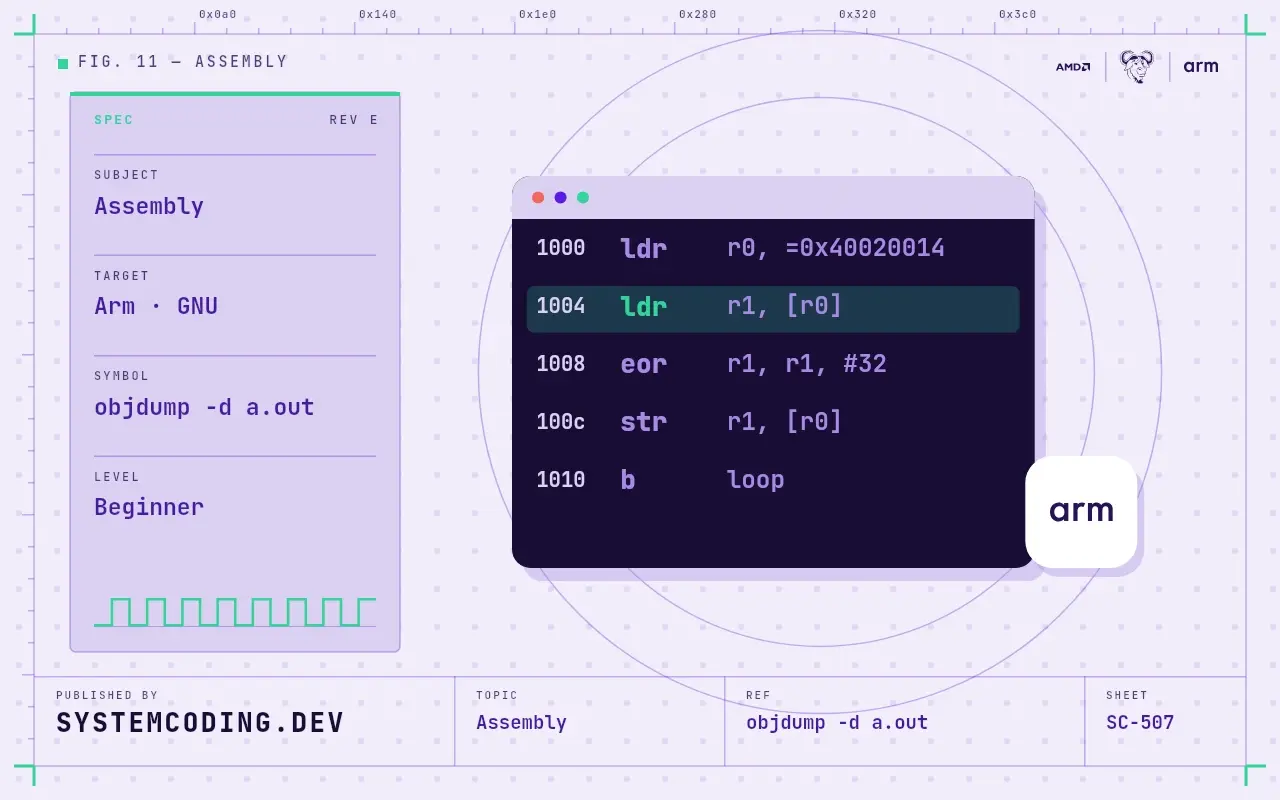
Disassemble a Cortex-M ELF with arm-none-eabi-objdump: pick sections and symbols, read the encoding columns, and spot literal pools and the vector table.
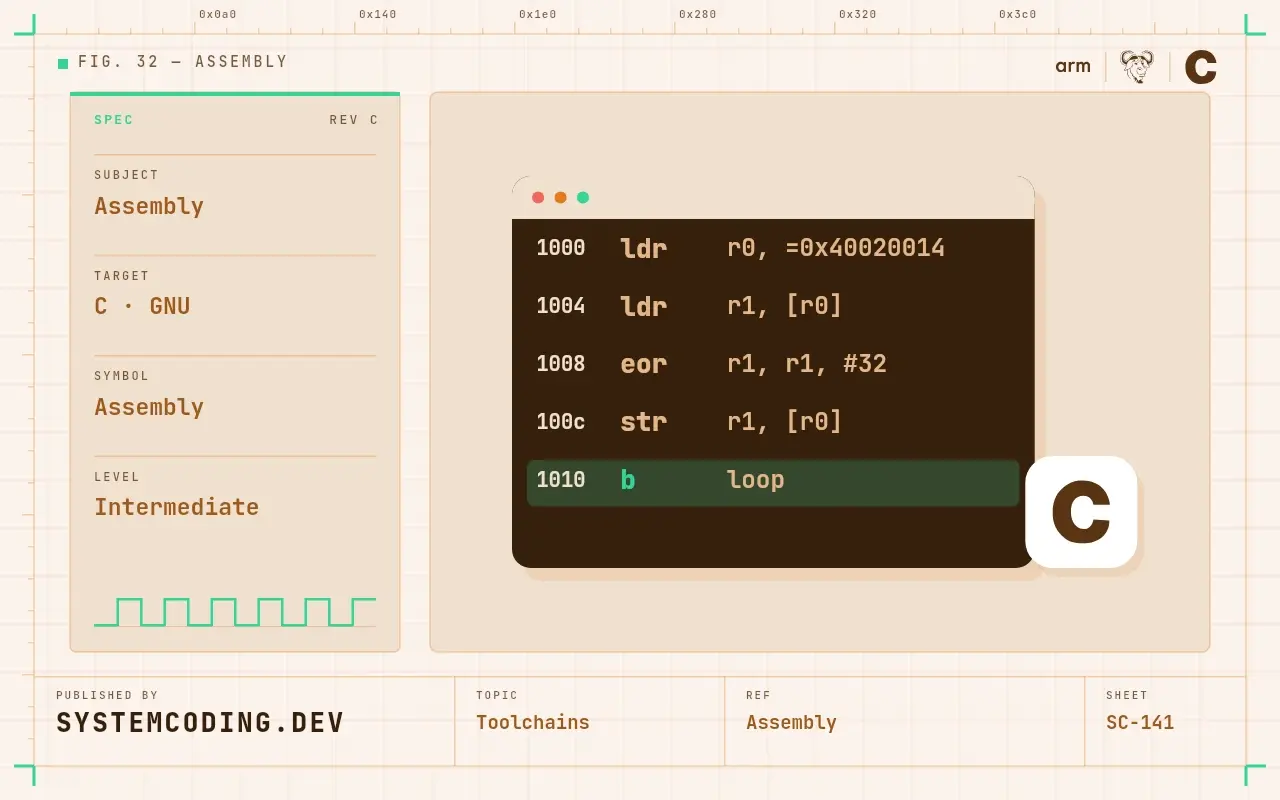
Keep a shared library's C interface stable across releases with opaque handles, size-tagged structs, explicit error codes and a versioned symbol set.
We send one email when a new post is published. No spam.