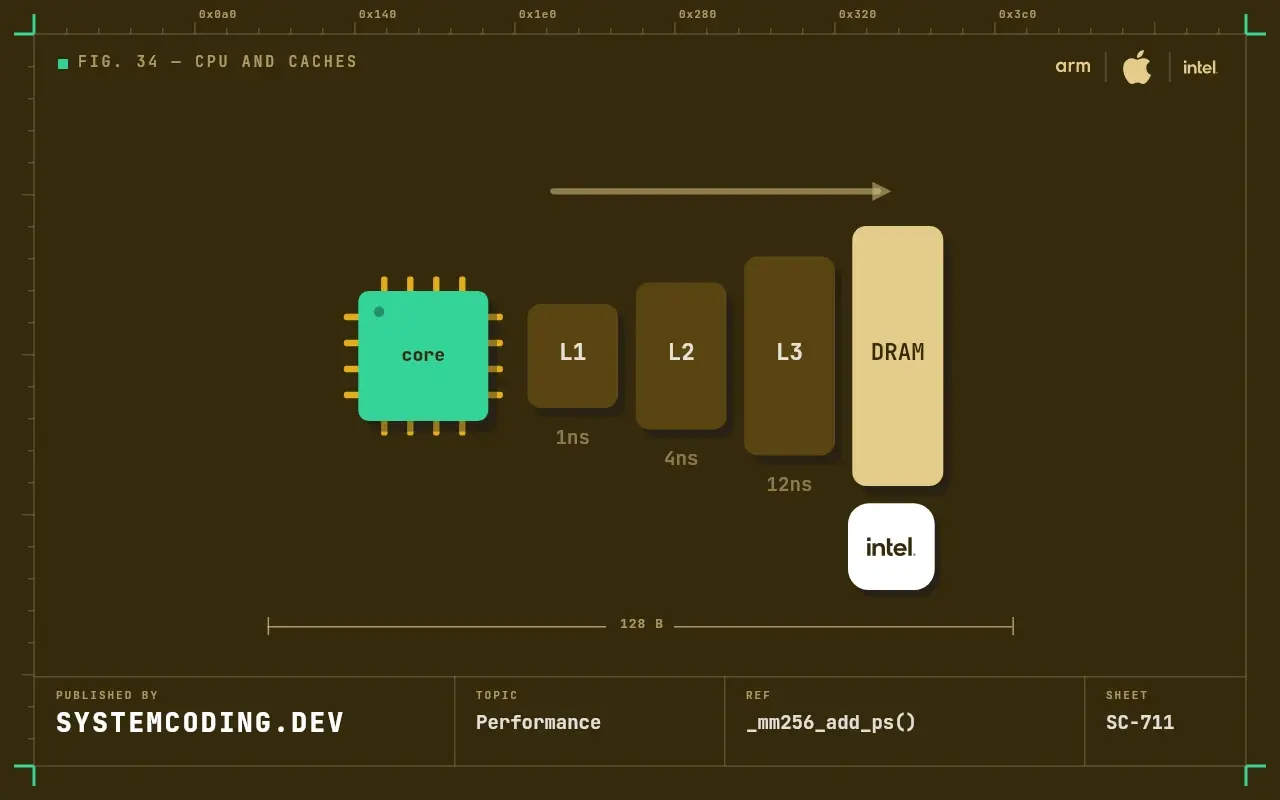
PerformanceGuide
The Complete Guide to SIMD Programming With Intrinsics
Learn SIMD from scratch with C intrinsics for SSE, AVX2 and ARM NEON: loads, arithmetic, masks, shuffles, reductions, tails, dispatch, testing and pitfalls.
26 min read
Everything you need to level up your coding skills.
Learn SIMD from scratch with C intrinsics for SSE, AVX2 and ARM NEON: loads, arithmetic, masks, shuffles, reductions, tails, dispatch, testing and pitfalls.
Learn the device tree language, how Linux uses it, and how to write, build, layer, validate and debug a board description from a blank file to a bound driver.
A full guide to x86 assembler syntax: Intel and AT&T operand order, NASM and GNU as directives, addressing modes, sections, macros, linking and porting.
Learn Eclipse ThreadX and RTEMS side by side: history, thread and sync APIs, memory pools, builds, configuration and how to choose between them.
Learn how Unix processes work in C on Linux: create them with fork, replace them with exec, collect them with wait, and end them cleanly with exit.
Learn GPIO from the pin up: modes, pull resistors, drive strength, interrupts, debouncing, alternate functions and loads, with STM32 code and cross-chip notes.
One driver for one chip, built from user-space probing to a regmap core with I2C and SPI front ends, IIO output, interrupts, error handling and debugging.
A working method for faster CUDA kernels: classify the bottleneck, fix memory access, tune occupancy and divergence, overlap transfers and verify each change.
Learn Verilog from a firmware engineer's view: wires, registers, clocked logic, state machines, testbenches and a first FPGA build, with worked code.
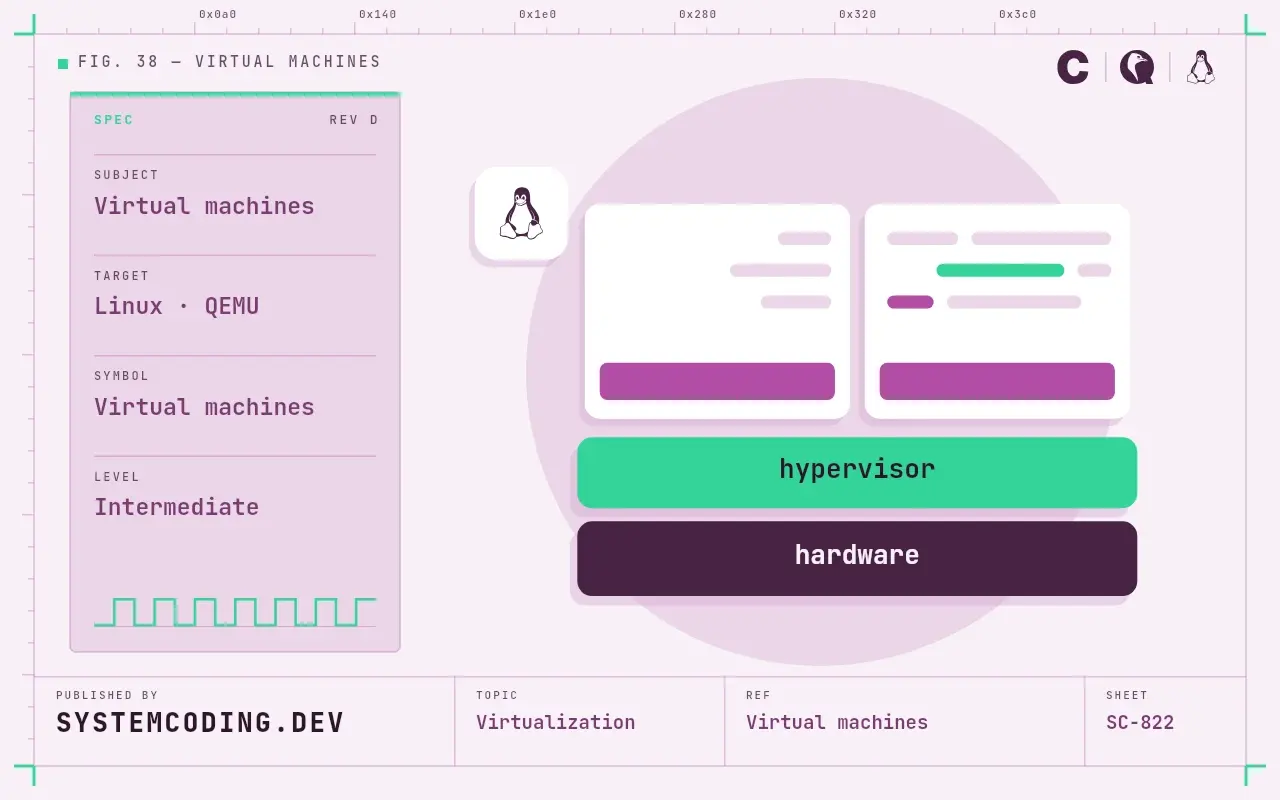
Build a working Linux container runtime in C: namespaces, a pivot_root rootfs, cgroup v2 limits, veth networking, seccomp, and what runc adds on top.
Build a Linux process sandbox layer by layer: drop root and capabilities, add namespaces, seccomp, Landlock, cgroups and systemd limits, then test what escapes.
Learn what undefined behavior is in C, why compilers exploit it, the common kinds with sanitizer output, and how to write, detect and fix code that avoids it.
We send one email when a new post is published. No spam.