Media
Codec vs Container: The Difference Explained Simply
A codec compresses audio or video and a container packages the compressed streams in one file. See the difference with ffprobe and learn to swap containers.
7 min read
Everything you need to level up your coding skills.
A codec compresses audio or video and a container packages the compressed streams in one file. See the difference with ffprobe and learn to swap containers.
eBPF runs small verified programs inside the Linux kernel. Learn the three parts that matter, programs, maps and the verifier, with a first complete example.
A race condition is a bug where the result depends on thread timing. See a lost-update counter in C with pthreads and how a mutex makes the update atomic.
Declare a function that calls exit or abort as noreturn so GCC drops dead code, silences false warnings and lays out the error path correctly.
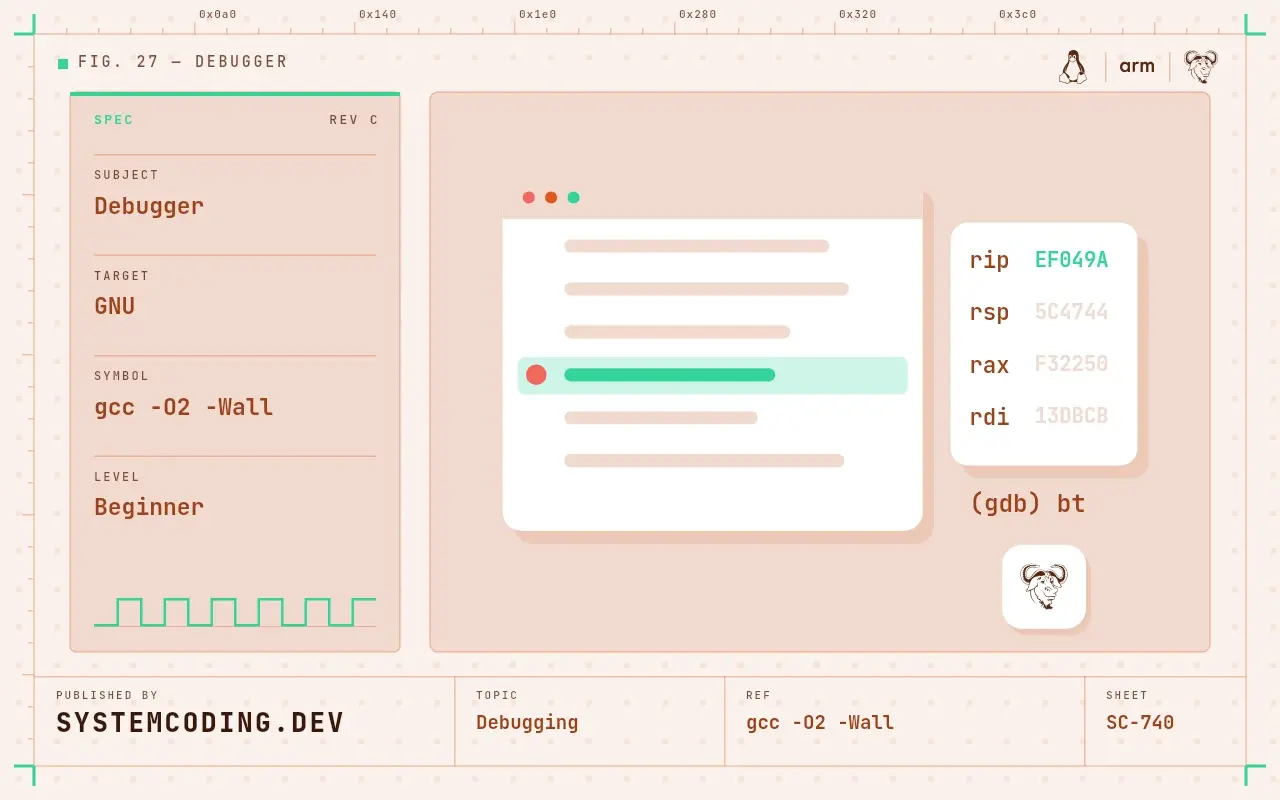
Build a C program with gcc -g, start it under GDB, stop at main, run it to the end and quit cleanly. The smallest complete session, with every output shown.
Pick up a recompiled load module in a running CICS region with CEMT SET PROGRAM NEWCOPY or PHASEIN, and learn why the old copy sometimes stays.
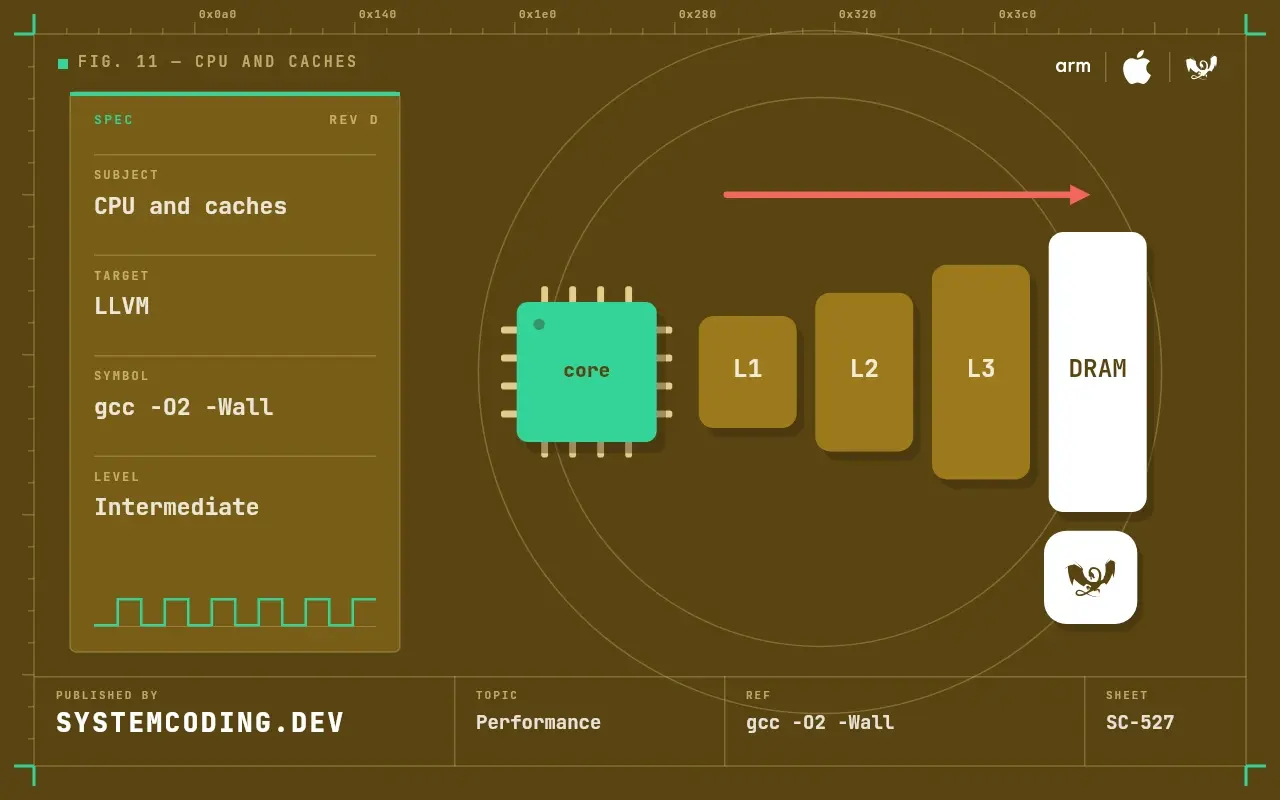
Rewrite float reductions, indirect gathers and early-exit loops in C so GCC and Clang vectorize them, using partial sums and blocked scans.
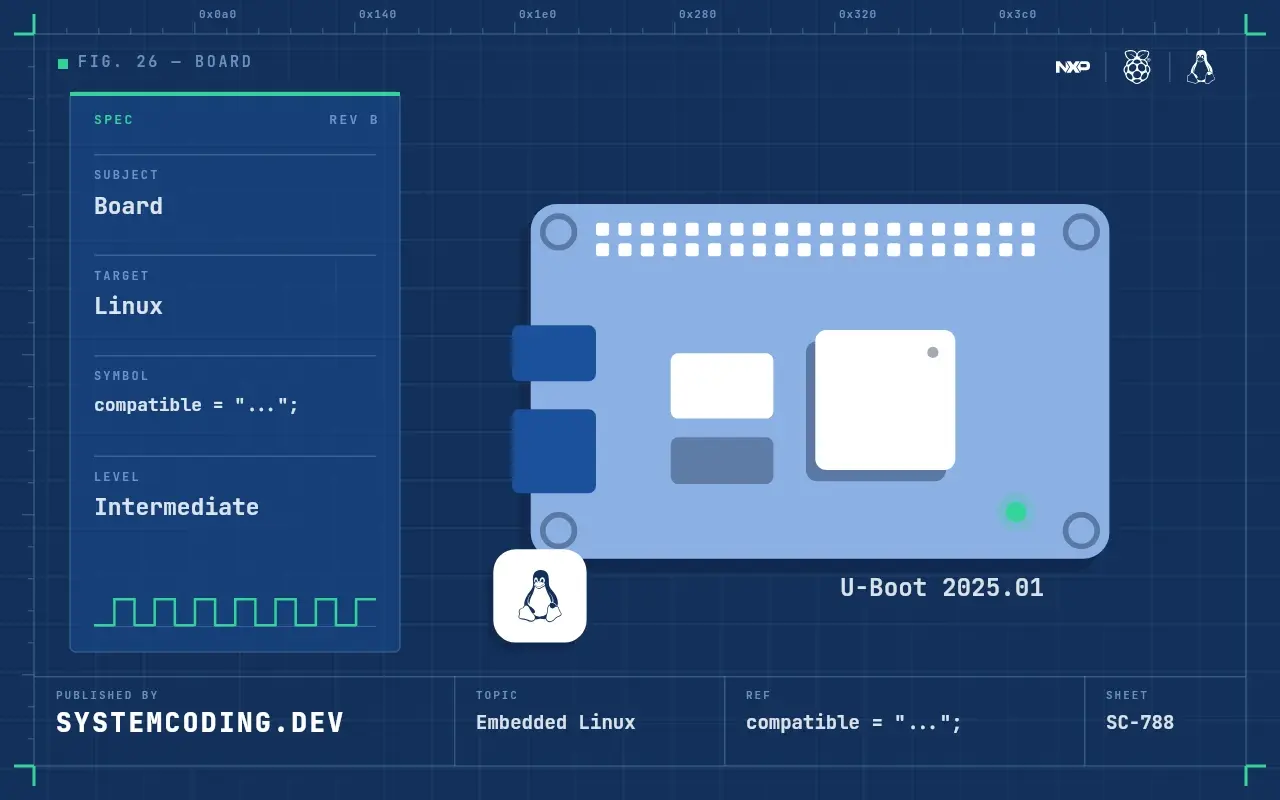
How a device tree compatible list is written, why the most specific name comes first, and how the kernel scores matches. Covers fallback strings and modaliases.
Put code, constants, variables and zeroed buffers into the right ELF sections in NASM and GNU as, and see how segments and permissions follow from them.
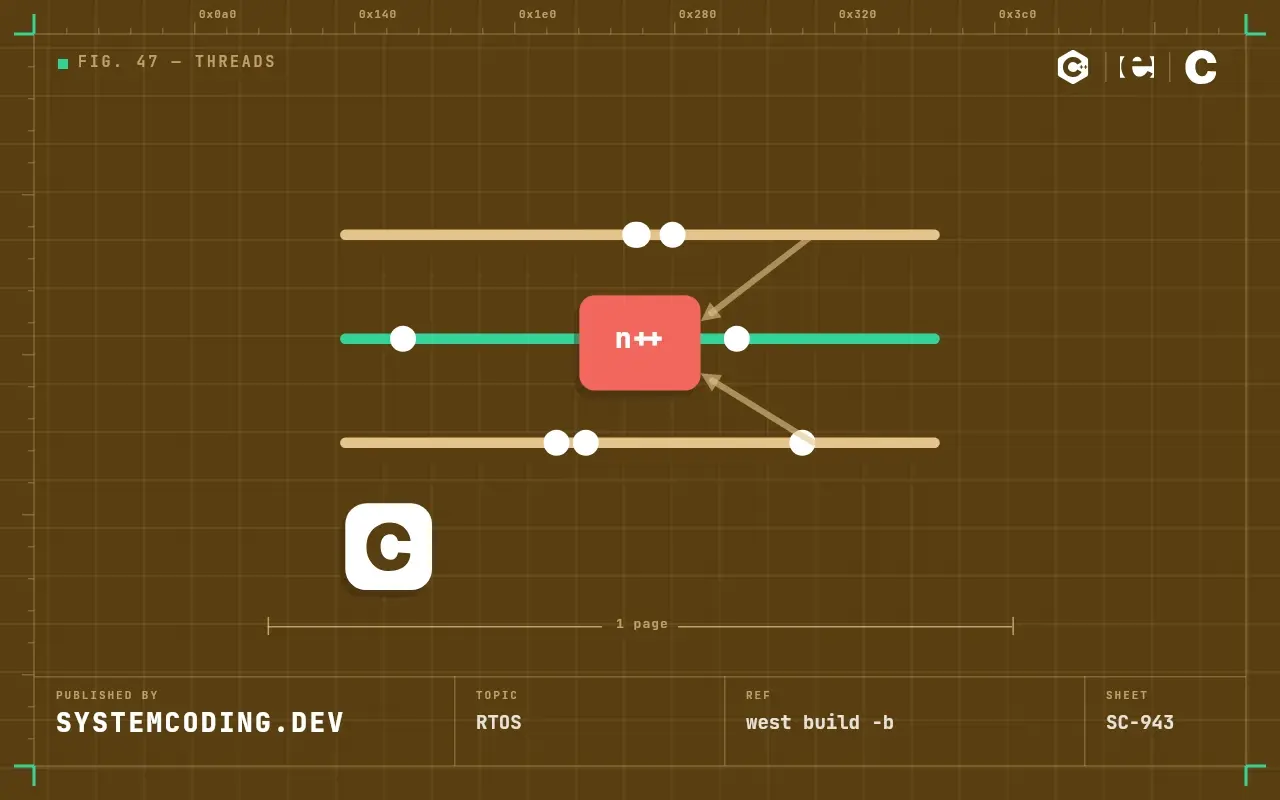
Send fixed-size messages between Zephyr threads and from ISRs with k_msgq, using K_MSGQ_DEFINE, put and get with timeouts, peek, purge and sizing rules.
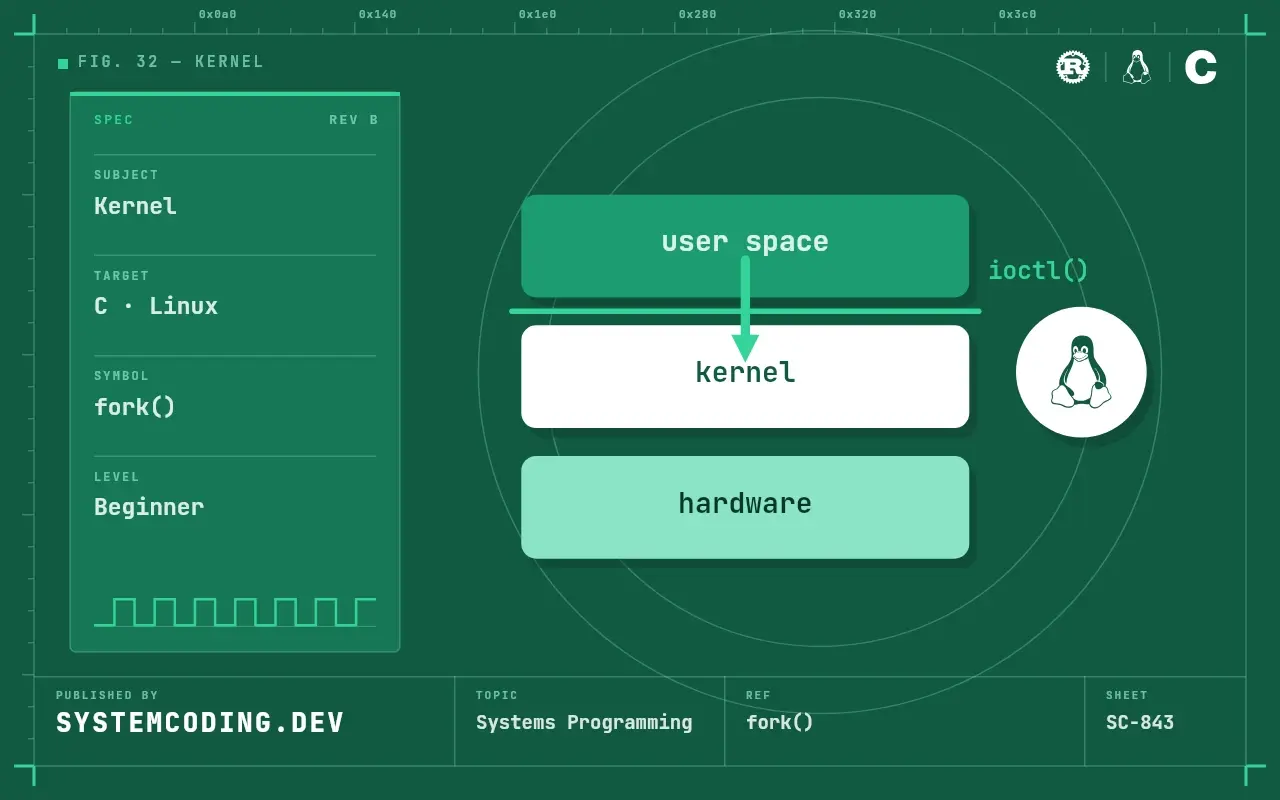
A process is a running program plus the kernel's record of it: a PID, a private address space and a table entry. See each part in C on Linux.
Write a complete GNU ld linker script for an STM32F407: MEMORY regions, vector table, .text, .data with AT>, .bss, heap and stack reserve, and link-time checks.
We send one email when a new post is published. No spam.