Embedded
Use nrfx Drivers Directly Without Zephyr Abstractions
Use nrfx drivers directly on an nRF52 in the nRF Connect SDK: enable the nrfx timer, connect its interrupt and run a periodic callback without Zephyr drivers.
6 min read
Everything you need to level up your coding skills.
Use nrfx drivers directly on an nRF52 in the nRF Connect SDK: enable the nrfx timer, connect its interrupt and run a periodic callback without Zephyr drivers.
Define a custom 128-bit GATT service on nRF52 with Zephyr: characteristic properties, read and write callbacks, notifications through the CCC and MTU limits.
Advertise a non-connectable BLE beacon on an nRF52 with Zephyr: advertising data, bt_le_adv_start parameters, intervals and an iBeacon payload.
Flash an nRF52840 Dongle over USB with nrfutil, the built-in bootloader and a DFU package, without a debug probe, then recover it back into bootloader mode.
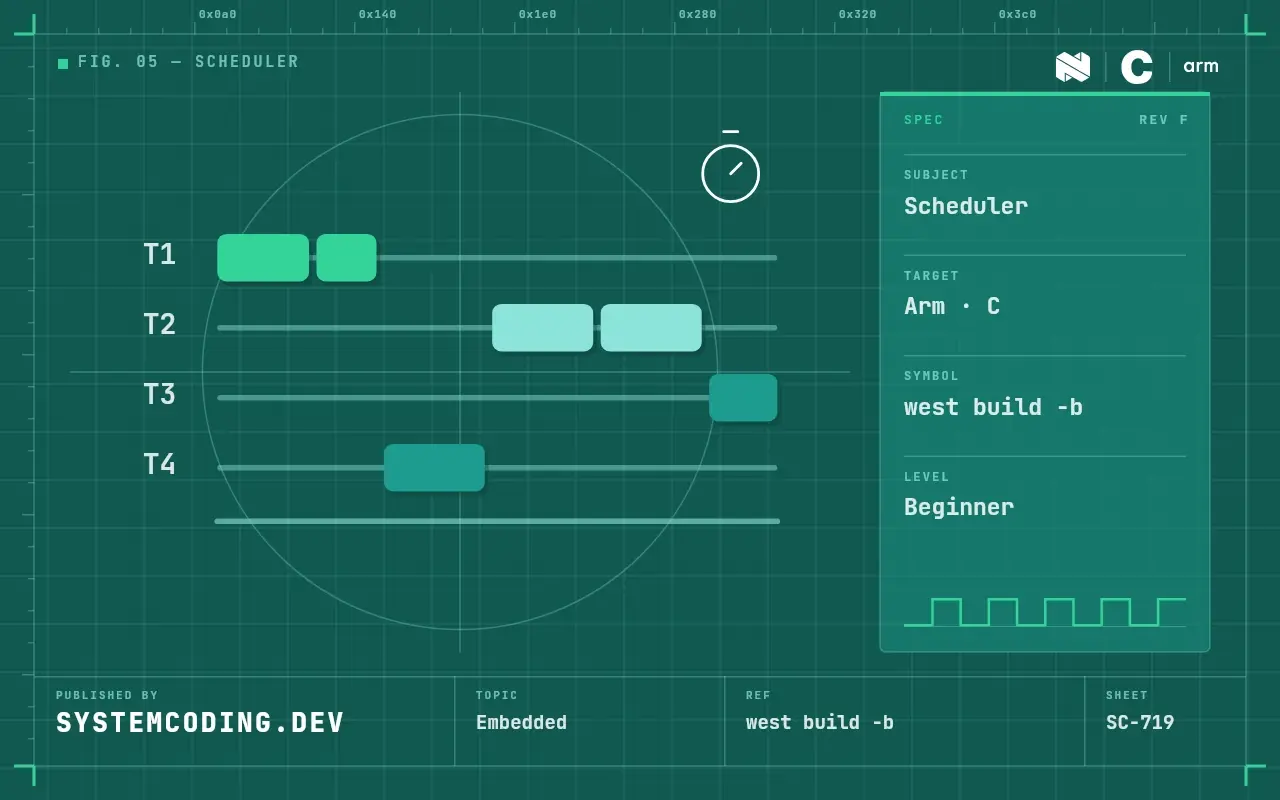
Install the nRF Connect SDK v2.9, build a Zephyr blinky for the nRF52840 DK with west build, flash it with west flash and read printk output over serial.
Compare the nRF52832, nRF52840 and nRF5340 for a new Bluetooth design: memory, radio modes, USB, crypto and cores, with a decision table and board targets.
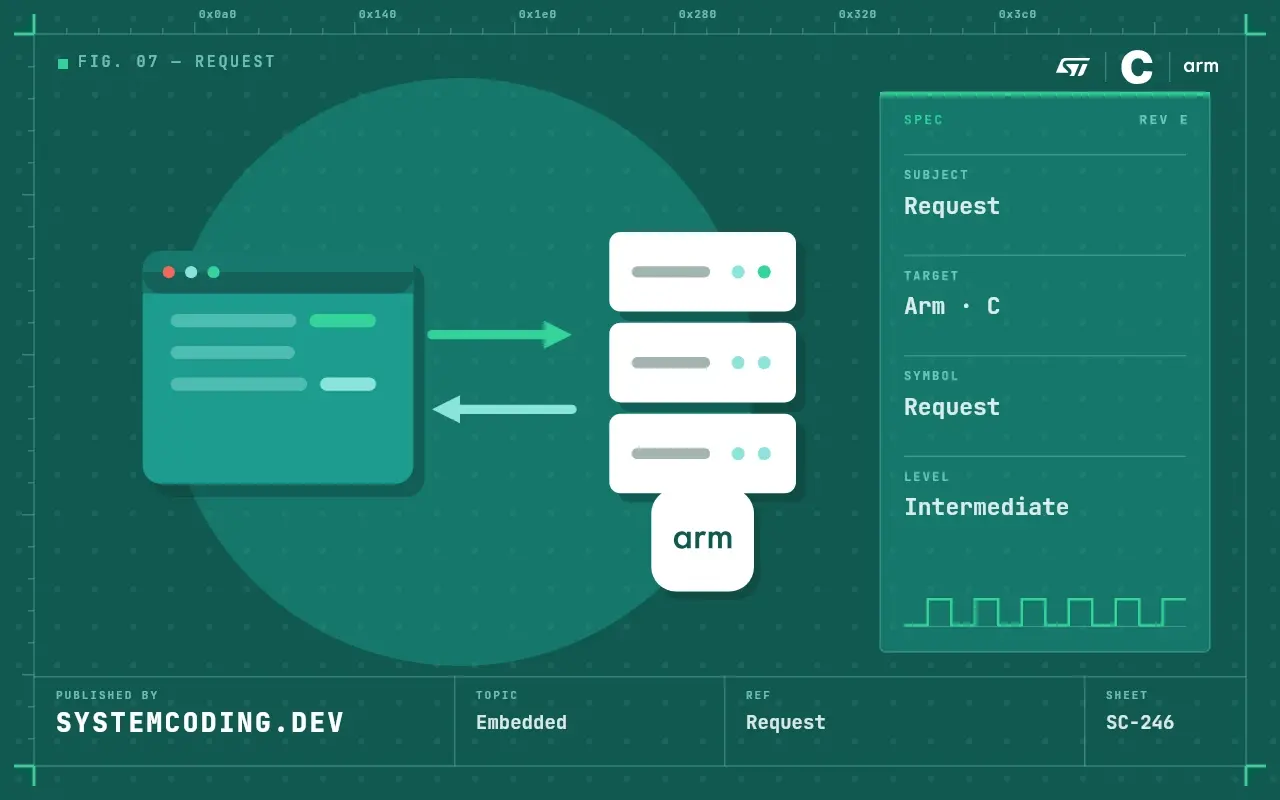
Use the DMAMUX request multiplexer on STM32G4 and H7 to connect any peripheral request to any DMA channel, plus request generators and synchronization.
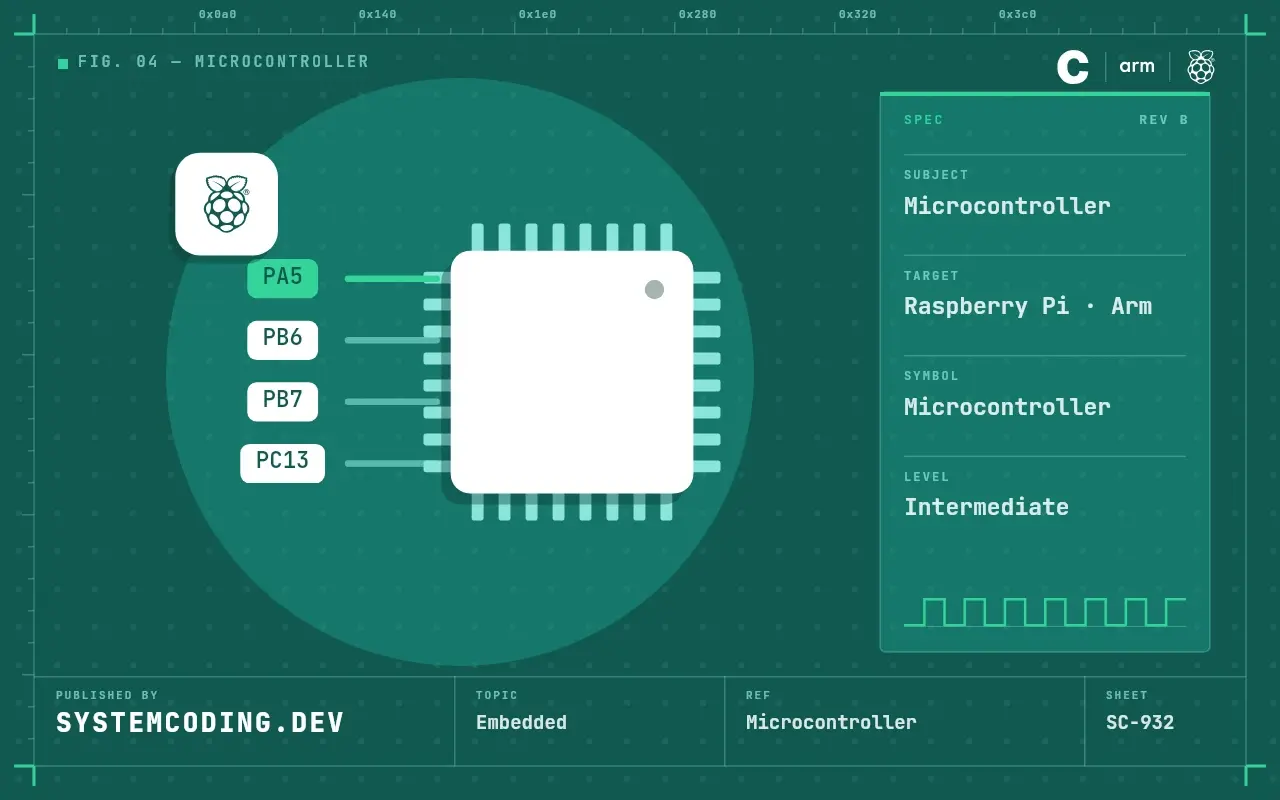
Chain RP2040 DMA channels with chain_to so one starts as the other finishes, and use a control channel to rotate through a list of buffers without the CPU.
Stream continuous data on an STM32 with circular DMA, process each half buffer on the half-transfer and complete events, and detect a missed deadline.
Configure and start an RP2040 DMA transfer with dma_channel_get_default_config and dma_channel_configure in Pico SDK 2.1, including fills, rings and completion.
Copy and fill memory blocks with the STM32F4 DMA2 controller using HAL_DMA_Start_IT or polling, with the FIFO setting it requires and the common mistakes.
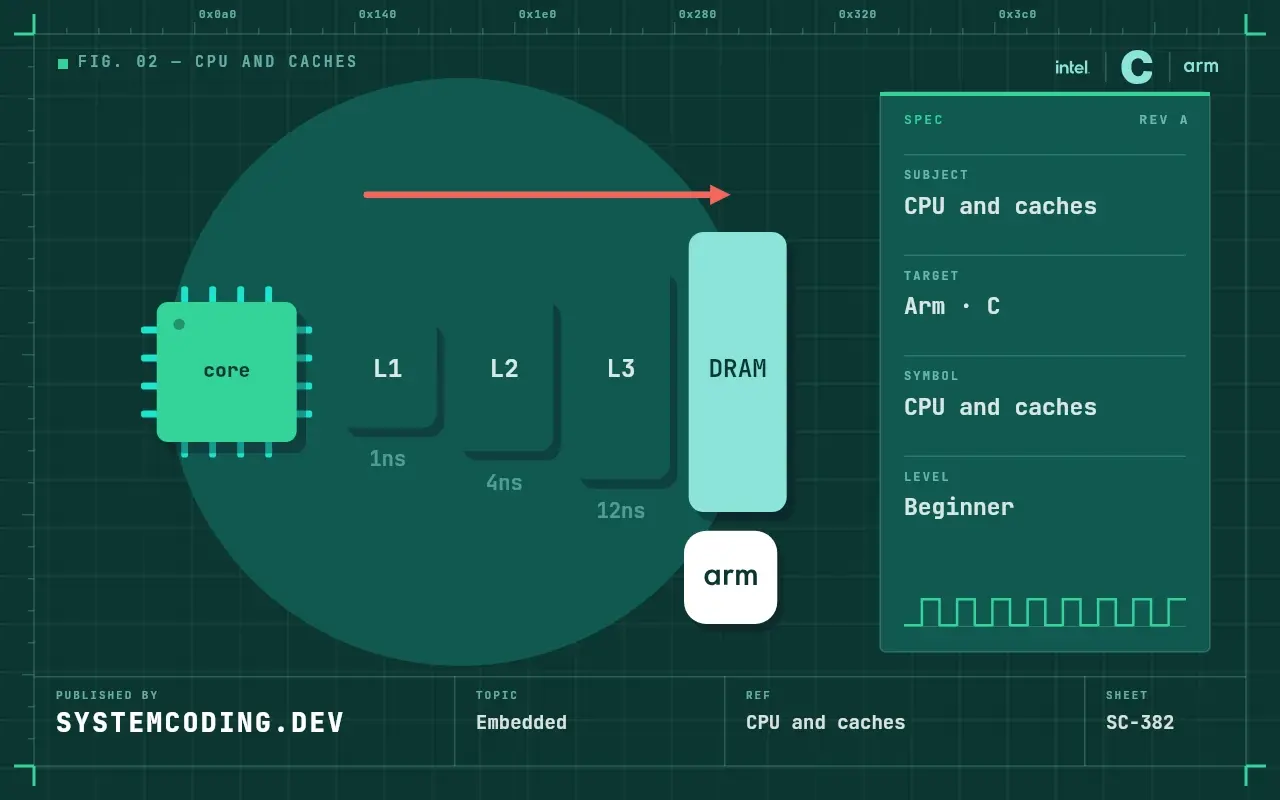
Understand what a DMA controller does, how it moves data as a bus master, and why one interrupt per buffer instead of per byte frees the CPU.
We send one email when a new post is published. No spam.