RTOS
Preemptive vs Cooperative Scheduling in Embedded Systems
Preemptive schedulers take the CPU away on their own, cooperative ones wait for a task to yield. Compare latency, safety and code cost with FreeRTOS examples.
6 min read
Everything you need to level up your coding skills.
Preemptive schedulers take the CPU away on their own, cooperative ones wait for a task to yield. Compare latency, safety and code cost with FreeRTOS examples.
Compare Linux IPC options for beginners: pipes, FIFOs, Unix sockets, shared memory, message queues, semaphores and signals, and which fits which job.
Use HAL_I2C_Mem_Read and HAL_I2C_Mem_Write on STM32 for sensor and EEPROM registers: shifted address, memory address size, timeouts and errors.
The kernel returns -errno in the result register, and the C library turns values from -4095 to -1 into errno and a return of -1. See the raw path and the rules.
Learn the HLASM instructions that move data between registers and storage, L, ST, LR, LA, STM and LM, with a traced example showing every register value.

Wrap per-thread atomics in crossbeam_utils::CachePadded to keep each on its own cache line in Rust, with size checks, scoped threads and a repr(align) option.
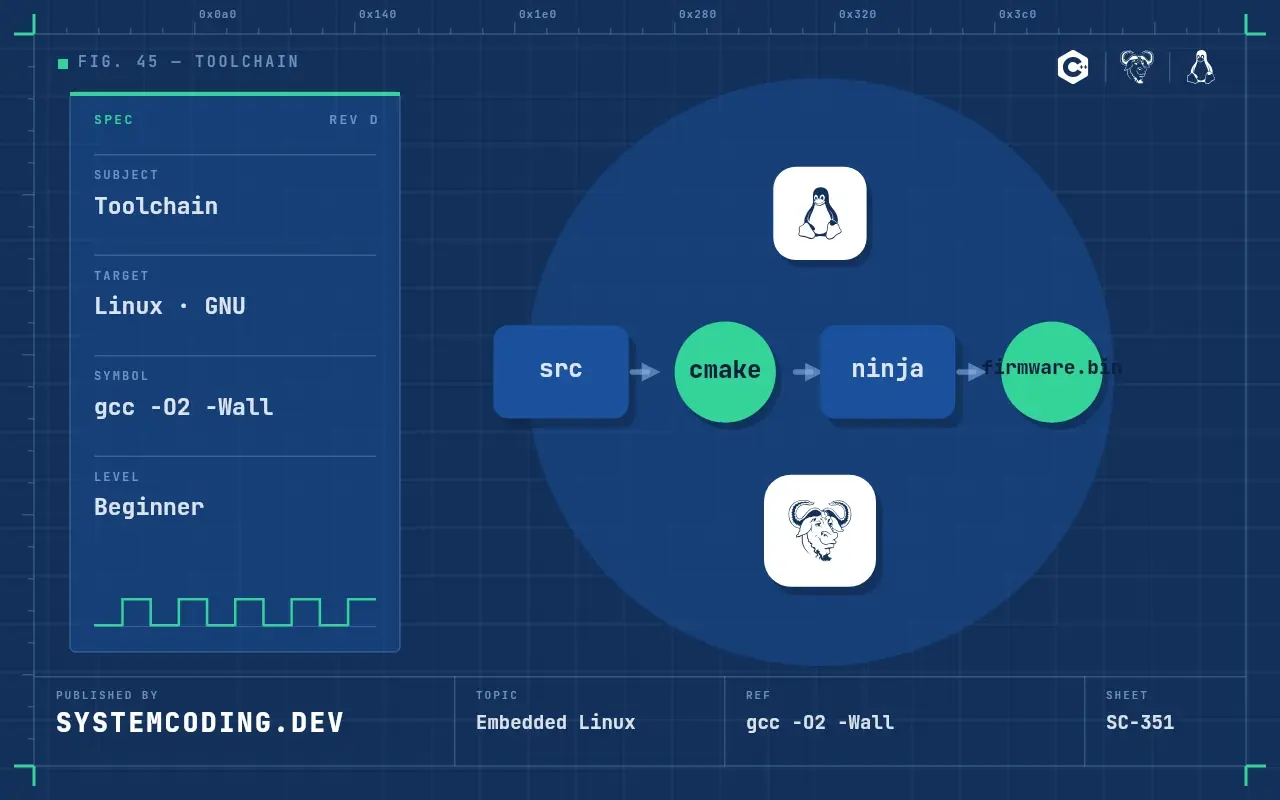
Read a Linux binary's CPU architecture, bit width, float ABI and loader with file, readelf -h, readelf -A and xxd, before you copy it to a board.
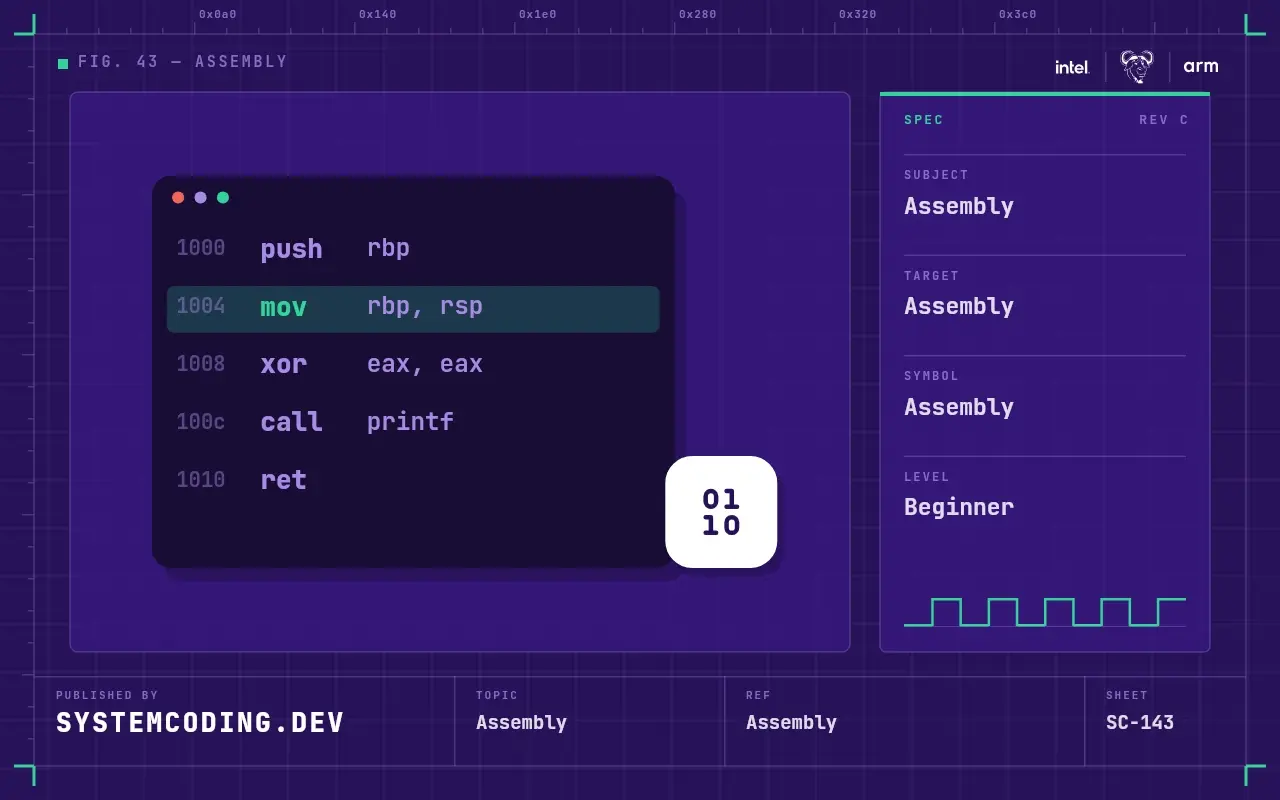
Learn the 6502 addressing modes: immediate, zero page, absolute, indexed with X and Y, indirect indexed and indexed indirect, with traced examples.
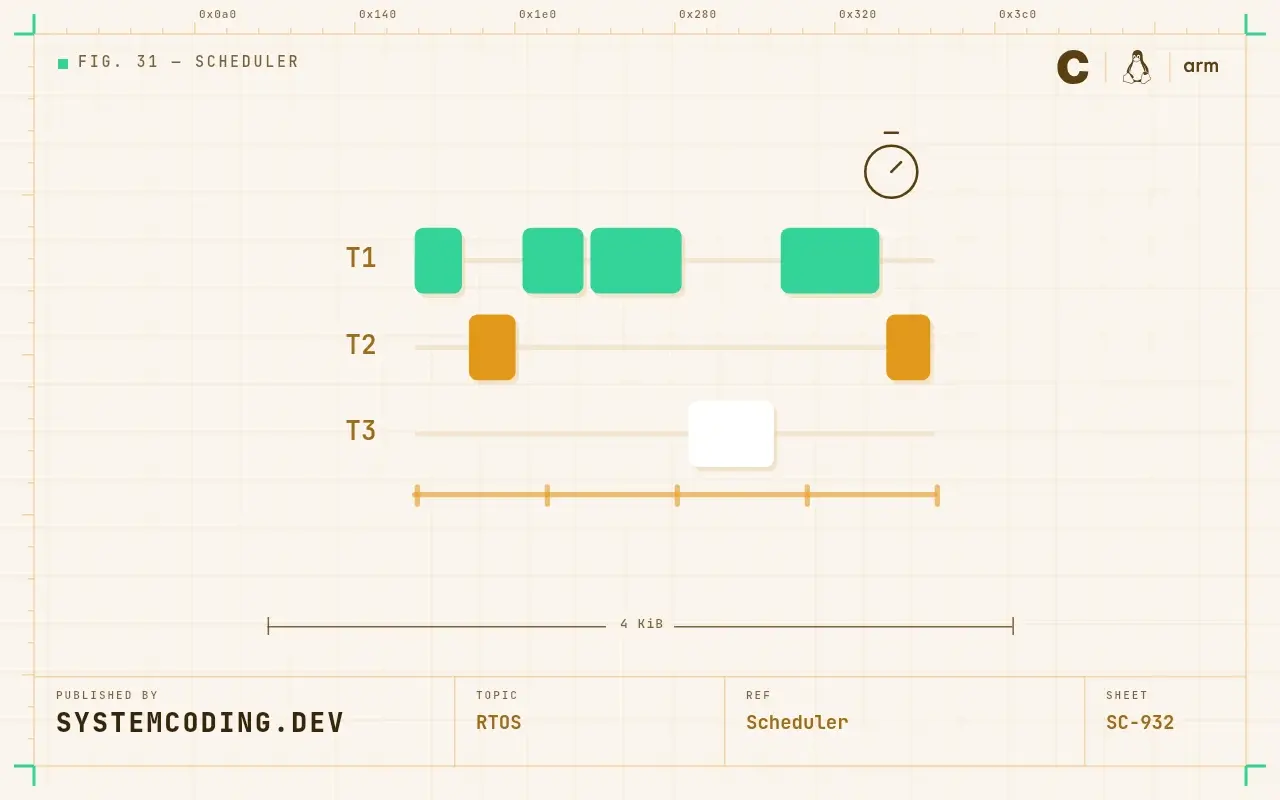
Follow a FreeRTOS context switch on Cortex-M4F from the yield request to the PendSV handler, and see which registers hardware stacks and which software saves.
Get memory aligned to 32, 64 or 4096 bytes with posix_memalign or C11 aligned_alloc, learn their rules and error codes, and pick the right one for SIMD or DMA.
Create an I2C bus with i2c_new_master_bus, attach a device with i2c_master_bus_add_device, and read registers with i2c_master_transmit_receive in ESP-IDF 5.3.
Run a program under strace, read each line as name, arguments and result, then filter, follow child processes and write the trace to a file to find real faults.
We send one email when a new post is published. No spam.