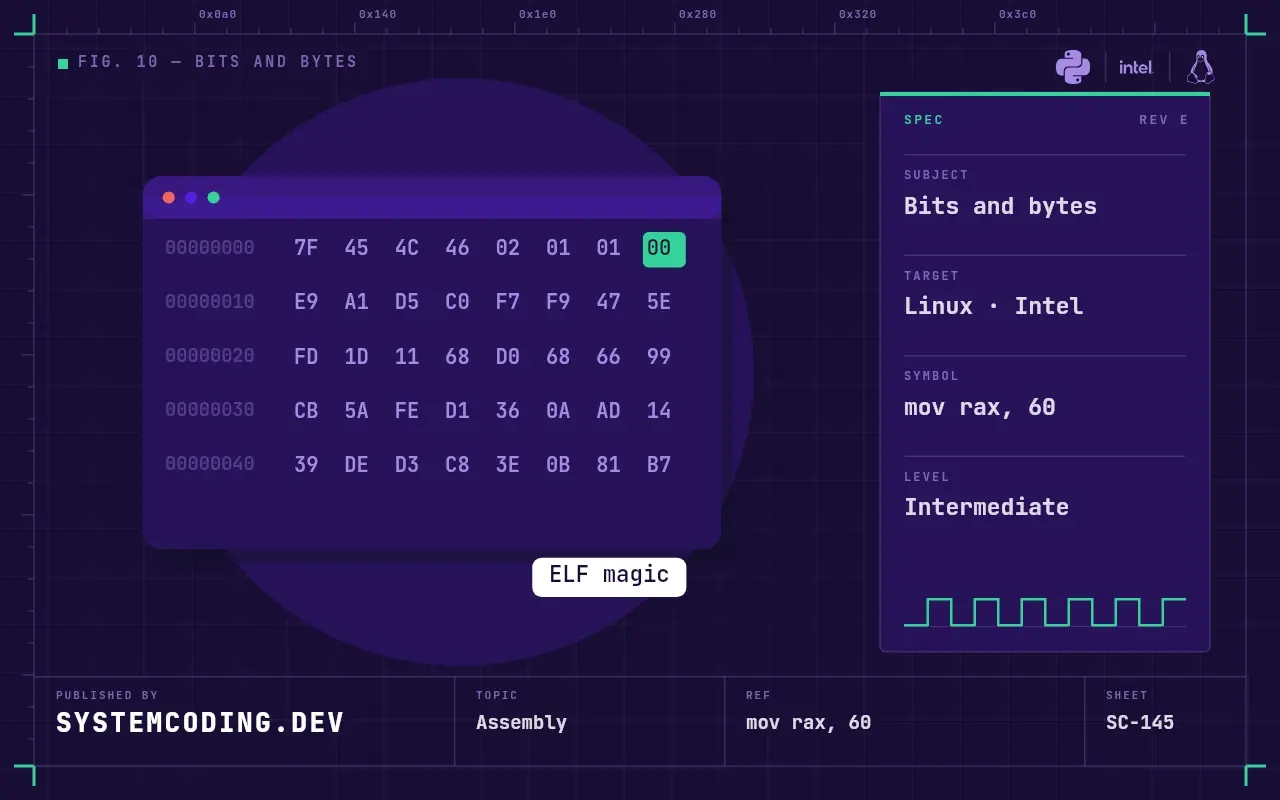
Assembly
Inside the 512-Byte MBR: Boot Code, Partition Table and Signature
Decode the 512-byte master boot record field by field, from 446 bytes of boot code to four 16-byte partition entries and the 0xAA55 signature, with xxd output.
5 min read
Everything you need to level up your coding skills.
Decode the 512-byte master boot record field by field, from 446 bytes of boot code to four 16-byte partition entries and the 0xAA55 signature, with xxd output.
Learn how I2C and SPI work on the wire, what each costs in pins and speed, and how Linux splits each into controller drivers and client drivers for developers.
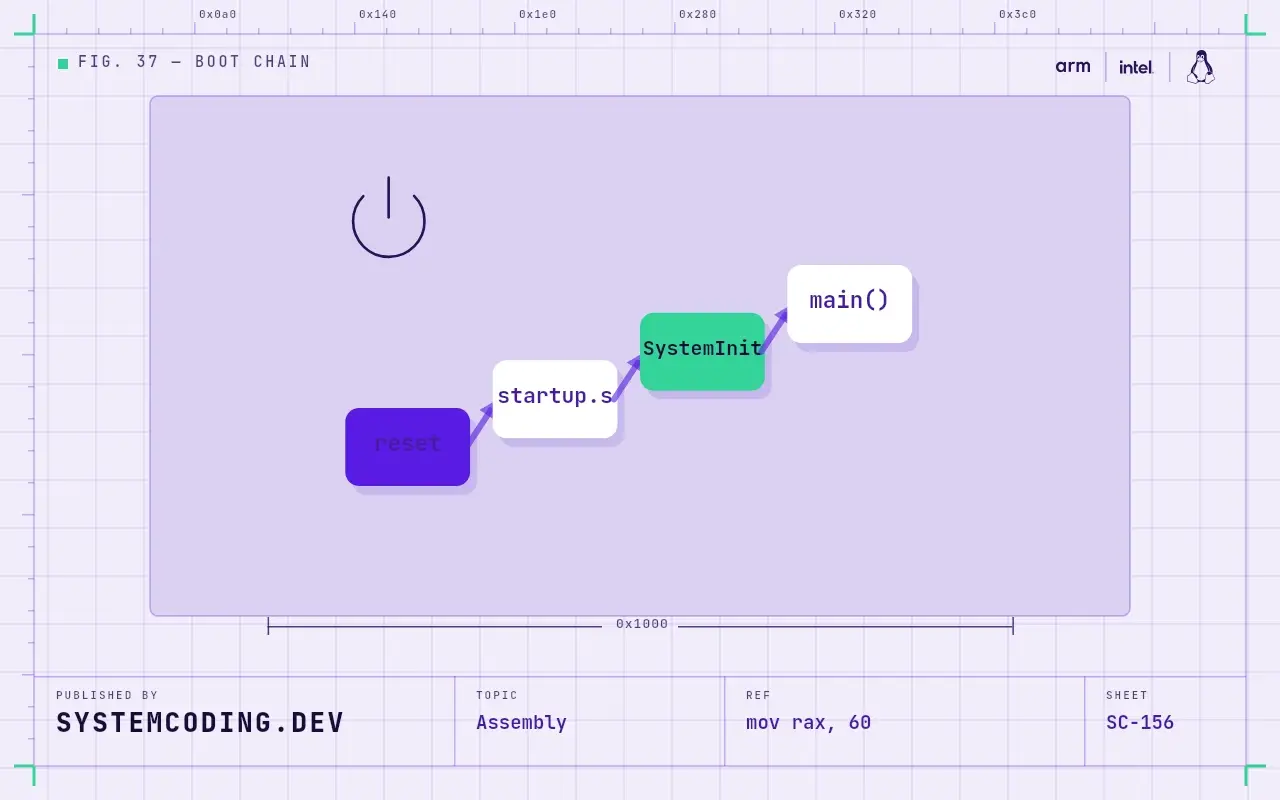
Print strings and hex values in 16-bit real mode with BIOS int 0x10, using teletype function 0x0E and write-string function 0x13, in reusable NASM routines.
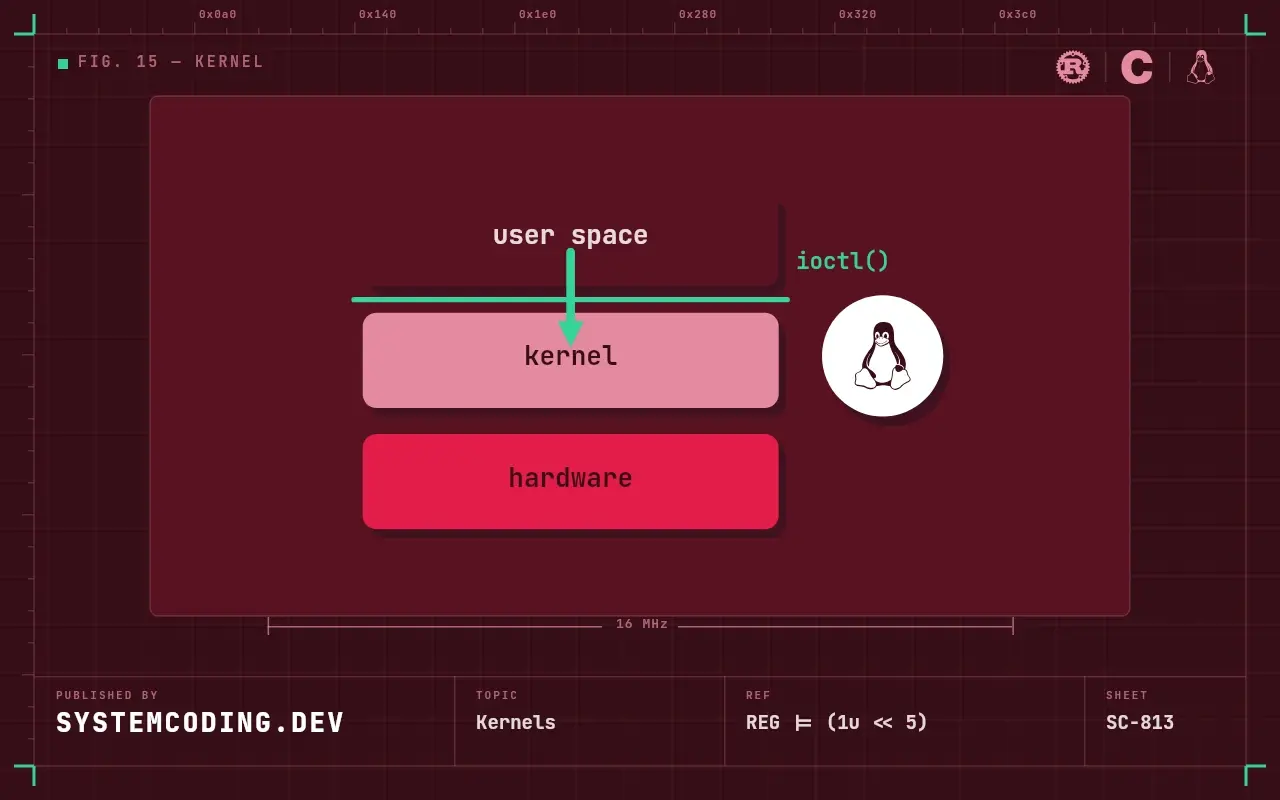
Learn what register_filesystem does, which file_system_type fields matter, how mount finds your type by name, and how to unregister it safely on module unload.
Boot a 512-byte boot sector in QEMU 9 with a raw drive option, then attach GDB to the emulated CPU to break at 0x7C00 and step real-mode instructions.
Build a tiny kernel filesystem that exposes one read-only file, using simple_fill_super, get_tree_nodev and simple_read_from_buffer from libfs on Linux 6.12.
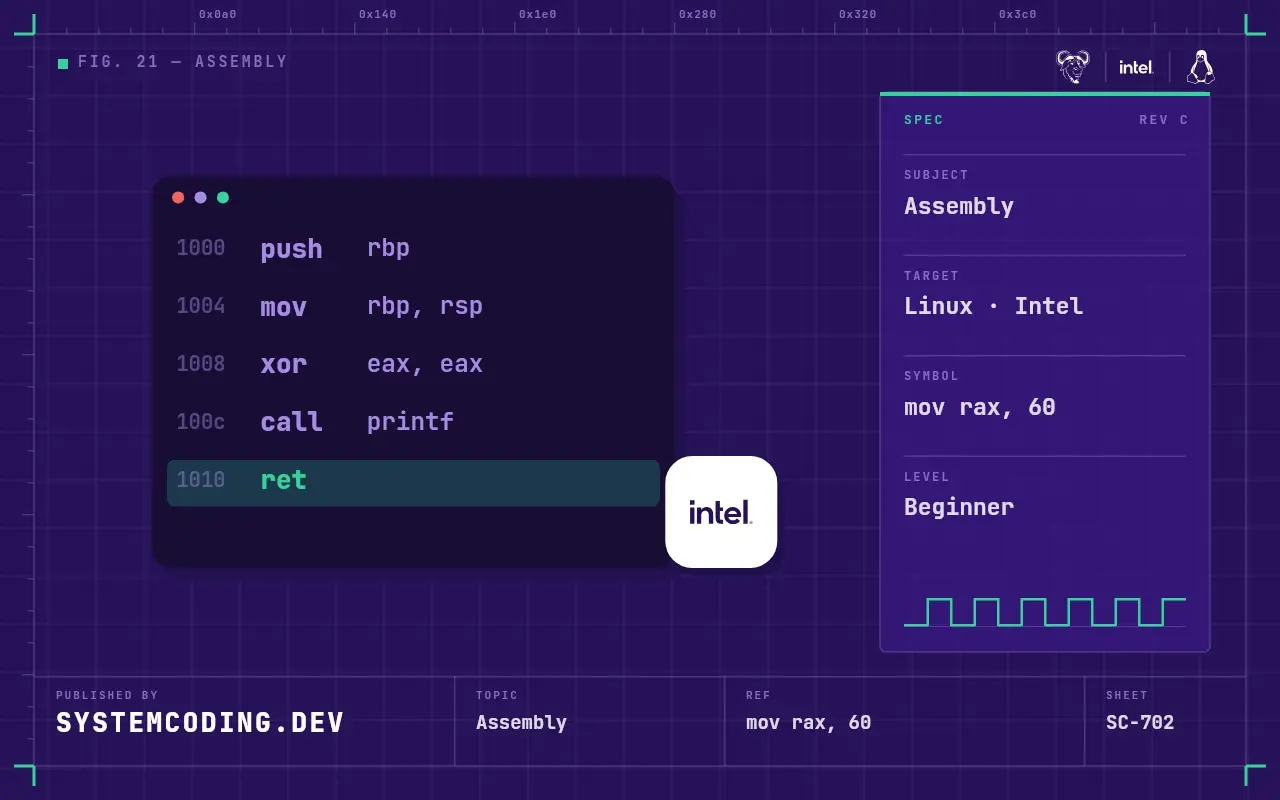
Write a 512-byte boot sector in NASM that sets up segments and a stack, prints a string with BIOS int 0x10 and ends with the 0xAA55 signature, line by line.
Create an ext4 filesystem inside a plain file, read its superblock with dumpe2fs, and walk inodes and directories with debugfs without mounting anything.
Choose between a FUSE daemon and an in-kernel filesystem by weighing crash safety, speed, tooling and boot needs, with a decision table and a libfuse sketch.
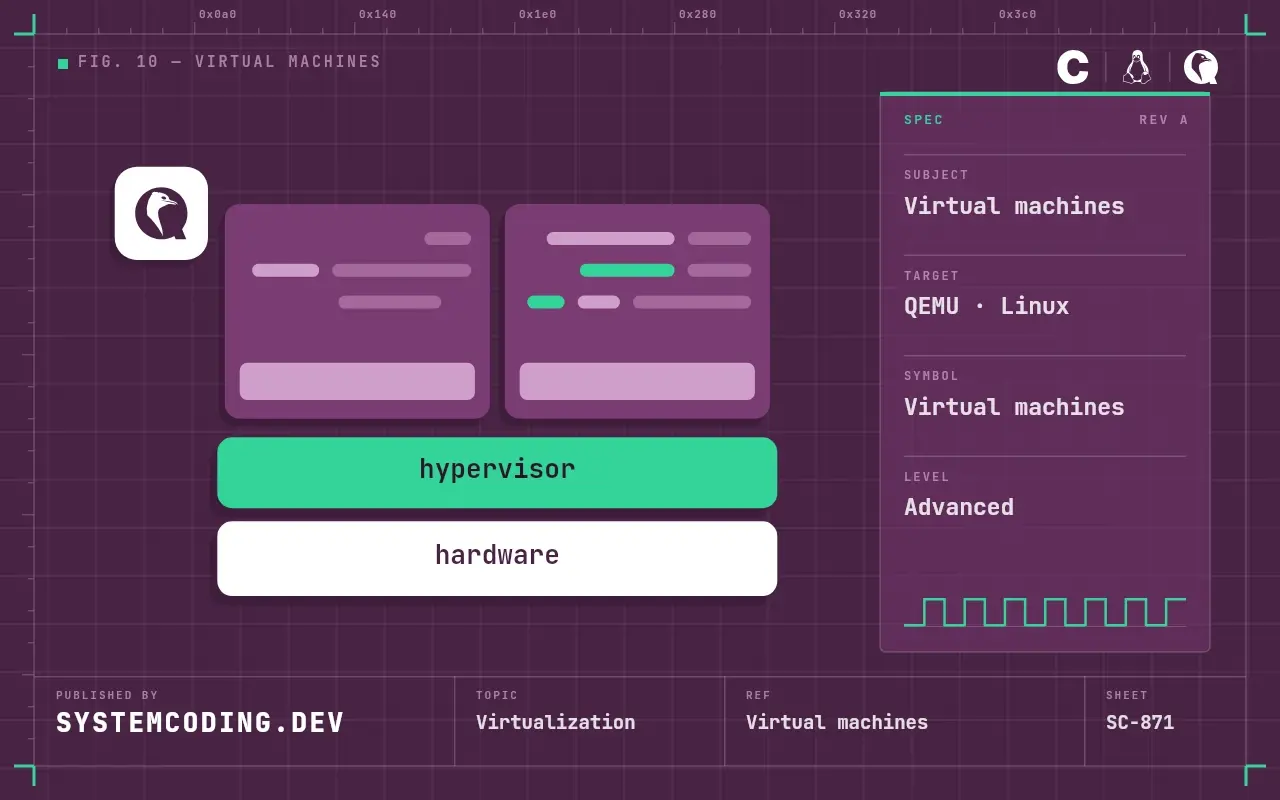
Register guest RAM, ROM and holes with KVM_SET_USER_MEMORY_REGION, covering slot rules, read-only slots, dirty logging and slot removal, with C code.
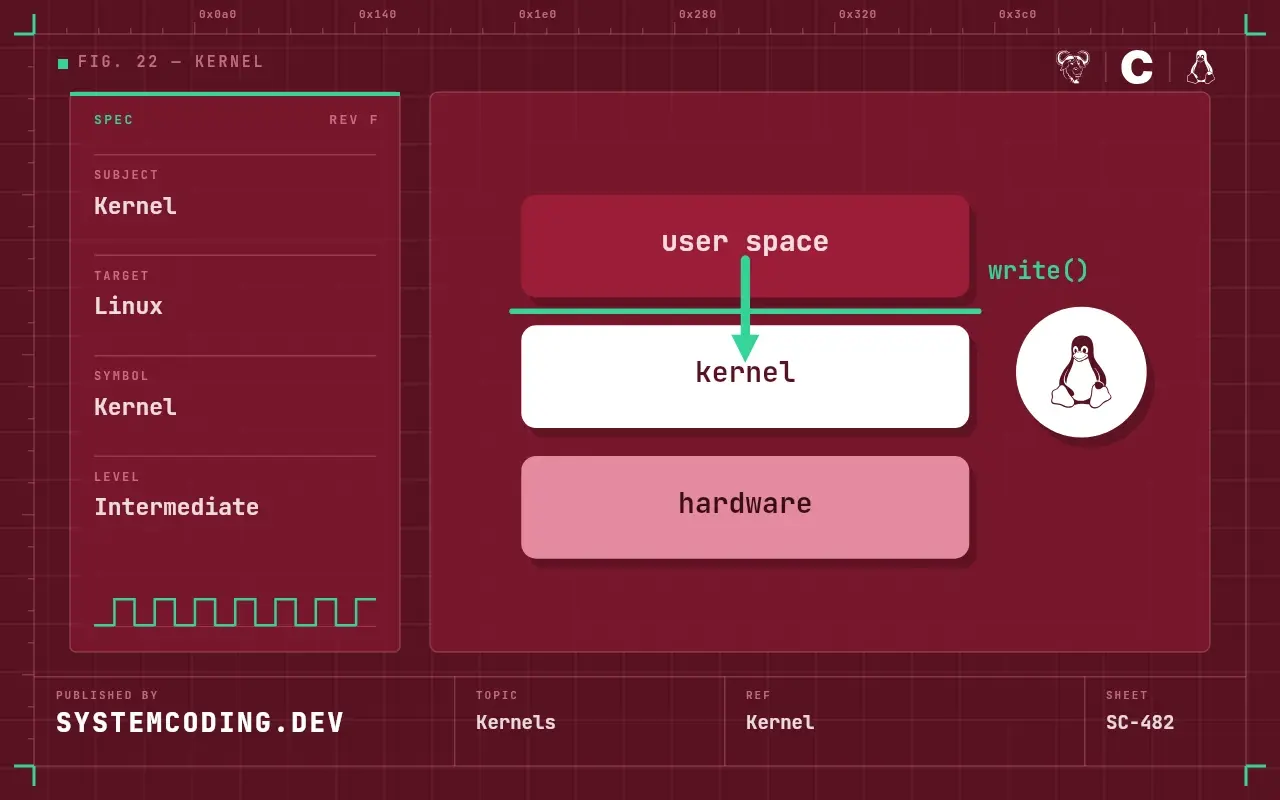
The Linux VFS gives every filesystem four shared objects, superblock, inode, dentry and file, plus operation tables that make ext4, tmpfs and FUSE look alike.
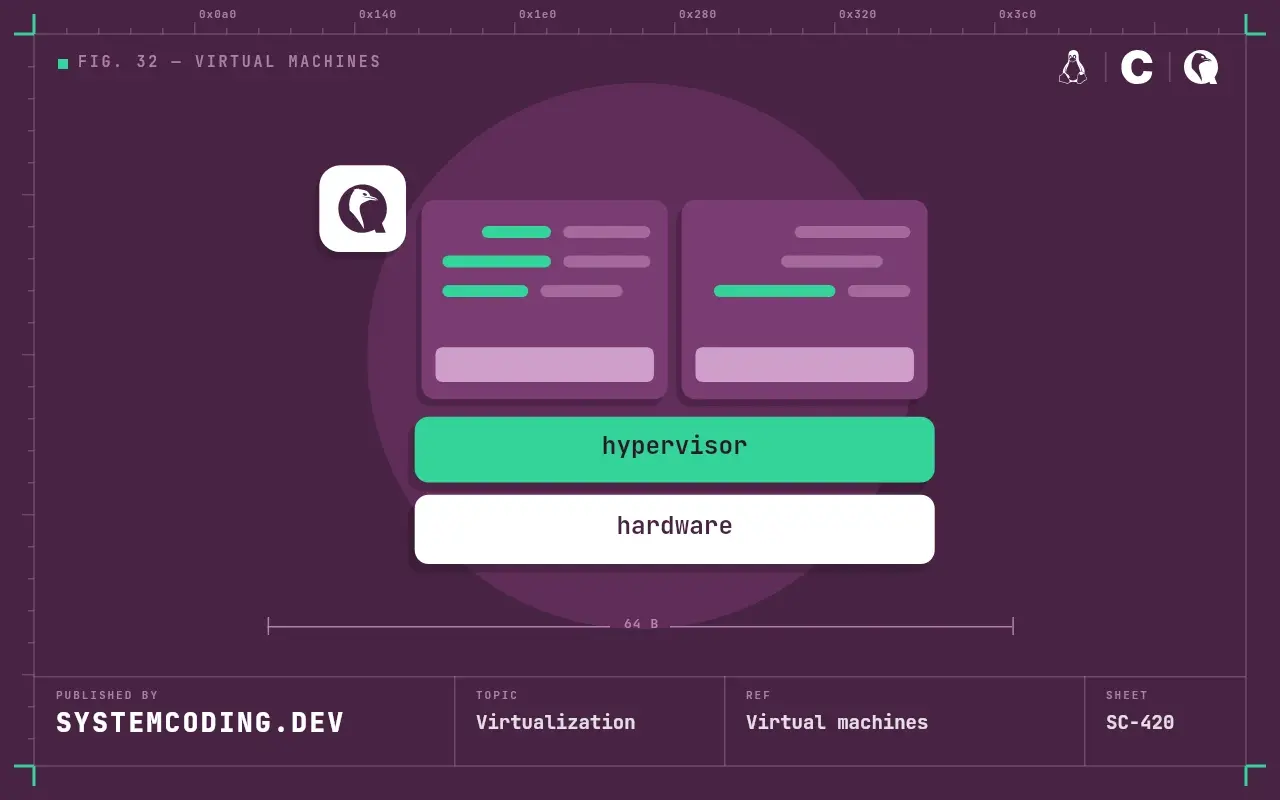
Build a small KVM hypervisor in C that loads a flat 16-bit guest binary, serves a serial port and a result port, counts exits and halts cleanly.
We send one email when a new post is published. No spam.