Kernels
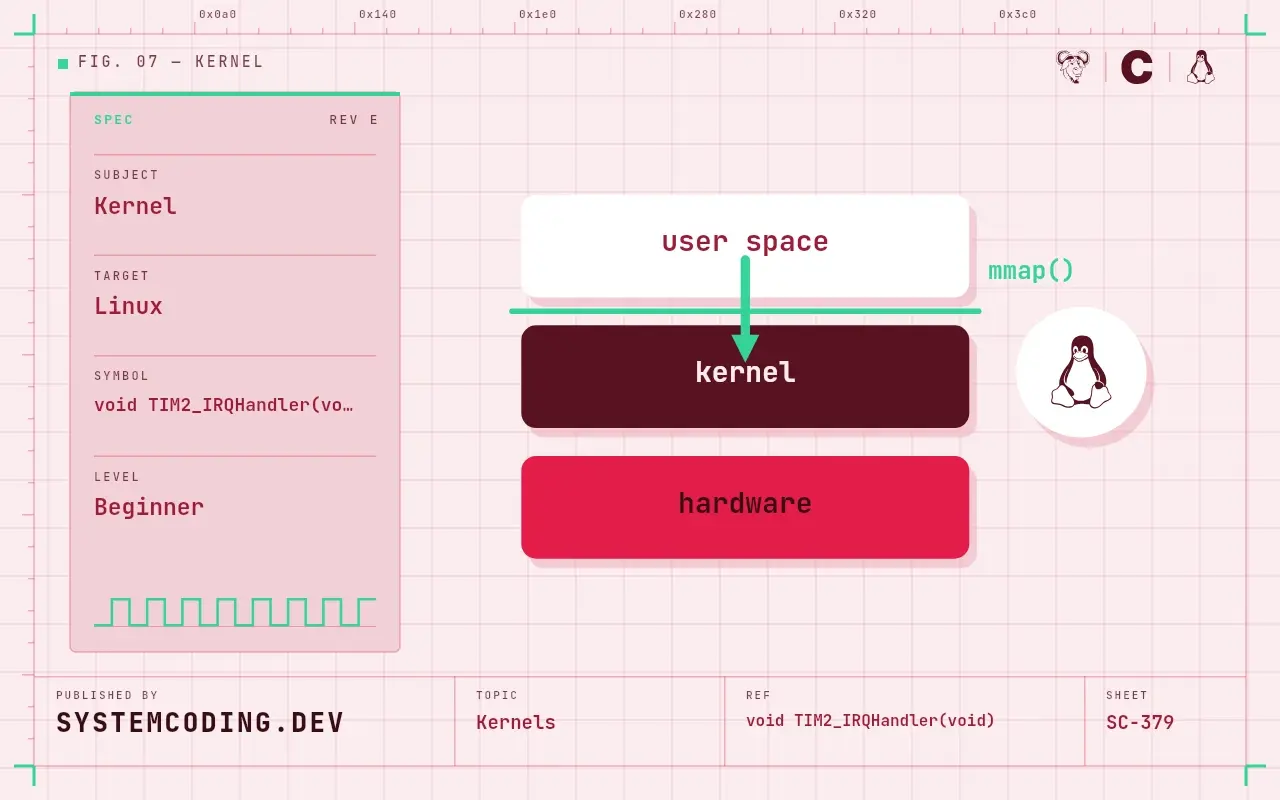
What Is an Interrupt and How CPUs Handle Them
An interrupt makes the CPU pause its program, run a handler and resume. Learn what the CPU saves, how it finds the handler, and what Linux does next.
7 min read
Everything you need to level up your coding skills.
An interrupt makes the CPU pause its program, run a handler and resume. Learn what the CPU saves, how it finds the handler, and what Linux does next.
A clock cycle is one tick of the signal that paces a processor. Learn what GHz measures, why it is not performance, and how to convert cycles to time in C.
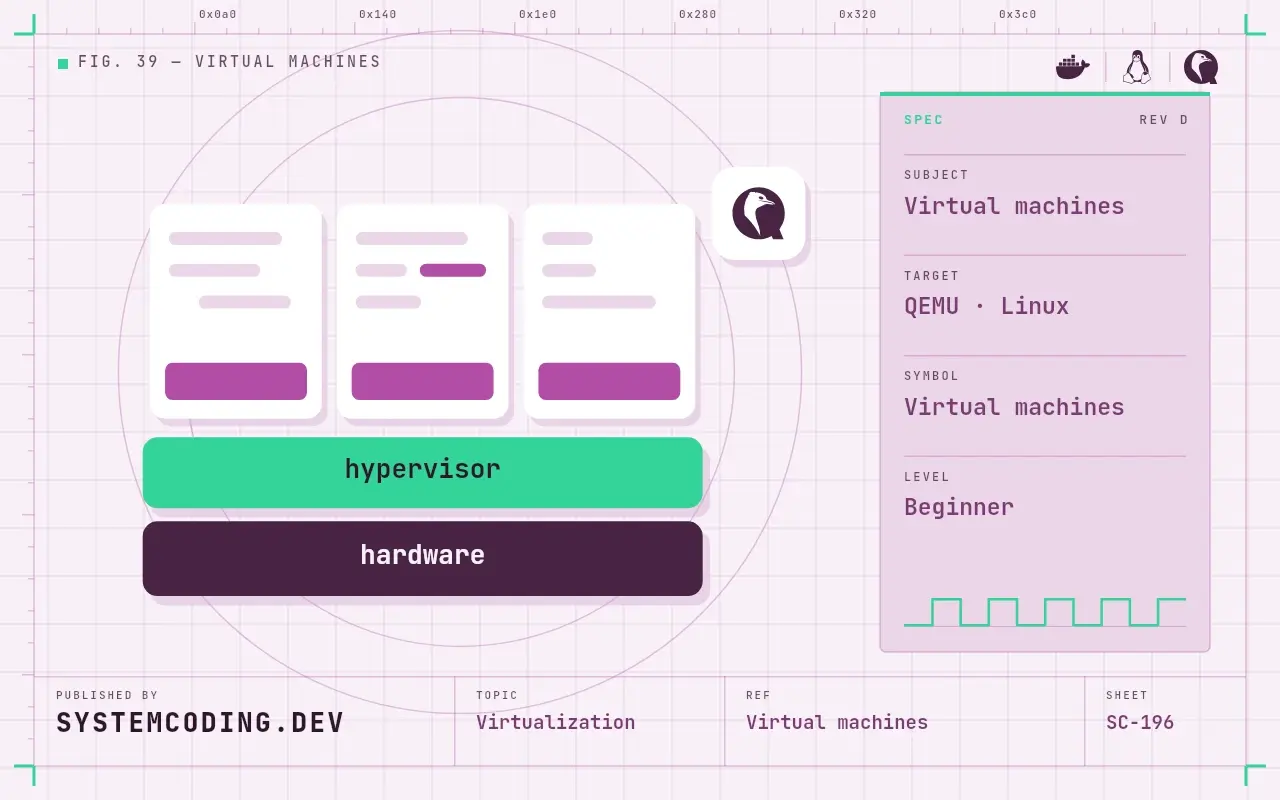
Find out whether your CPU supports hardware virtualization on Linux by reading the vmx and svm flags, running kvm-ok and checking that /dev/kvm exists.
Learn why computers use layers of memory from registers to storage, how a cache line works, and how to read your own machine's cache sizes with a C program.
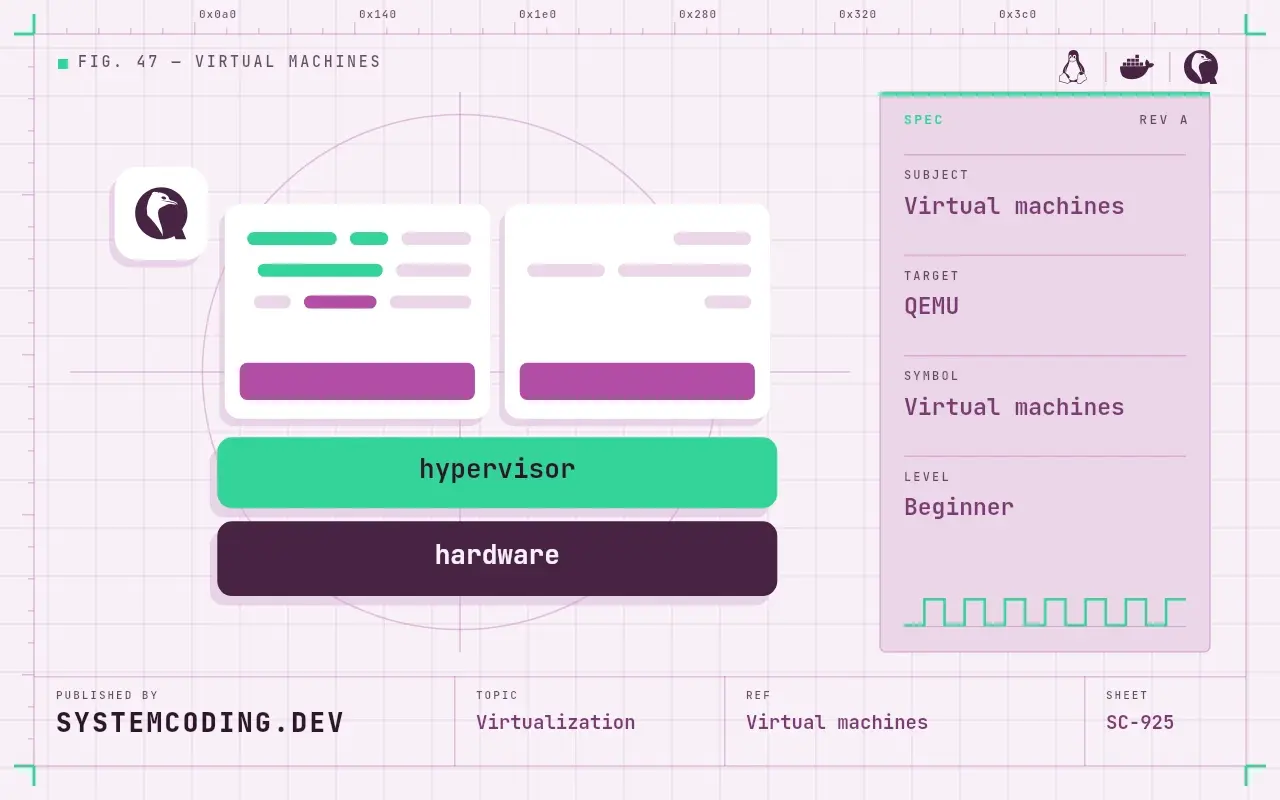
Type 1 hypervisors run on bare metal and type 2 run inside a host OS. See the real differences, where KVM falls, and which one fits your work.
Learn what registers, the ALU and the control unit do inside a CPU, with a small C model of an 8-bit ALU and its status flags that you can read line by line.
Emulation translates a foreign CPU, virtualization runs guest code natively under a hypervisor, and containers share the host kernel. Here is how they differ.
Copy a float into a uint32_t with memcpy, then mask out the sign, exponent and fraction fields to see exactly how IEEE 754 stores it.
Learn what blocking and non-blocking I/O mean for sockets on POSIX, what EAGAIN tells you, and why servers with many clients switch to non-blocking mode.
A process owns an address space and a thread is a schedulable flow inside one. See what each shares and isolates on Linux, with fork and pthread_create code.
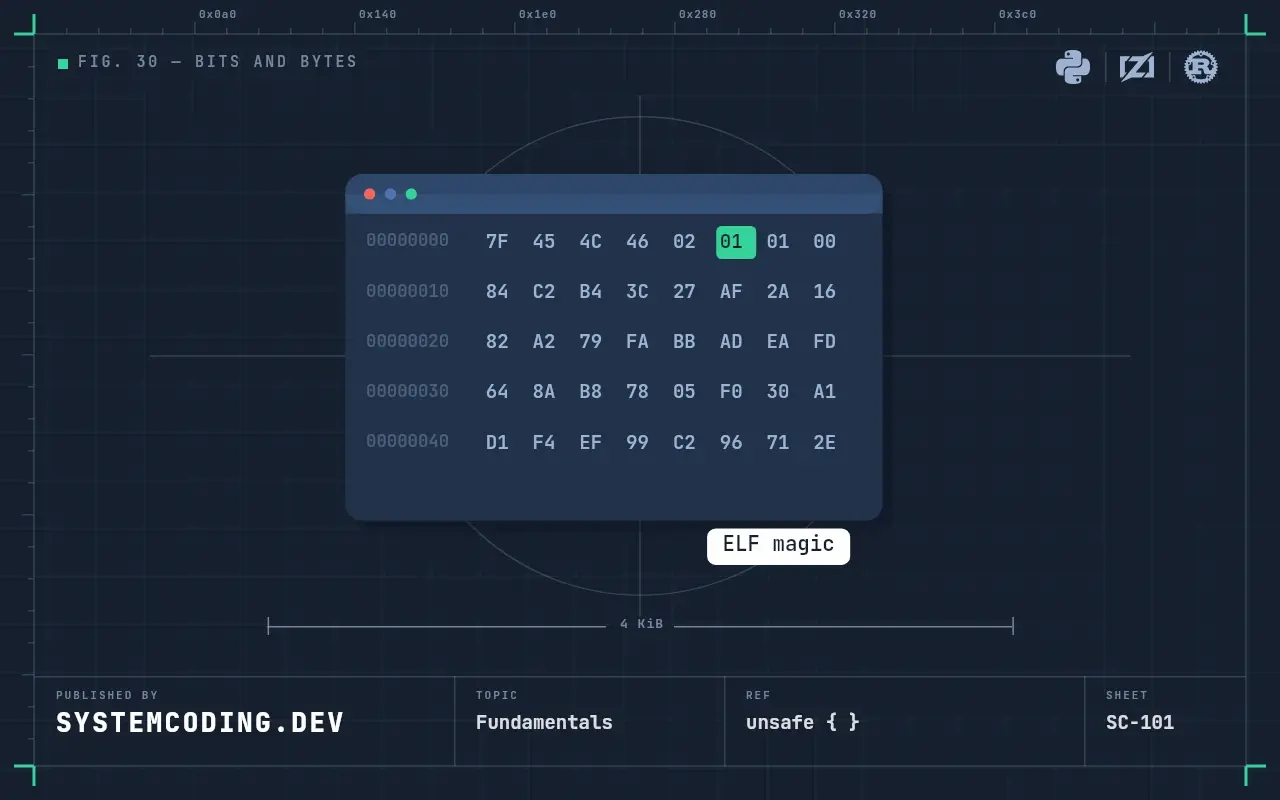
Safe Rust has no undefined behavior, but unsafe blocks can. See what counts as UB in unsafe Rust and how the Miri interpreter reports each kind.
Choose between TCP and UDP for systems code by weighing reliability, ordering, latency and framing, with a decision table and the cost of each option.
We send one email when a new post is published. No spam.