Virtualization
Limit Memory and CPU With cgroups v2
Create a cgroup v2 directory, write memory.max and cpu.max, move a shell into it and watch the kernel cap memory and CPU time. Commands and output included.
6 min read
Everything you need to level up your coding skills.
Create a cgroup v2 directory, write memory.max and cpu.max, move a shell into it and watch the kernel cap memory and CPU time. Commands and output included.
Learn real, effective and saved user IDs, what setuid does at execve, and the correct order to drop privileges in C with setgroups, setgid and setuid.
A working method for Linux 6.12 kernel bugs: debug builds, reading oopses, runtime checkers, tracing, gdb in QEMU, hangs, and capturing crashes with kdump.
Use unshare and nsenter from a shell to create and join Linux namespaces, and watch hostnames, process lists and mounts change inside a new one.
Use setcap to give a binary only CAP_NET_BIND_SERVICE instead of making it setuid root, and see how the file capability bits change what the program can do.
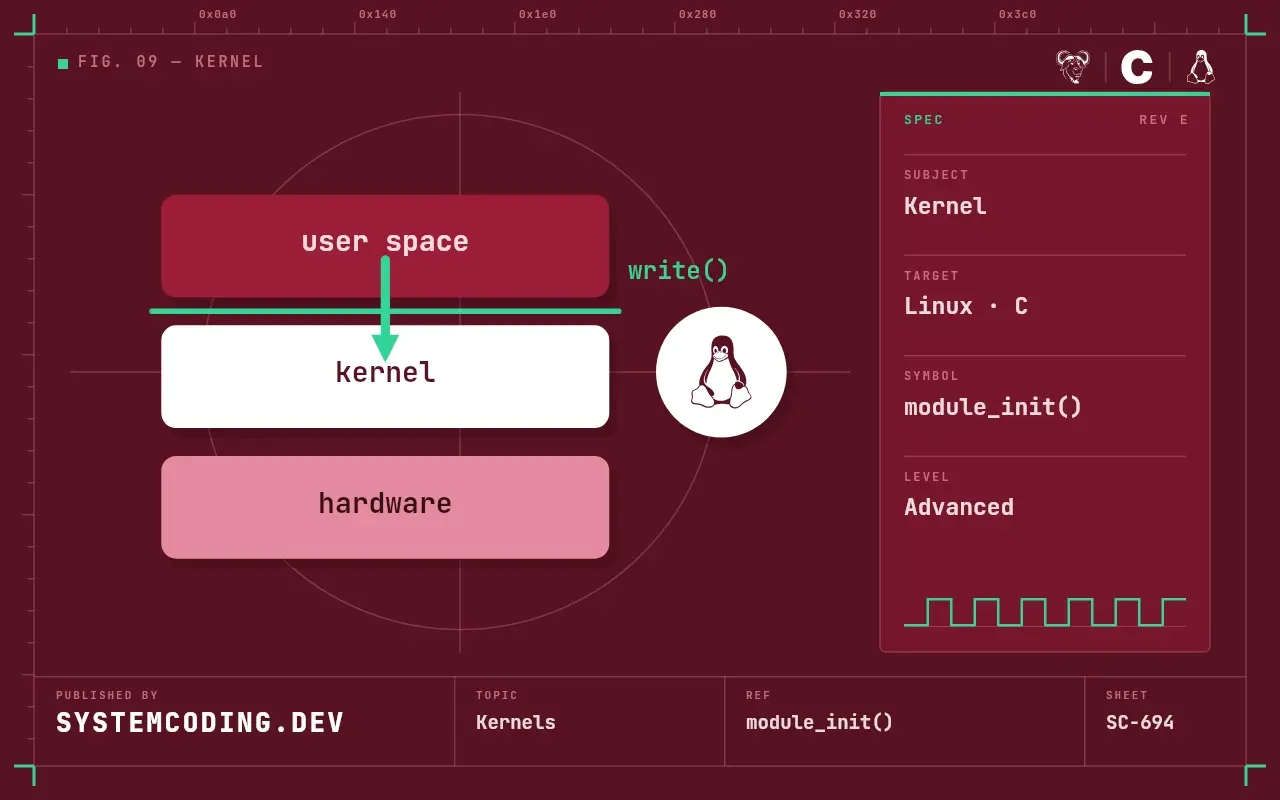
Build a complete Linux 6.12 network driver for a ring-based PCIe NIC: rings, NAPI, DMA, statistics, ethtool, link state, offloads and recovery.
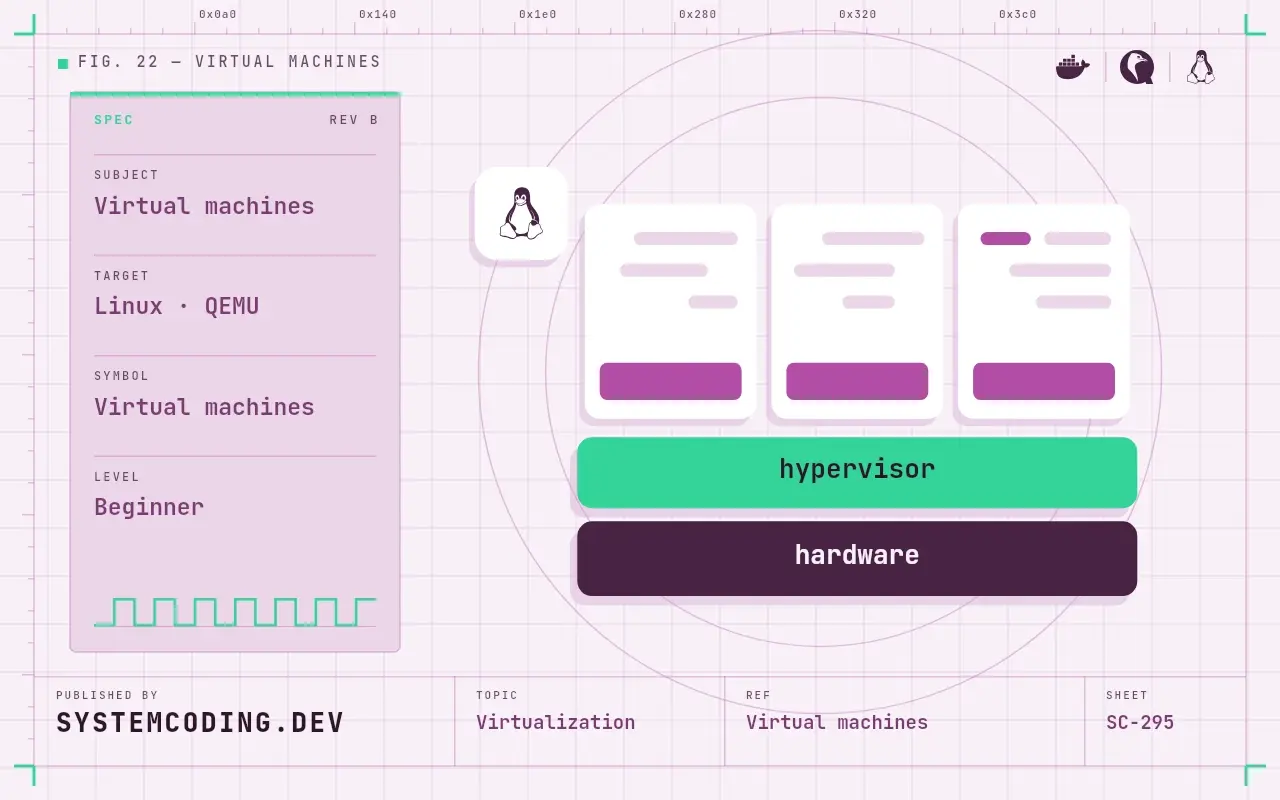
Linux has eight namespace types: mount, PID, network, IPC, UTS, user, cgroup and time. Each one gives a process its own view of one kind of kernel resource.
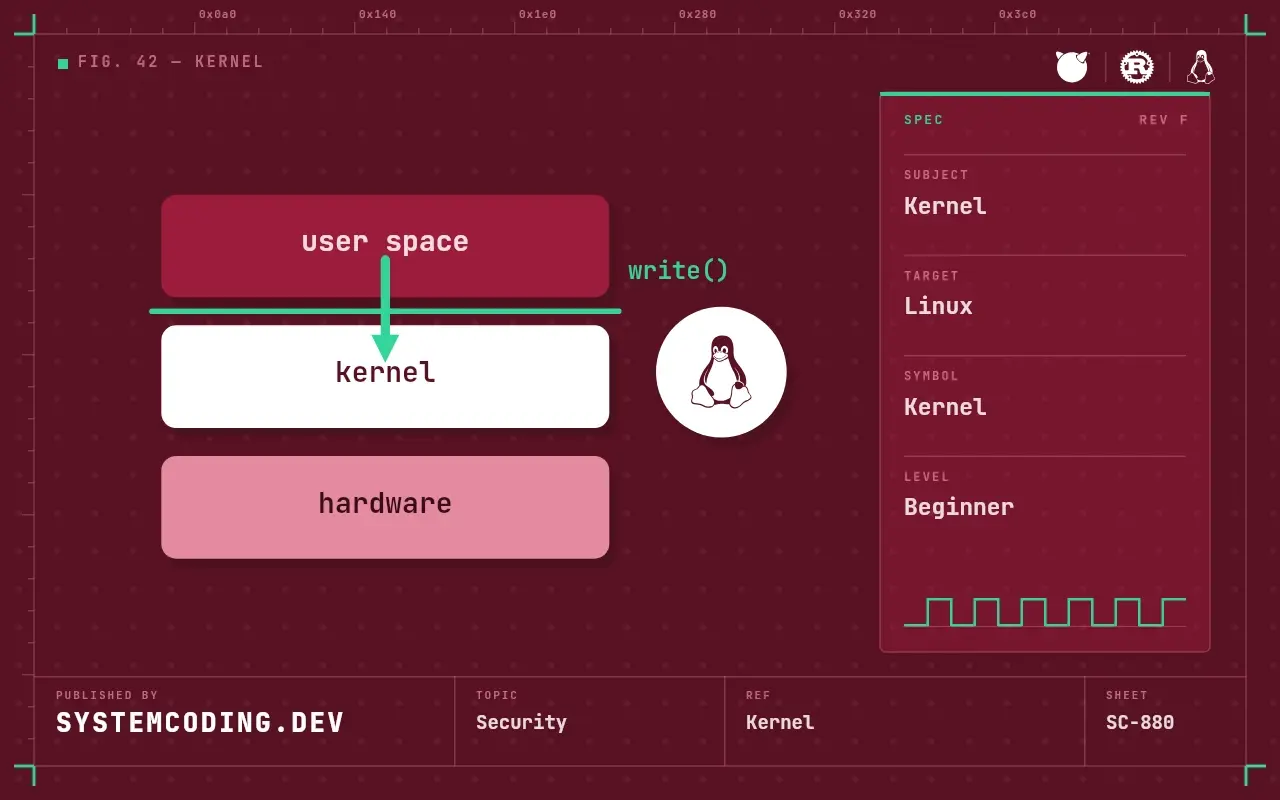
Linux capabilities split root's power into about forty separate privileges, so a process can bind port 80 without being able to load kernel modules.
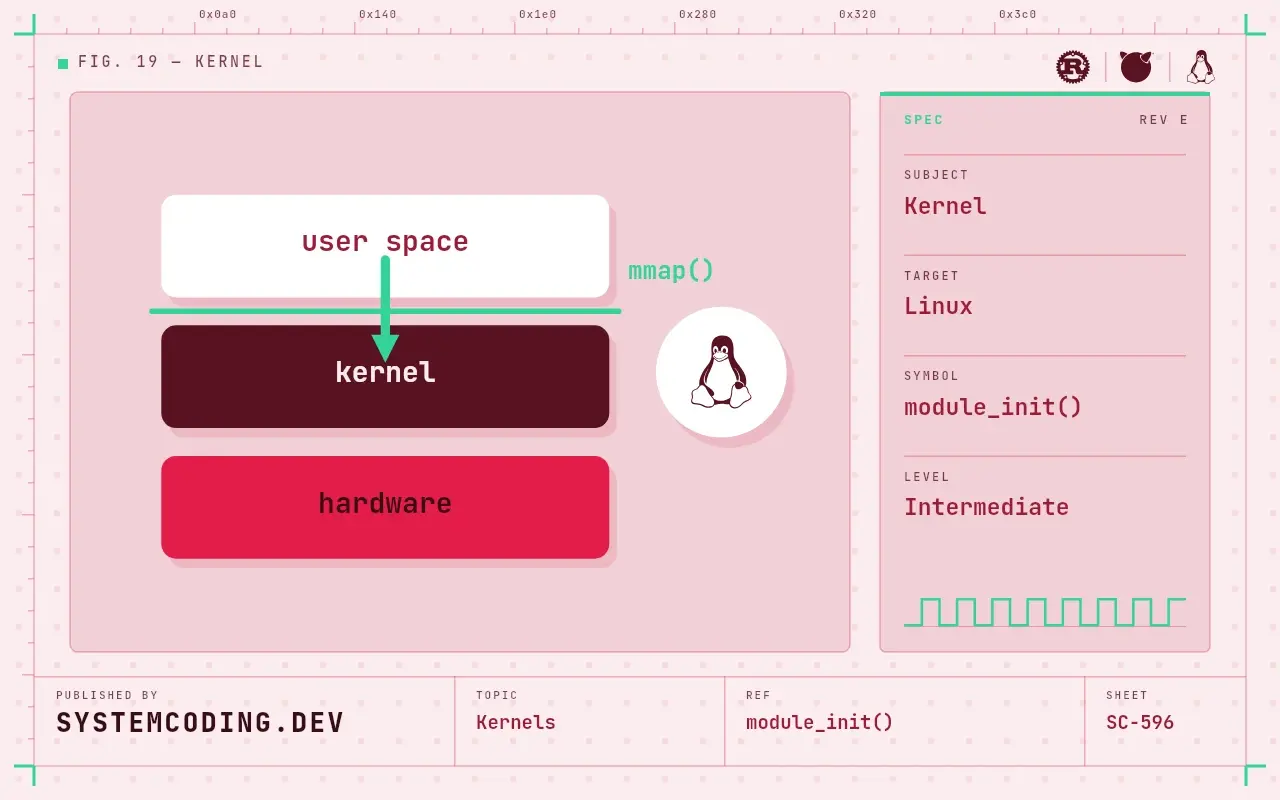
How the Linux 6.12 device model binds drivers to devices, and how platform drivers use device tree, devres and runtime PM to expose hardware through subsystems.
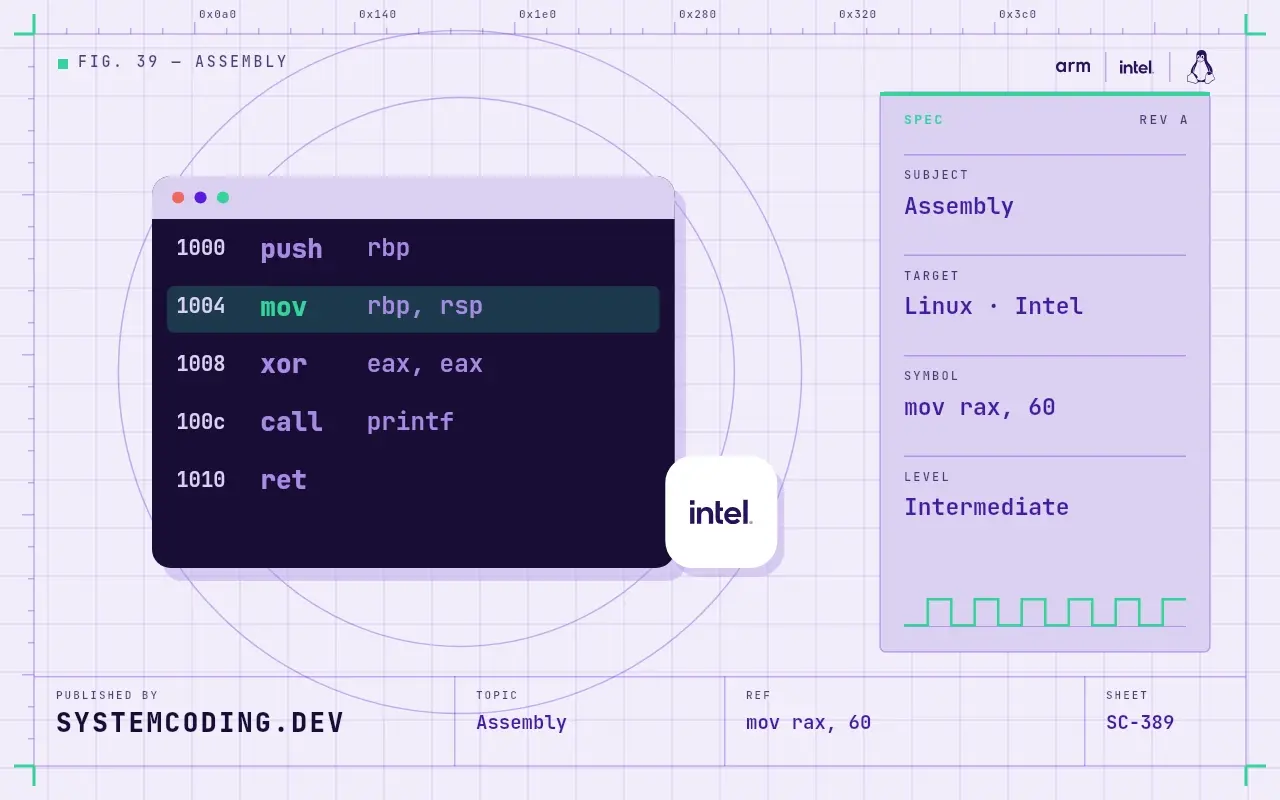
Build an x86 bootloader in NASM from a 512-byte boot sector to a loaded kernel, covering disk reads, A20, the memory map, protected mode and long mode.
Write a complete Linux 6.12 PCI driver: probe, BAR mapping, MSI interrupts, DMA with a restricted mask, a user-space interface, error recovery and testing.
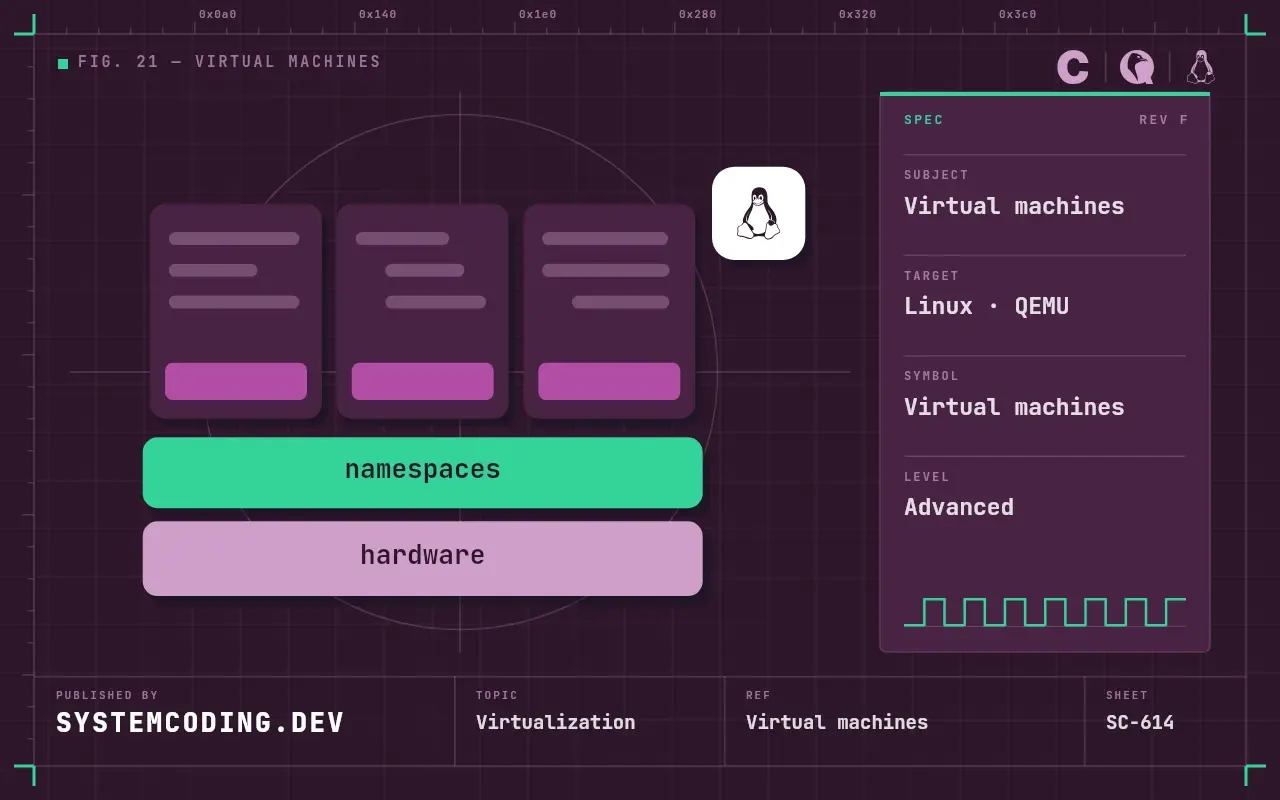
A practical tour of the Linux KVM ioctl interface: system, VM and vCPU descriptors, memory slots, kvm_run exits, interrupts, CPUID, debugging and threads, in C.
We send one email when a new post is published. No spam.