Embedded
Build a USB HID Keyboard With TinyUSB on RP2040
Make an RP2040 appear as a USB keyboard with TinyUSB: the HID report descriptor, the 8-byte report, keycodes, press and release, and the LED output report.
8 min read
Bare-metal firmware on STM32, ESP32, RP2040, AVR, nRF and RISC-V: GPIO, UART, SPI, I2C, DMA, interrupts, timers, low power and over-the-air updates.
Make an RP2040 appear as a USB keyboard with TinyUSB: the HID report descriptor, the 8-byte report, keycodes, press and release, and the LED output report.
Load i2c-dev, scan a bus with i2cdetect, read and write registers with i2cget and i2cset, and do the same in C through /dev/i2c-N and ioctl on Linux.
Bring up a USB CDC serial port on an STM32F4 with TinyUSB: 48 MHz clock, OTG_FS pins, VBUS sensing, the interrupt handler, tusb_config.h and a printf retarget.
Learn how I2C and SPI work on the wire, what each costs in pins and speed, and how Linux splits each into controller drivers and client drivers for developers.
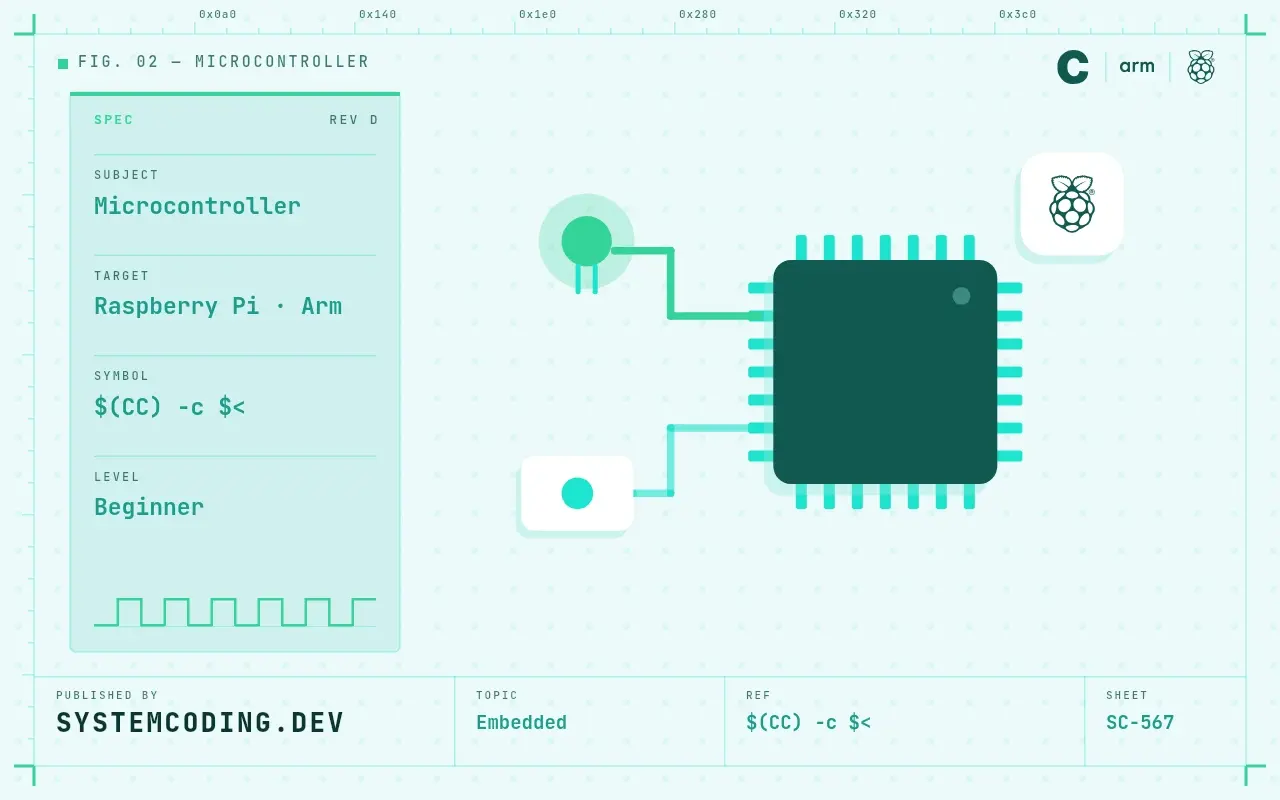
Build a USB CDC serial device on the RP2040 with the Pico SDK and TinyUSB, from the stdio shortcut to descriptors, tusb_config.h and an echo loop.
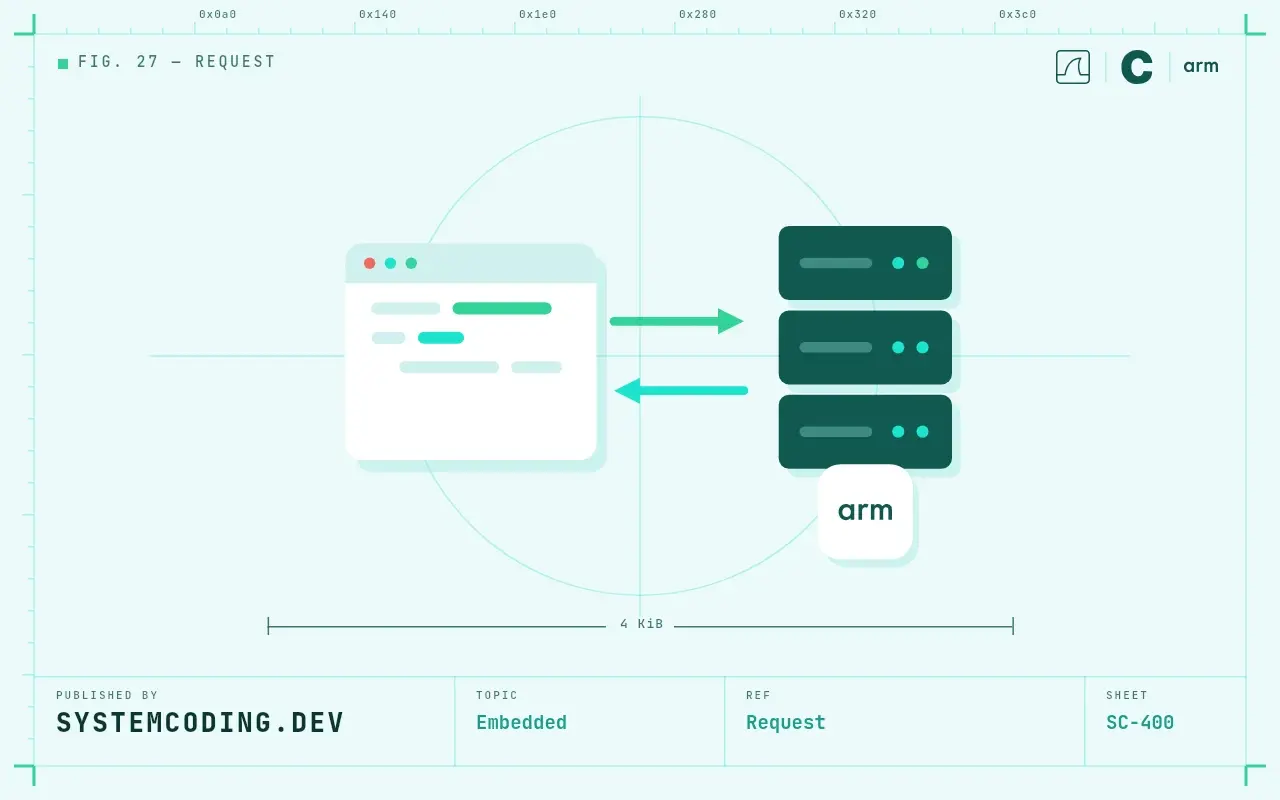
Understand what a USB device tells the host when plugged in: device, configuration, interface and endpoint descriptors and the enumeration steps.
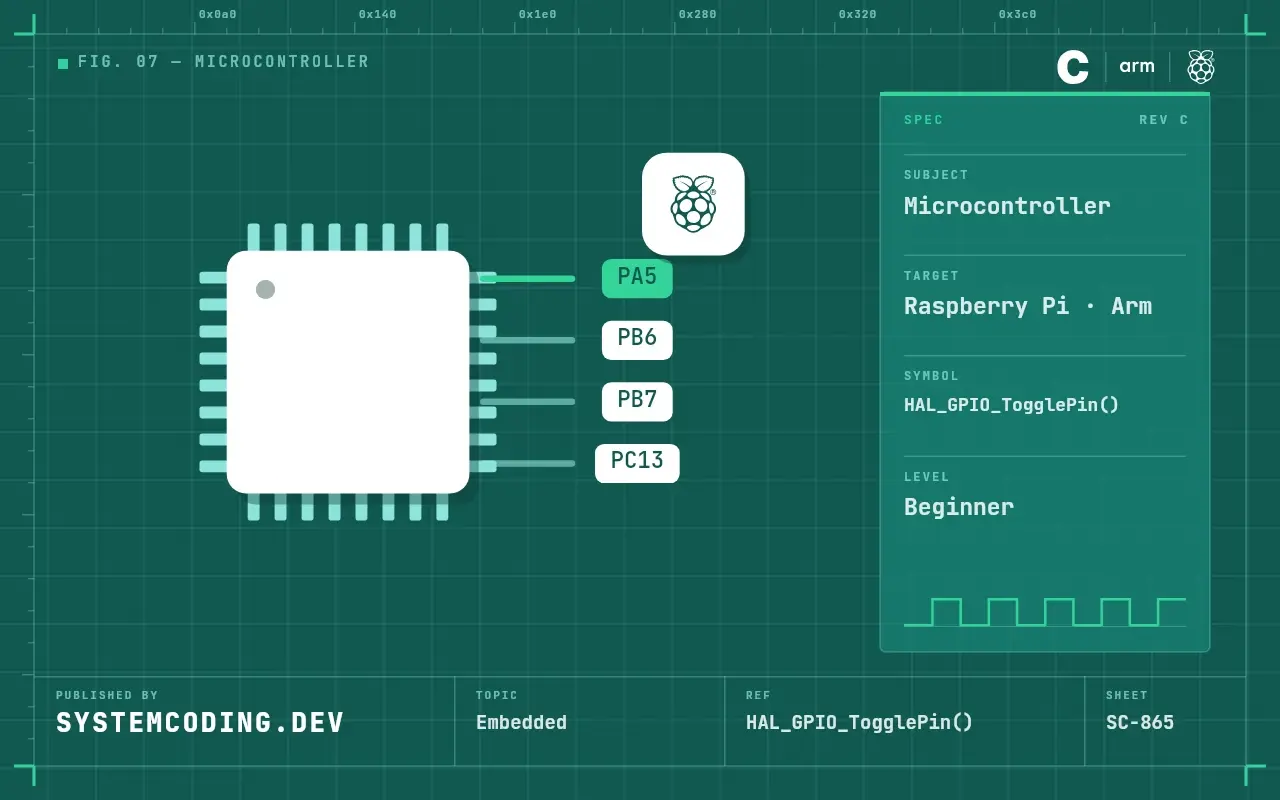
Handle a Pico button press with an RP2040 GPIO interrupt: the event mask, the callback signature, one shared callback for several pins, and a flag for main.
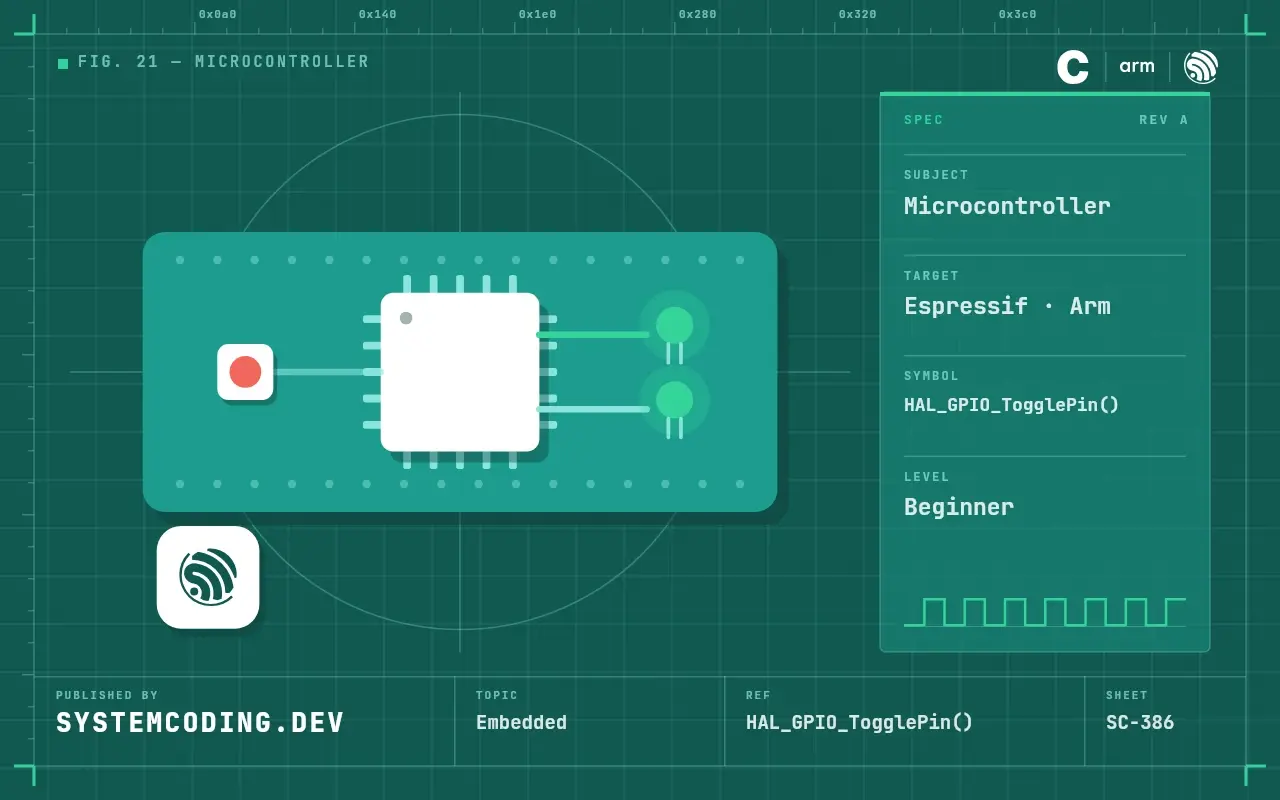
Configure ESP32 outputs and a button input with gpio_config in ESP-IDF 5.x, then add a falling-edge interrupt with gpio_install_isr_service and a queue.
Wire a button to a Raspberry Pi Pico, enable the pull-up with gpio_pull_up and read it with gpio_get in C using Pico SDK 2.0, with CMake and expected output.
Learn the three AVR port registers on an ATmega328P: DDRx sets direction, PORTx drives output or the pull-up, PINx reads and toggles, with avr-gcc examples.
Blink the LD2 LED on a NUCLEO-F446RE by writing the GPIO registers yourself: MODER, OTYPER, OSPEEDR, PUPDR and ODR, with a SysTick delay and a register decoder.
Learn how push-pull and open-drain GPIO outputs differ at the transistor level, when each is right (LEDs, I2C, shared lines), and how to set both on an STM32.
We send one email when a new post is published. No spam.