Kernels
What Is an Interrupt and How CPUs Handle Them
An interrupt makes the CPU pause its program, run a handler and resume. Learn what the CPU saves, how it finds the handler, and what Linux does next.
7 min read
Tag
71 posts
An interrupt makes the CPU pause its program, run a handler and resume. Learn what the CPU saves, how it finds the handler, and what Linux does next.
A complete guide to Linux kernel modules: lifecycle, build, load, parameters, exported symbols, a working misc device, licensing, signing, DKMS and debugging.
A beginner guide to Linux kernel development: how the kernel works, a safe lab, reading source, kernel C, a first module, debugging and a first patch.
Write a Linux filesystem as a loadable module: file_system_type, the mount API, superblock, inodes, directories, page-cache I/O and a mount option, tested.
A working method for Linux 6.12 kernel bugs: debug builds, reading oopses, runtime checkers, tracing, gdb in QEMU, hangs, and capturing crashes with kdump.
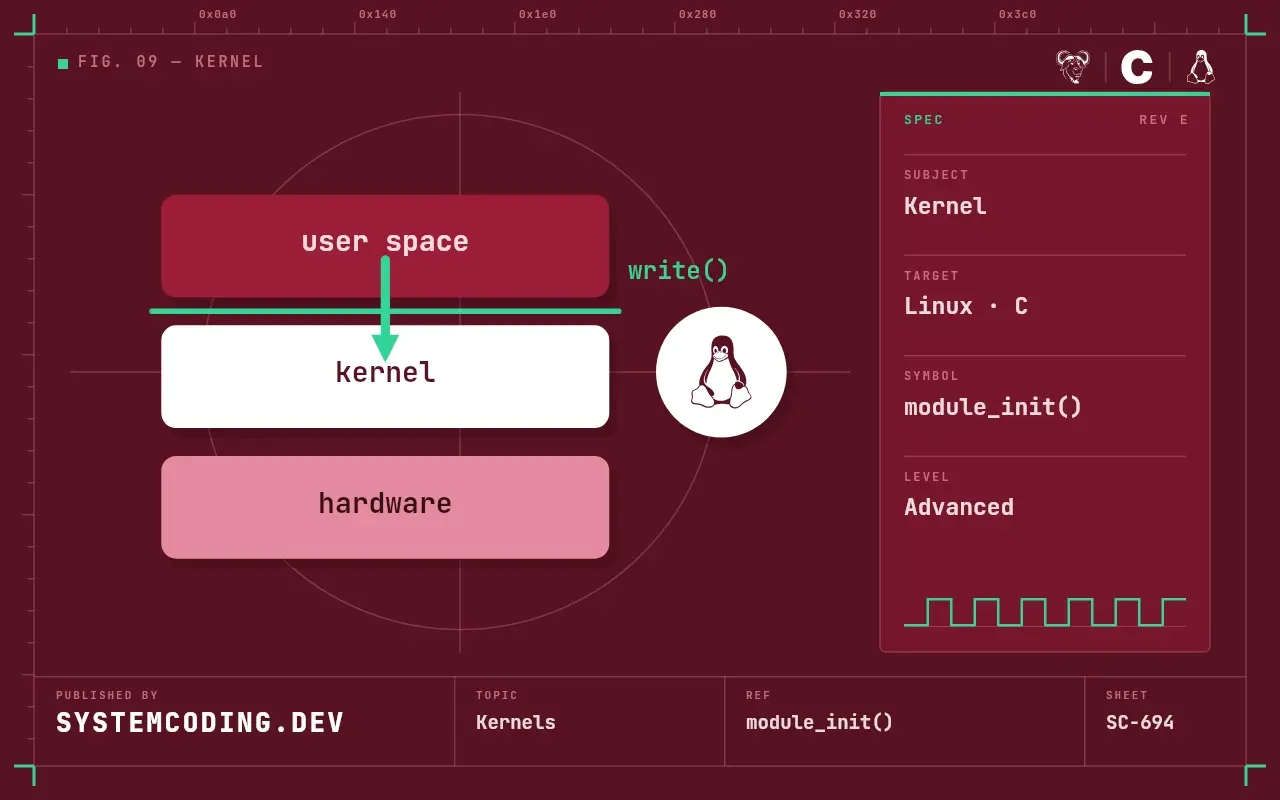
Build a complete Linux 6.12 network driver for a ring-based PCIe NIC: rings, NAPI, DMA, statistics, ethtool, link state, offloads and recovery.
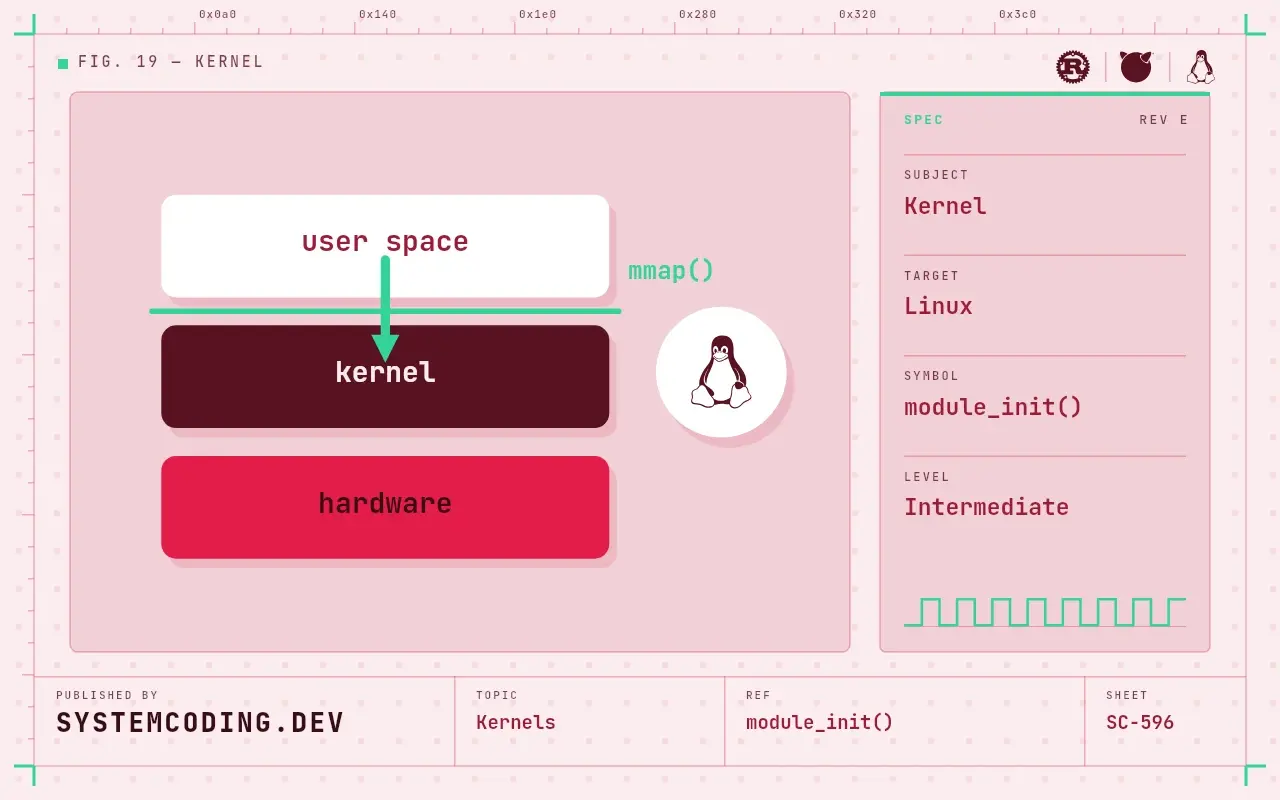
How the Linux 6.12 device model binds drivers to devices, and how platform drivers use device tree, devres and runtime PM to expose hardware through subsystems.
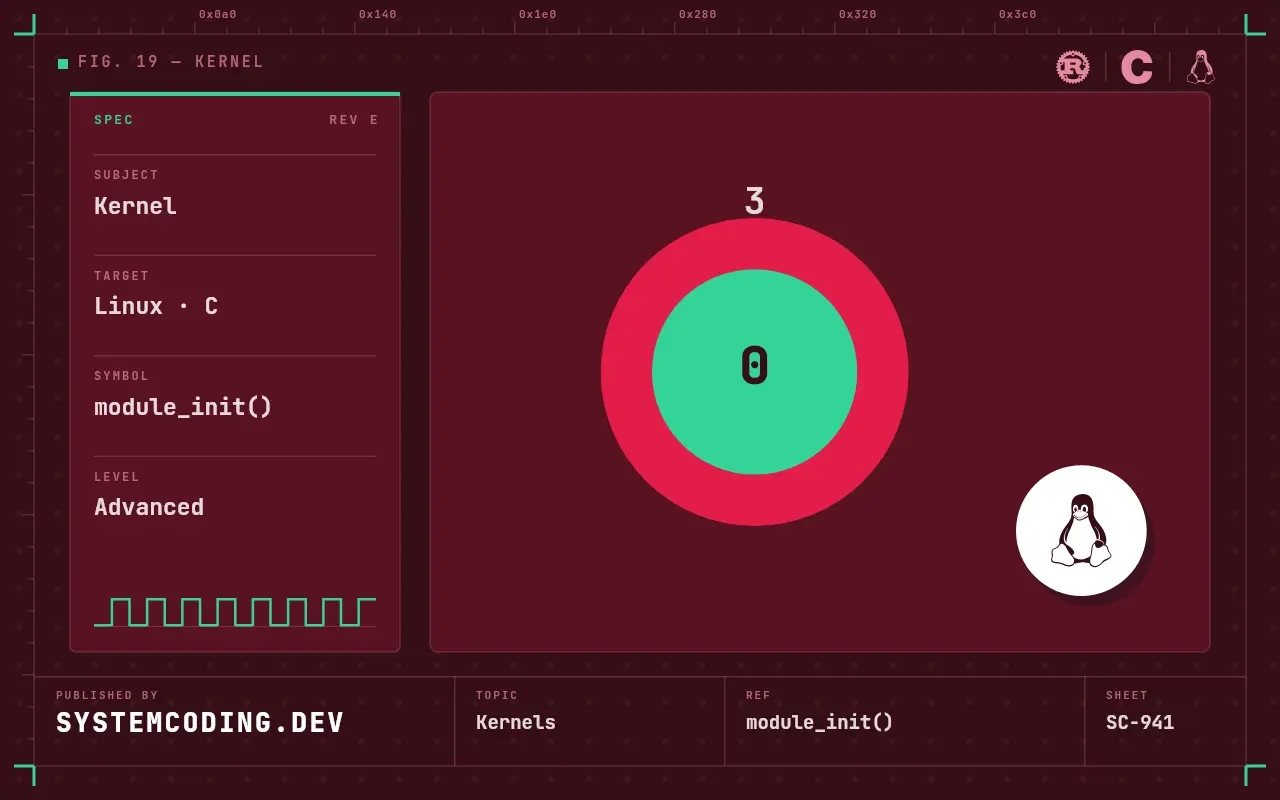
Write a complete Linux 6.12 PCI driver: probe, BAR mapping, MSI interrupts, DMA with a restricted mask, a user-space interface, error recovery and testing.
A working guide to Linux system calls: invocation, error returns, the main families with code, tracing with strace, seccomp filtering and portability.
One driver for one chip, built from user-space probing to a regmap core with I2C and SPI front ends, IIO output, interrupts, error handling and debugging.
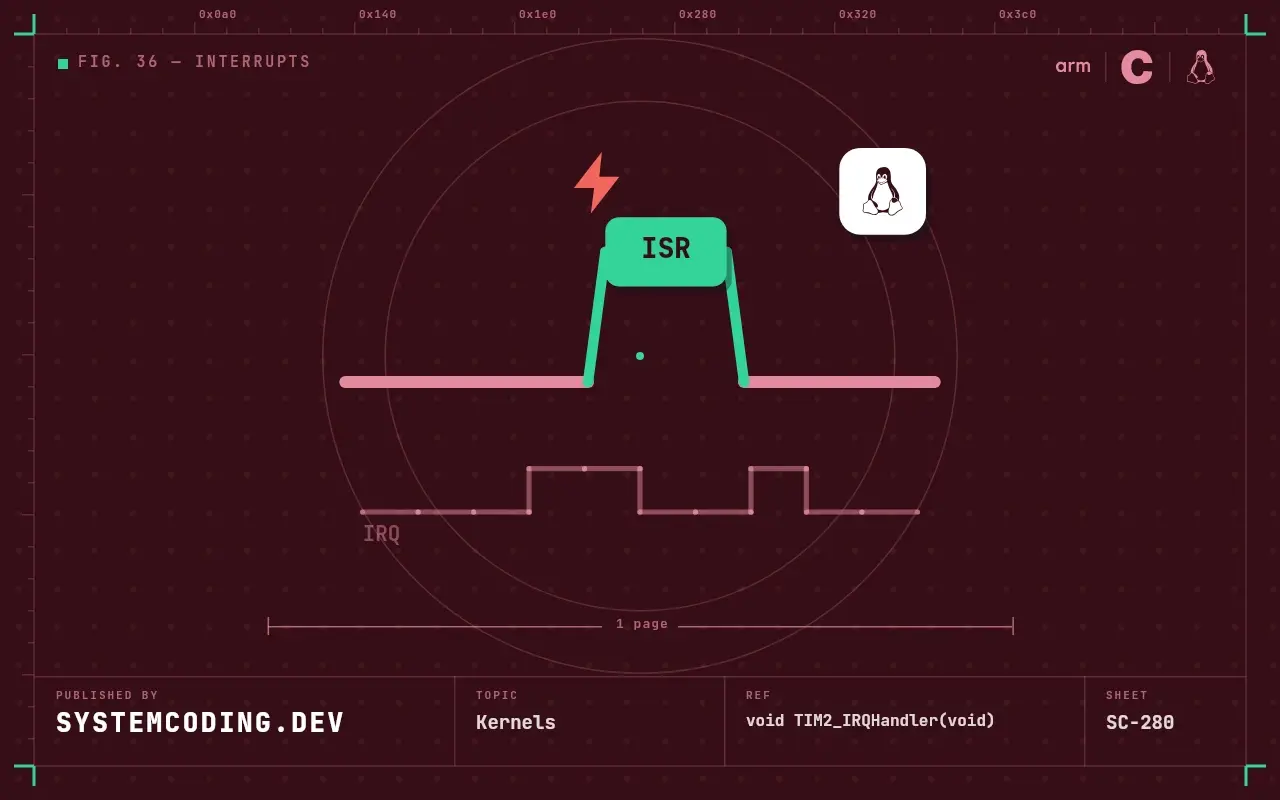
Everything a driver author needs about interrupts in Linux 6.12: request_irq, handler rules, shared lines, threaded IRQs, bottom halves, affinity and debugging.