Systems Programming
Print All Environment Variables Using environ
The global environ is the NULL-terminated array behind getenv. Loop over it to list every NAME=value entry, split entries safely and avoid the stale envp trap.
7 min read
Tag
44 posts
The global environ is the NULL-terminated array behind getenv. Loop over it to list every NAME=value entry, split entries safely and avoid the stale envp trap.
setenv copies its arguments and honors an overwrite flag, unsetenv removes a name, and putenv stores your pointer. Learn the rules and what children inherit.
getenv returns a pointer to a variable's value, or NULL when it is unset. Check for NULL, tell empty from unset, copy what you keep and parse numbers safely.
Read lines of any length in C with getline, reuse one growing buffer, strip the newline, spot read errors and handle files without a final newline.
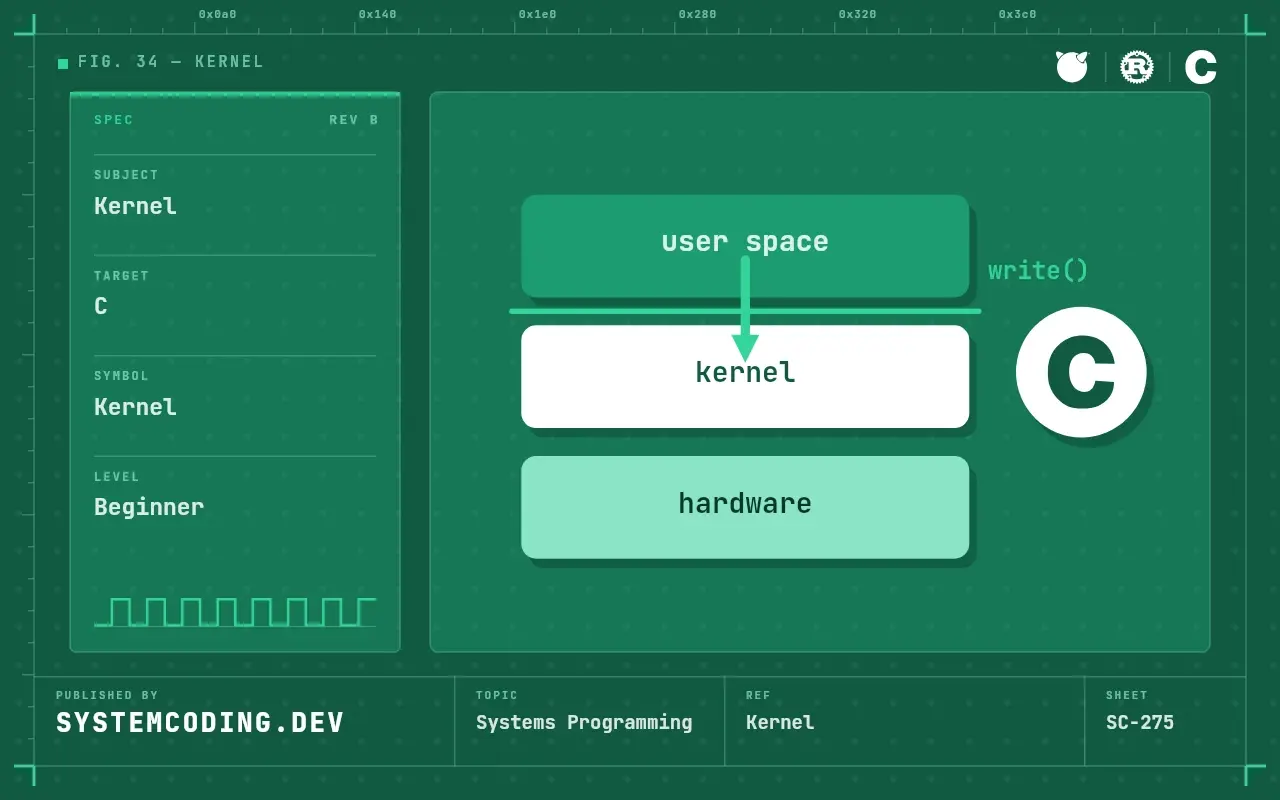
Report failures from a C tool the Unix way: perror, strerror and the err and warn family, with errno saved correctly and messages sent to stderr.
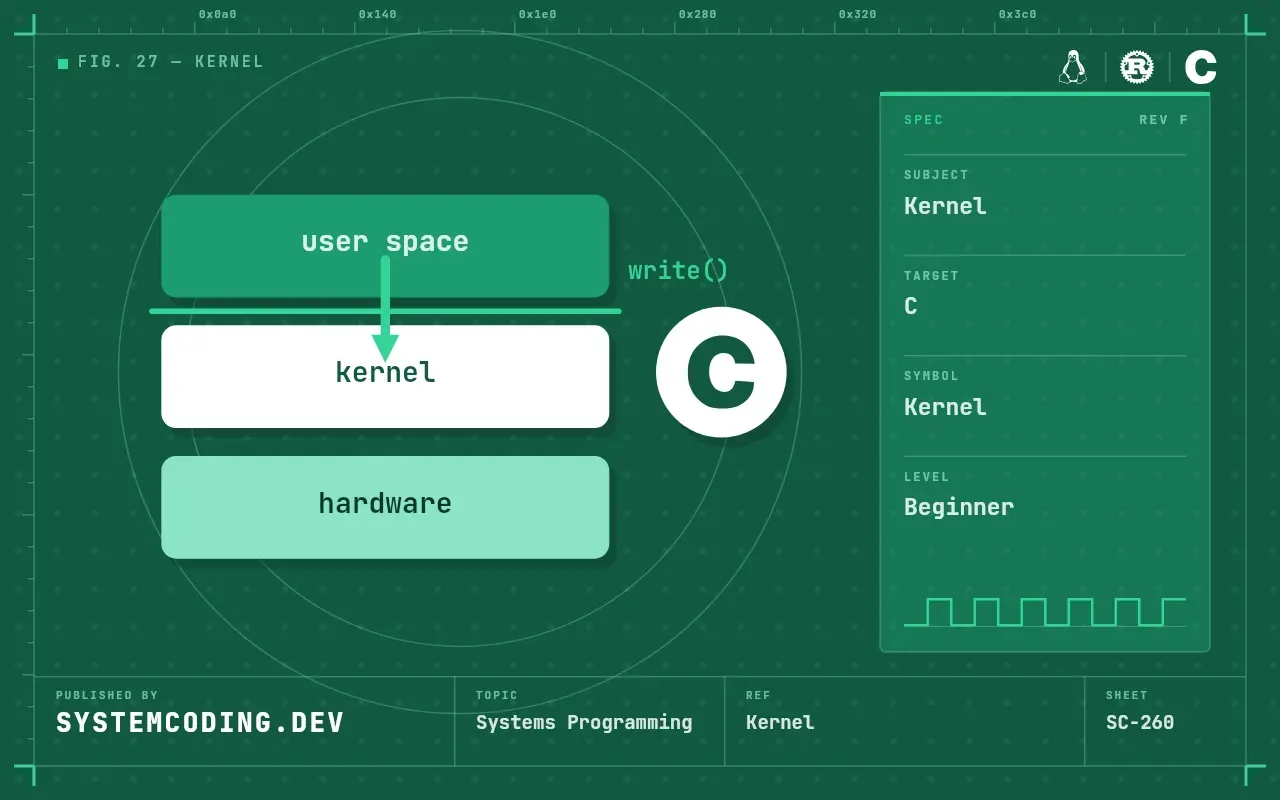
Write a cat-style filter in C that reads the files named on the command line, uses standard input when there are none, and treats a lone hyphen as stdin.
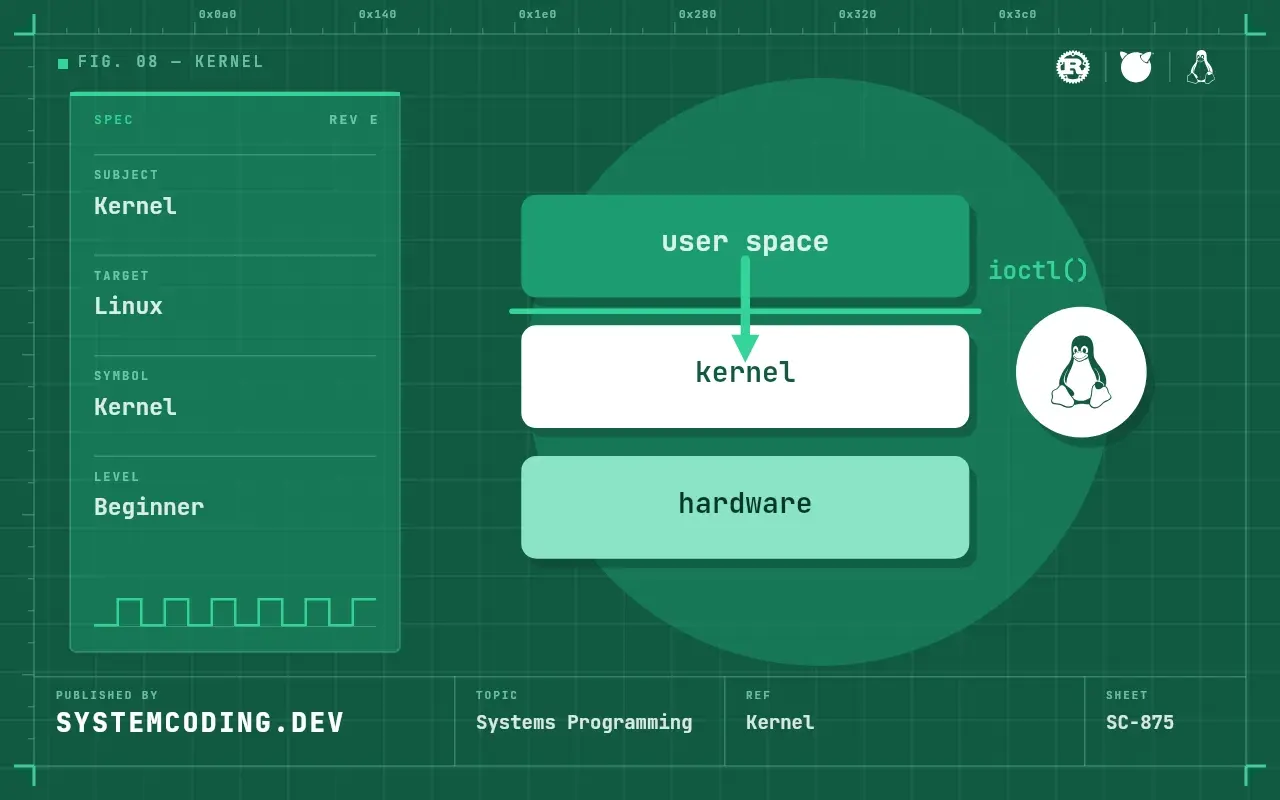
What exit status 0, 1, 2, 126, 127 and 128 plus a signal number mean on Linux, how a shell reads them, and which codes your own command-line tool should return.
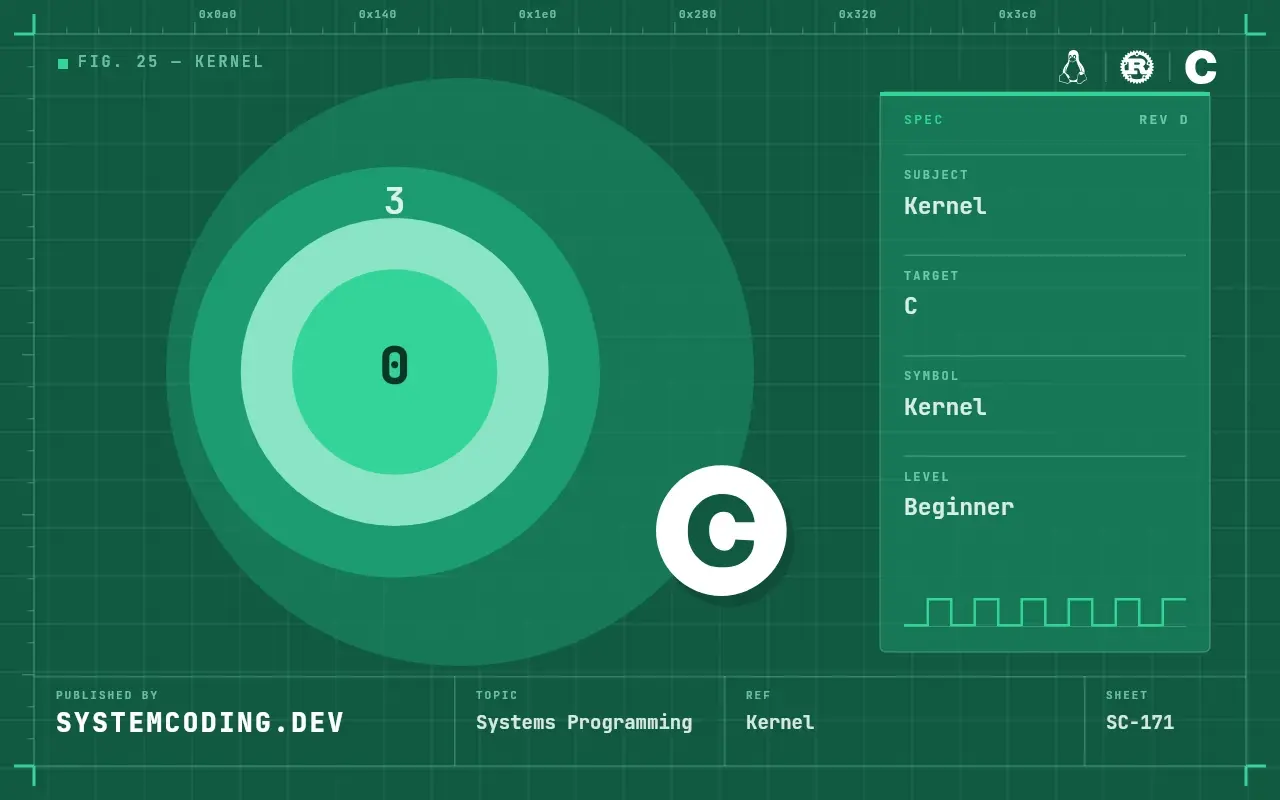
Learn how getopt walks argv in C, what optind, optarg and opterr mean, how a colon marks an option value, and how to handle errors and bundled flags.
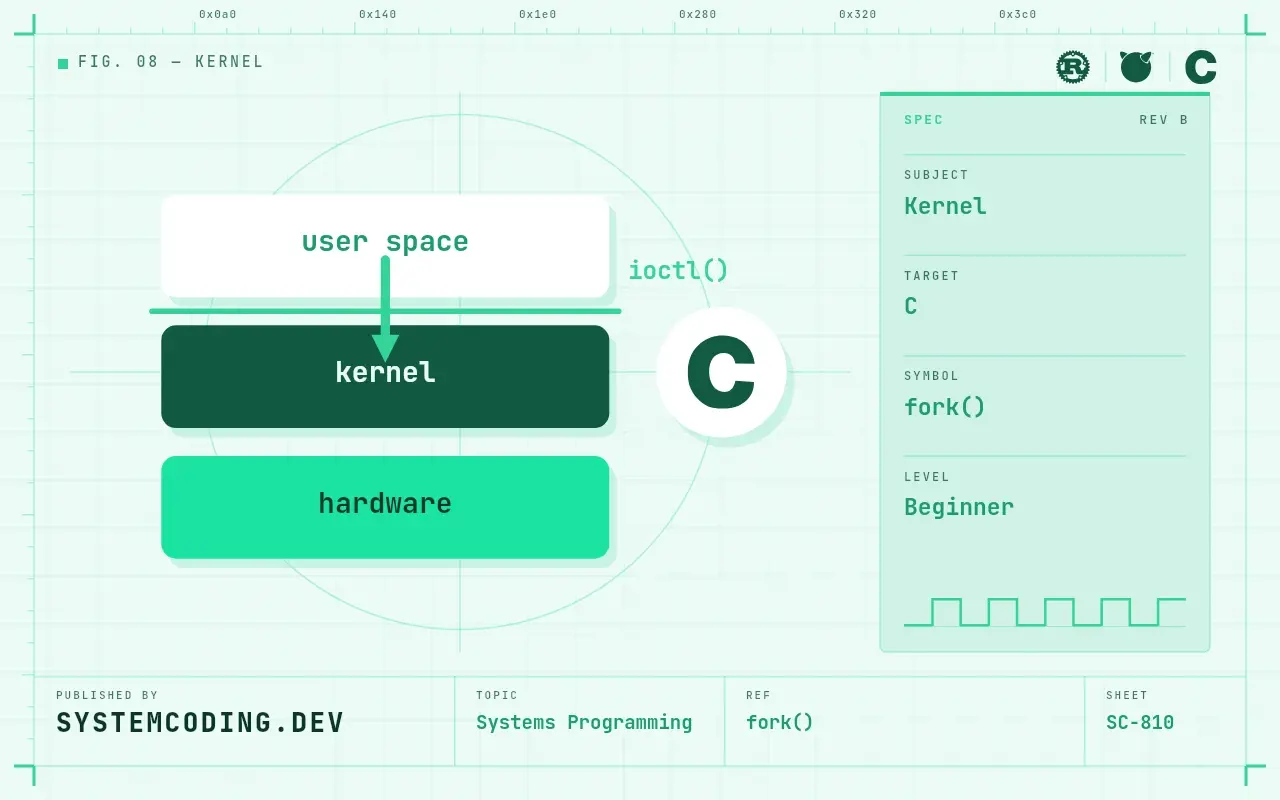
Cap open files, CPU time, memory and core dumps for a Linux process with setrlimit, understand soft and hard limits, and read the results in /proc.
A file descriptor points to an open file description, which points to an inode. See which layer holds the offset, flags and data, with dup and fork demos.
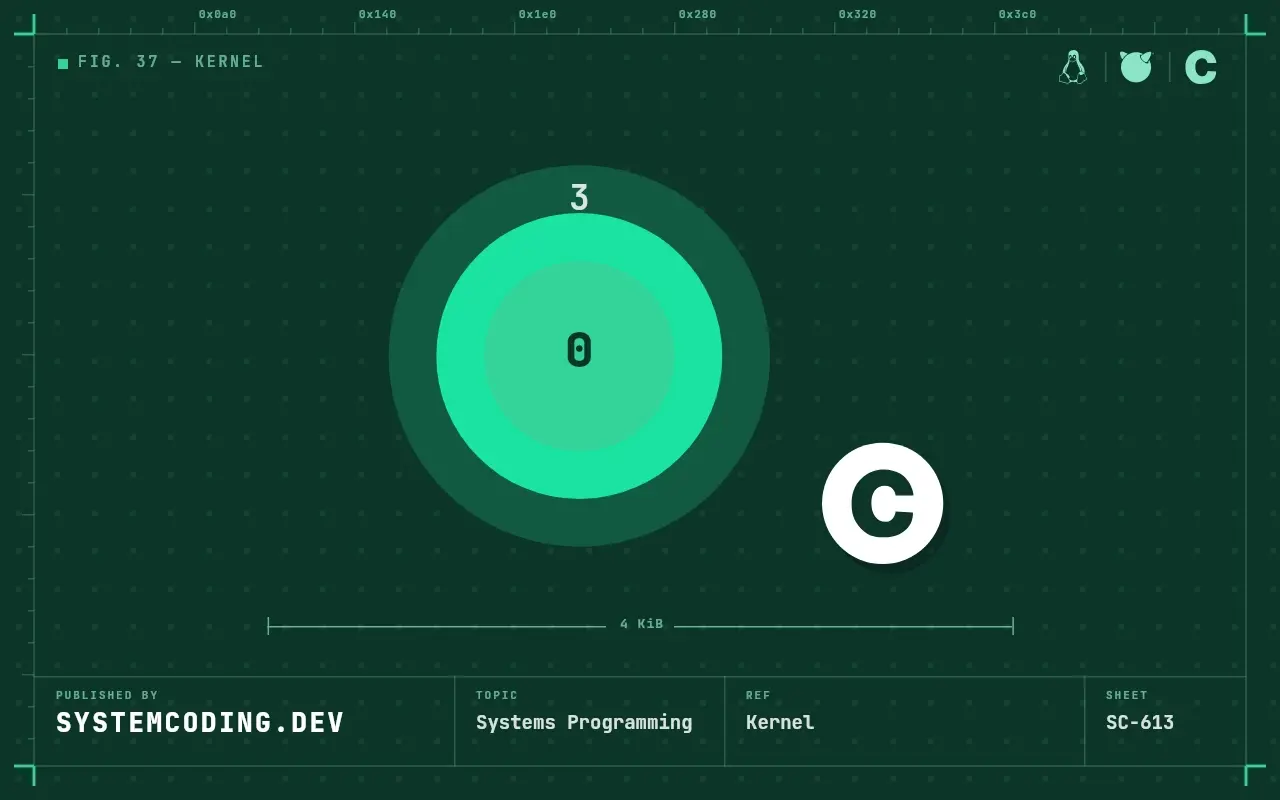
Redirect stdout to a file in C by opening it and calling dup2 onto descriptor 1. Includes saving and restoring the terminal and the fork and exec case.
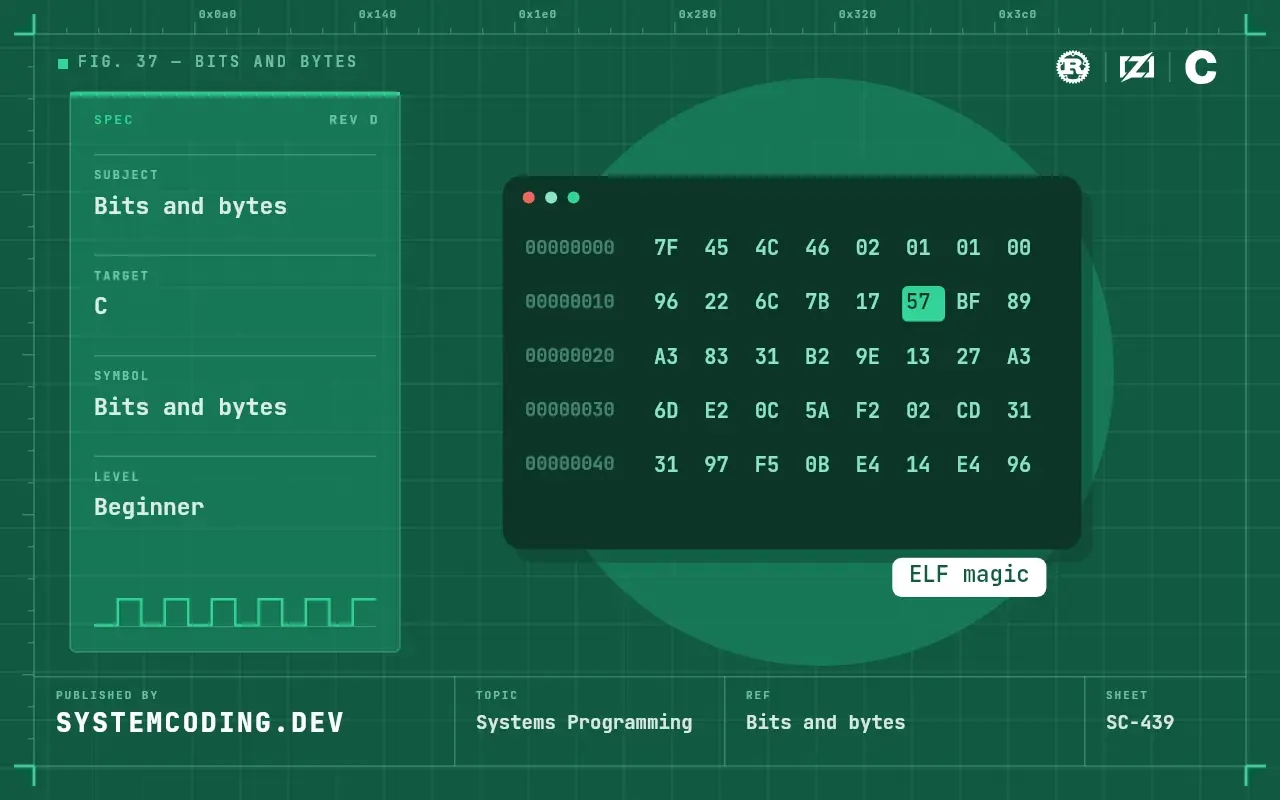
A file descriptor is a small integer that indexes a per-process table of open files. Learn what 0, 1 and 2 mean and how open and close hand numbers out.