Embedded
Push-Pull vs Open-Drain Outputs Explained for Firmware Developers
Learn how push-pull and open-drain GPIO outputs differ at the transistor level, when each is right (LEDs, I2C, shared lines), and how to set both on an STM32.
7 min read
Tag
445 posts
Learn how push-pull and open-drain GPIO outputs differ at the transistor level, when each is right (LEDs, I2C, shared lines), and how to set both on an STM32.
Install the LunarG Vulkan SDK on Windows, Linux or macOS, set the environment, and check the loader, driver and validation layers with vulkaninfo and vkcube.
Write a Verilog testbench with initial blocks that drives inputs, prints with $display and $monitor, checks outputs with !== and ends with PASS or FAIL.
Trace what QEMU does with /dev/kvm, from open and KVM_CREATE_VM to the anonymous VM and vCPU file descriptors, using strace and /proc to see each step.
Turn on _FORTIFY_SOURCE=3 with -O2 on glibc 2.33 or later and see which libc calls get bounds checks, how level 3 differs from 2 and what it cannot catch.
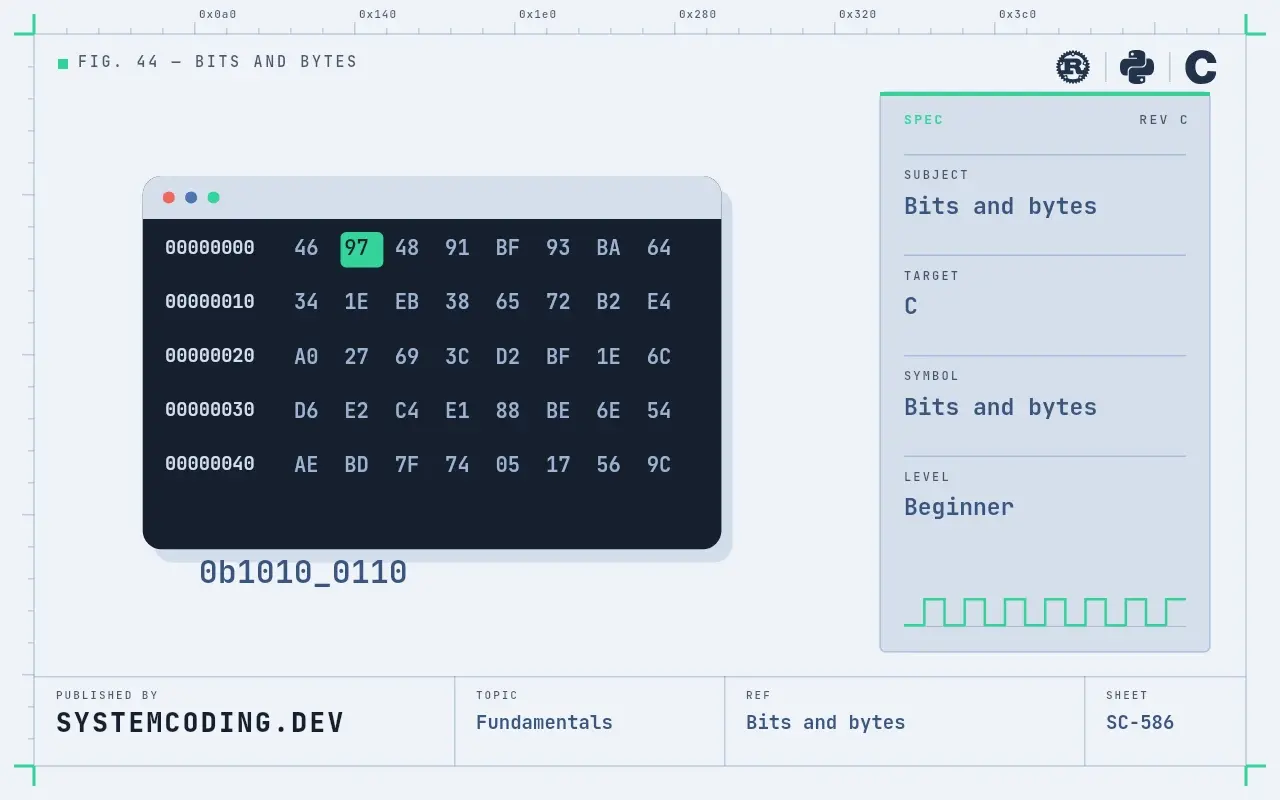
Learn how binary numbers work: place values, counting, converting and why every integer in a program is a pattern of bits, with C code that prints them.
Learn how I, P and B frames and the GOP work in H.264 video, why keyframes enable seeking, and how to inspect and set them with ffprobe and x264 options.
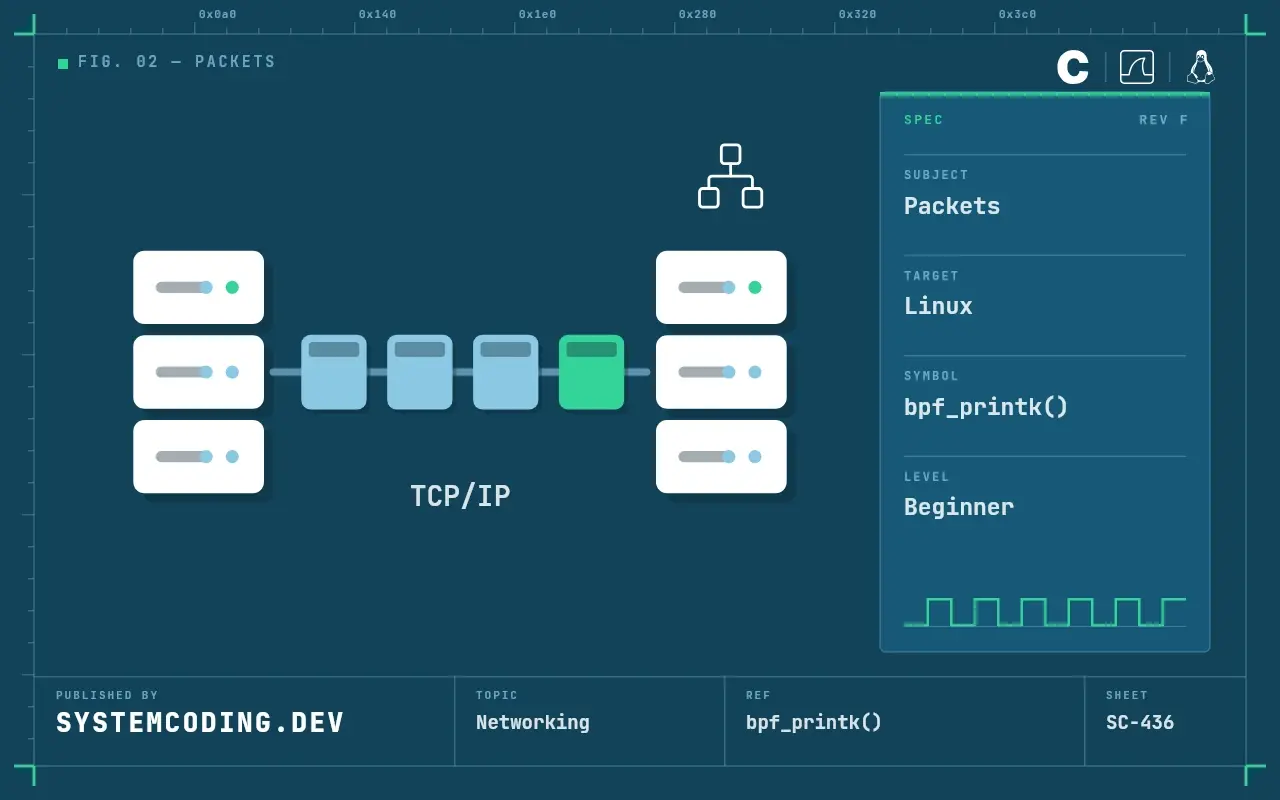
XDP runs eBPF programs on packets inside the NIC driver, before the kernel builds an skb. See the hook point, the five verdicts and the three attach modes.
Guard a shared linked-list stack in C with pthread_mutex_lock and pthread_mutex_unlock on glibc 2.41, check return codes, and avoid leaks from missed unlocks.
Use GDB's break command with a function name, a line number, file:line, an address or an offset, then list, disable, delete and make breakpoints temporary.
A system abend is a three-digit hex code from z/OS, a user abend a four-digit decimal code from a program. Learn to tell them apart and where to look each up.
Install perf from your distribution, check it matches the kernel, then run perf stat and perf record on a small C program to see where time goes.