Security
libFuzzer vs AFL++ vs Honggfuzz: Choosing a Fuzzer
Compare libFuzzer, AFL++ and honggfuzz on harness style, speed, binary-only support, mutators and platforms, with a decision table and a shared harness.
7 min read
Tag
7 posts
Compare libFuzzer, AFL++ and honggfuzz on harness style, speed, binary-only support, mutators and platforms, with a decision table and a shared harness.
Collect seeds, merge and shrink a corpus with libFuzzer -merge=1 and afl-cmin, replay it in CI with -runs=0, and keep it clean of crashes and private data.
Build a file parser with afl-clang-fast and AddressSanitizer, seed and run afl-fuzz 4.x, read the crashes directory and shrink a crash with afl-tmin.
Use Go 1.24 native fuzzing with testing.F to fuzz a binary decoder, find a slice bounds panic, read the saved testdata file and add a round-trip property.
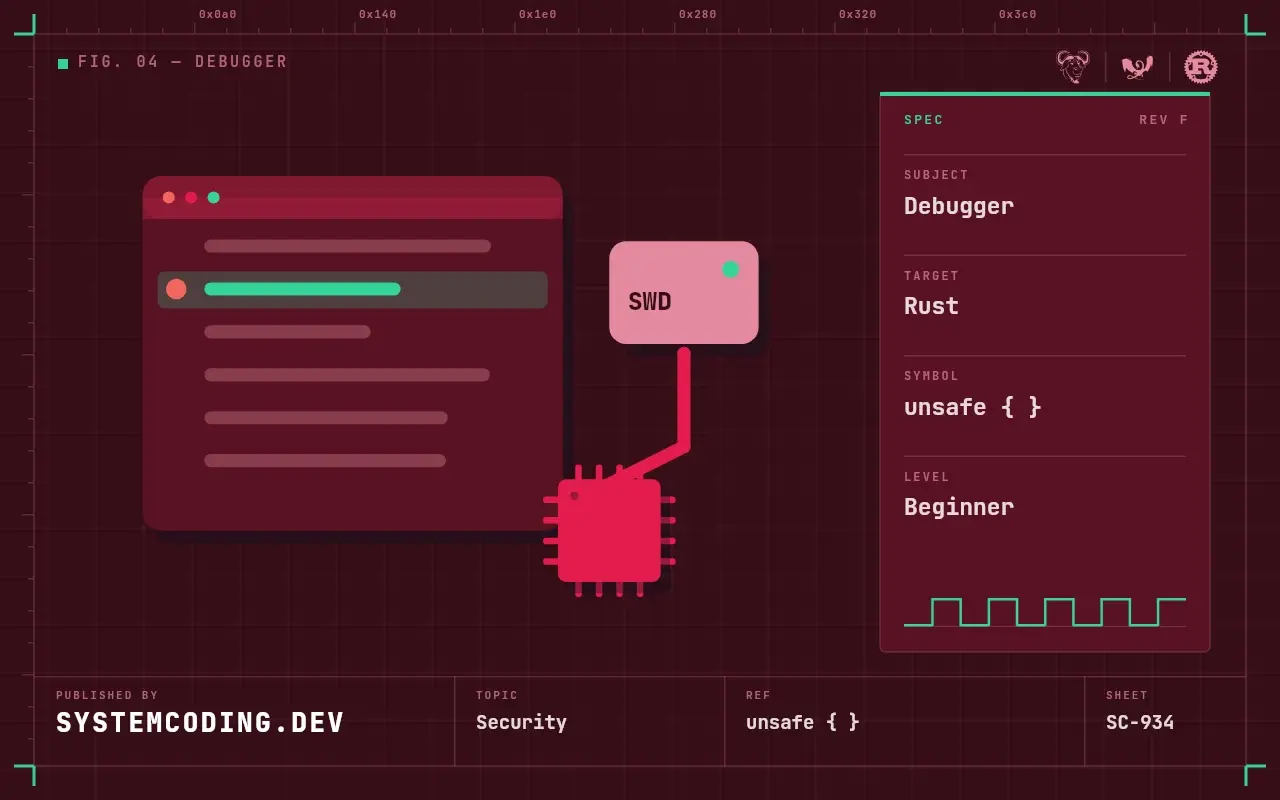
Set up cargo-fuzz 0.13 on a Rust nightly toolchain, fuzz a parser that uses unsafe code, read the crash report and replay, minimize and keep the failing input.
Fuzzing feeds a program mutated inputs and watches for crashes. Coverage feedback keeps inputs that reach new code, so an impossible search becomes short.
Fuzz C and C++ with libFuzzer and AFL++ on Clang 19: write targets, use sanitizers, build corpora and dictionaries, triage crashes and run fuzzing in CI.